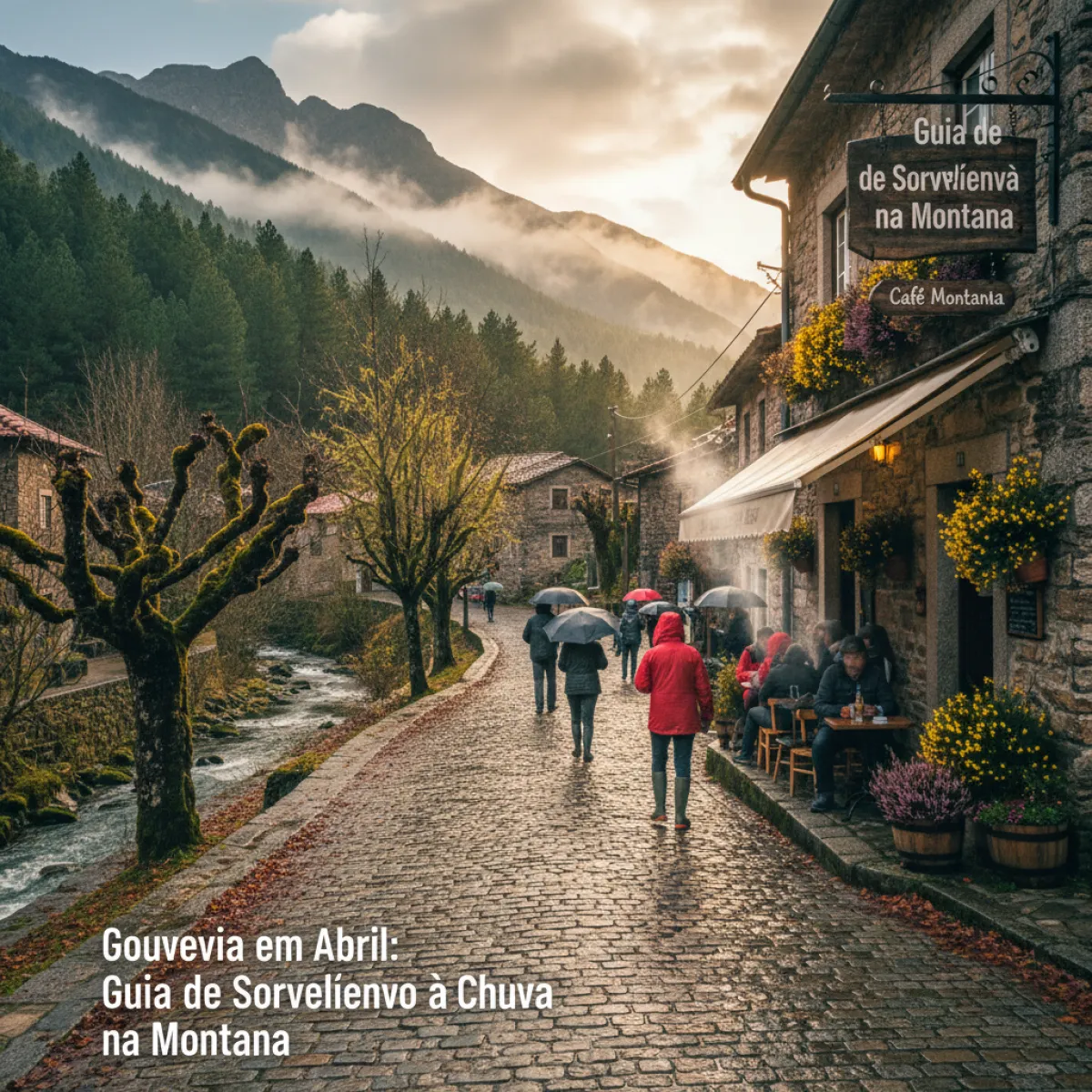
Gouveia in April: A Mountain Guide to Rain and Layers
Forget fashion and focus on function: Gouveia in April demands technical layers and local Burel wool. Discover how to face the mountain rains with pragmatic style and where to find the best culinary refuges.
The Myth of the Gentle Spring in Gouveia
If you’re expecting April in Gouveia to be an idyllic stroll through sun-drenched meadows, I’m sorry to report that the reality of Serra da Estrela is somewhat more… damp. Here, the Portuguese proverb "Abril águas mil" (April, a thousand waters) isn't a poetic suggestion; it's a logistical warning. Gouveia, perched on the northern slopes of the mountain range, greets Atlantic fronts with a hospitality that translates into thick fogs, persistent rain, and a temperature drop that catches any sneaker-clad tourist off guard. To visit the city at this time, you need more than just will; you need a wardrobe that respects both the terrain’s verticality and the weather’s stubbornness.
Forget those flimsy umbrellas bought in a panic at a convenience store. At the intersection of Rua Direita and Praça Alípio de Melo, the April wind turns them into useless metal skeletons in seconds. Physical and aesthetic survival in Gouveia demands technical layers, a touch of local wool, and the acceptance that wet granite is your primary interlocutor.
The Climb to Monte do Calvário: The Waterproofing Test
There is no better way to test your gear than by climbing Monte do Calvário on a grey late afternoon. As the granite steps glisten with rainwater, the view over the city and the Mondego valley begins to dissolve into the clouds. It’s a dramatic, almost cinematic setting, but one that requires your outer jacket to be a genuine three-layer shell. Don’t settle for a mere windbreaker; you need something with a breathable membrane that keeps the water out while letting the sweat from the climb escape.
Once you reach the top, near the chapel, the exposure to the wind is total. This is where you see the difference between those who came prepared and those who read a generic travel guide. While some shiver, the experienced adjust their hoods and appreciate the silence that only heavy rain can impose on the mountain. It’s a necessary moment of isolation, far from the bustle of the beaches that, while having seen their peak action in Surfing Portugal in March: The Best Beaches and Conditions, now feel like they belong to another country entirely.
The Layering System: The Mountain Trinity
The golden rule in Gouveia is stratification. April is a bipolar month. You might start the morning at 6°C with freezing rain and end the afternoon with a pale sun pushing the thermometer to 16°C. How do you manage this without carrying a whole wardrobe on your back?
- The Base Layer: Forget cotton. Cotton is your enemy in the Serra; once wet, it never dries and robs you of body heat. Opt for fine Merino wool or high-performance synthetics.
- The Mid Layer: This is where local pride comes in. Burel. This wool from the Bordaleira sheep, woven and felted to become nearly waterproof and extremely durable, has been the secret of Serra shepherds for centuries. A burel vest or jacket is the best piece of design you can bring to Gouveia. It’s functional, heavy with history, and protects against the mountain chill like few modern fibers can.
- The Outer Layer: A hard shell with taped seams. If you plan to hike to the Casais of Folgosinho or explore the narrow streets of Gouveia, this is your armor.
Culture Between Downpours: Abel Manta’s Refuge
When the rain becomes too aggressive for the outdoors, Gouveia offers shelters of rare sophistication. The Abel Manta Municipal Museum of Modern Art, housed in the imposing 18th-century Solar dos Condes de Vinhó e Almedina, is the ideal place to leave your boots to dry (metaphorically) and dive into the work of one of Portugal's greatest 20th-century painters. The granite walls of the manor house hold a collection that dialogues with the sobriety of the landscape outside. It’s a fascinating contrast: the rawness of the weather outside and the precision of Manta’s brushwork within.
This connection between the mountain and modernism isn't an isolated case in the region. If you have a car and a good set of tires, it’s worth taking the short drive to the neighboring town to understand how architecture adapted to these altitudes, as explored in Modernism in the Mountains: The Architectural Legacy of Cottinelli Telmo in Seia. It’s a lesson in how concrete and granite can coexist under the same leaden April sky.
Gastronomy: Where to Dry Your Soul (and Your Jacket)
No one survives April in Gouveia without the proper caloric comfort. When your hands are cold and your jacket starts to feel heavy, look for Restaurante O Júlio or venture out to Folgosinho, a few miles away, for the legendary Albertino. What to order? Forget the salads. This is the kingdom of Arroz de Zimbro (Juniper Rice), roasted kid (cabrito), and, of course, Queijo da Serra. The cheese must be just right, buttery, runny, with that characteristic odor that the uninitiated call strong and the devotees call divine.
Pair it with a Dão wine. Gouveia is part of this demarcated region, and its high-altitude wines have a freshness and acidity that perfectly cut through the fat of the cheese and the kid. A red made from Touriga Nacional and Alfrocheiro, served at the right temperature (which in April, in Gouveia, is basically the room temperature), is the best central heating system money can buy. Expect to pay around 25 to 35 euros for a full feast that will leave you ready to face another three days of rain.
The Regional Contrast: From Fundão to the Peaks
It’s curious to note how geography shapes the April experience. While in Gouveia we battle the fog, just a few miles away on the other side of the mountain, the landscape is radically different. Many travelers make the mistake of thinking all of Beira Interior is the same during this season. Nothing could be further from the truth. If you descend towards the Cova da Beira, you’ll find a much softer scenery, as described in The Ephemeral Bloom: A Guide to Seeing Cherry Blossoms in Fundão. There, the white isn't from snow or fog, but from cherry blossoms. It’s the yin and yang of the Portuguese mountains in April: the austerity of Gouveia versus the ephemerality of Fundão.
Practical Tips for the April Traveler
If you decide to ignore my advice and wear canvas sneakers, prepare to spend all your time drying them with the hotel hairdryer. If you're smart, follow these notes:
- Footwear: Trekking boots with Vibram soles. Wet granite is treacherous, and Gouveia’s cobblestones are steep.
- Schedules: In April, museums and churches often close for lunch (usually between 12:30 PM and 2:00 PM). Plan your outdoor hiking for the sunny windows (check the IPMA weather app frequently) and save your indoor visits for the hours of heaviest rainfall.
- Transport: Having a car is essential for exploring the surroundings (Manteigas, Seia, Linhares da Beira). If you come by bus, connections are limited, so be prepared to walk… and to get wet.
Gouveia in April is not for those seeking ease. It’s for those who appreciate the smell of wet earth, the sound of water rushing through granite gutters, and the feeling that the mountain is alive and, occasionally, a bit cranky. Pack your best waterproof, buy a burel scarf the moment you arrive, and accept the Serra’s invitation to see the world through a filter of rain and productive melancholy.