Gerês: Secret Waterfalls Beyond the Main Trails
Gerês's famous waterfalls draw crowds, but a 20-minute walk along a forgotten levada in Pincães, or hidden in the Mata da Albergaria with zero signage, there are cascades you'll probably have entirely to yourself. A practical guide to finding them.
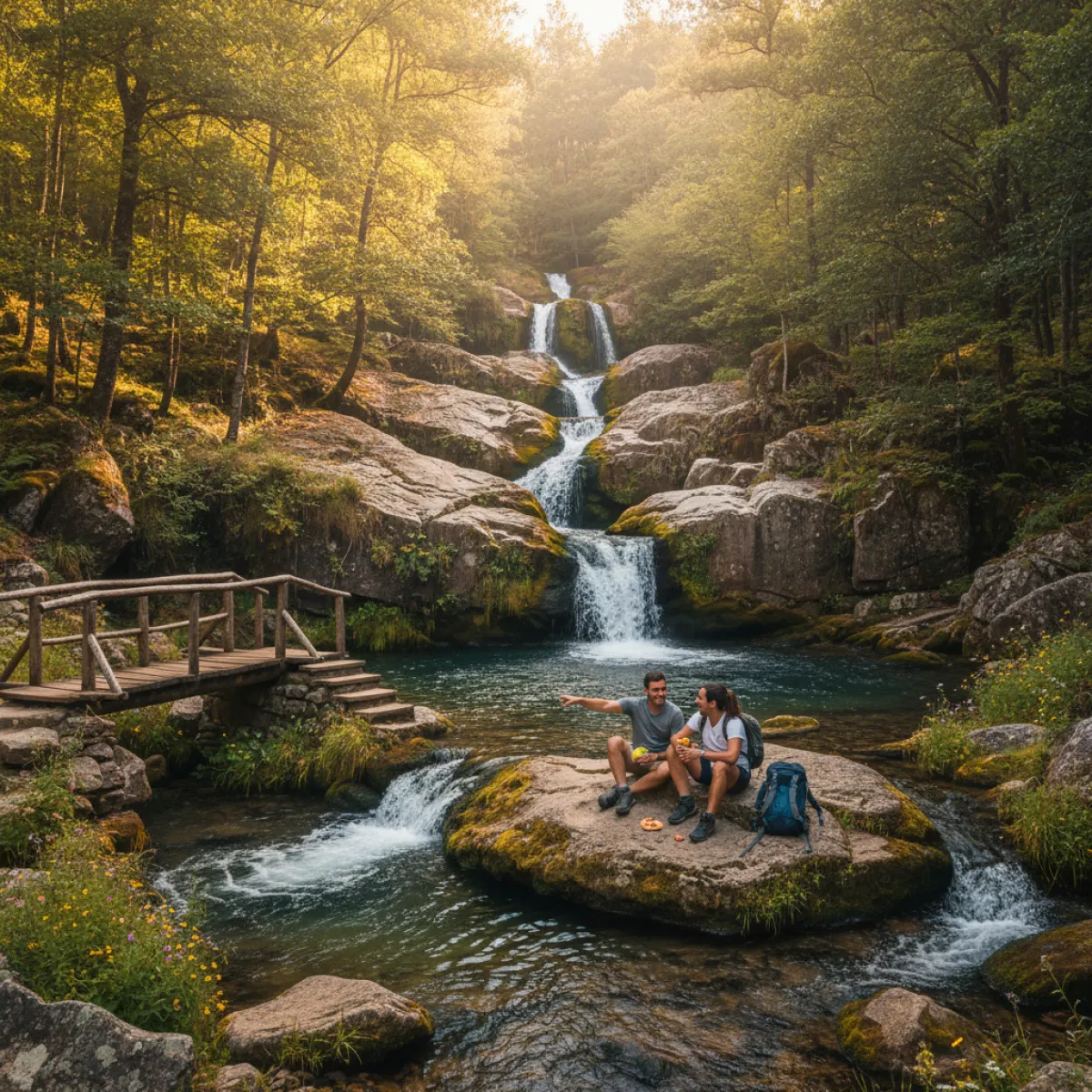
Let me be blunt: if your Gerês plan consists of parking near Cascata do Arado, snapping a photo, and leaving, you're wasting the National Park. The Arado is gorgeous, nobody's arguing that. But everyone goes there, which means in July you get a chaotic car park and a queue of tripods where there should be silence. The waterfalls I'm about to tell you about demand more leg work, less reliance on Google Maps, and in a few cases, a healthy dose of stubbornness. That's the price of admission. Every drop of sweat is worth it.
Cascata de Pincães: The Levada Nobody Promotes
Pincães is a tiny village in the municipality of Montalegre, clinging to the EN308 towards Cabril. No trendy restaurant, no souvenir shop, nothing that says "tourist attraction", which is precisely why it works.
The trail starts in the village itself, where you leave your car (there's no alternative, you can't drive to the waterfall). The round trip is about 2.5 km and follows an old levada, a water channel that once fed grain mills. Along the way, you'll pass the ruins of those mills, half-swallowed by undergrowth, stones draped in moss that looks like green velvet.
The trail is almost flat for most of the way, the only real climb is the last 250 metres before the waterfall. In about 20 minutes of easy walking, you reach a cascade wedged between granite walls that, in spring, hits with surprising force. Some call it the most photogenic waterfall in Gerês. I'm not sure I agree, it depends on the light and the water flow, but I understand the argument.
Concrete tip: go in spring. More water, greener landscape, and significantly fewer people. By August, even Pincães catches the overflow from visitors who've run out of patience at more popular spots.
Mata da Albergaria: Where Gerês Keeps Its Best
Mata da Albergaria is the crown jewel of the National Park, Portugal's best-preserved oak forest, with trees that are centuries old. In summer, car access to the road between Portela do Homem and the Albergaria area is limited and requires a fee (check locally for current prices and schedules, as they change yearly). But that filter is part of the charm: fewer cars, less noise, more actual forest.
Near the Cascata da Portela do Homem, which sits literally beside the road, 500 metres from the Spanish border, hide the Cascatas das Lagoas da Mata da Albergaria. They're among the least visited waterfalls in the entire park, which is almost absurd given that the access from the Portela do Homem car park is easy and pleasant. The problem, if you can call it that, is that almost nobody knows they exist. There are no signs. No yellow arrows. Just a faint path and your own powers of observation.
About a kilometre and a half into a 4 km circular route, you'll find a succession of cascades tumbling between granite boulders, not monumental waterfalls, but intimate, quiet ones. Go on a weekday and you'll likely have them completely to yourself. If you enjoy combining nature with history, the Geira hiking route passes through this same area, following the ancient Roman road with milestones still standing.
Poço Negro: The Swimming Hole Nobody Tells You About
Close to the Albergaria lagoons sits Poço Negro, probably the best swimming spot in all of Gerês. A wide natural pool, deep enough for jumping (with caution, always check depth first), surrounded by flat rocks perfect for laying out a towel and pretending the world doesn't exist. Access is easy, which makes this ideal for anyone who wants the secret waterfall experience without the three-hour hike.
Cascata Cela Cavalos: The Descent That Keeps the Crowds Away
This waterfall stays empty for one simple reason: you have to go down. And everything you go down, you climb back up. The starting point is the Capela de Santa Luzia in Cela, coming from Outeiro on the M308, you'll see the sign for "Cela Cavalos," park by the chapel, and descend a dirt track for about 1.5 km.
The descent isn't difficult, about 10 minutes at a good pace. But it's enough to filter out anyone who just wants a quick photo. The result is a waterfall tucked into a narrow valley, with a natural pool of freezing water (this is Gerês, fair warning: even in August, the water is not for the faint-hearted). It's one of the least crowded waterfalls in the Park and, honestly, one of the most beautiful.
For those who want to go further, literally, the trail to Poço Dola also departs from here. It's a 13 km route with over 1,000 metres of accumulated elevation gain. Not for everyone: there's a lot of loose rock, the descent to Poço Dola is steep, and on rainy days it's simply dangerous. But Poço Dola is one of the wildest spots in all of Gerês, a natural amphitheatre of rock and water that rewards those with strong legs and mountain experience.
Pitões das Júnias: Monastery, Waterfall, and the Edge of the World
Pitões das Júnias is one of the most isolated villages in the National Park, in the far north, and it has that end-of-the-world feeling you can't manufacture. The village itself is worth the visit, granite houses, espigueiros (traditional granaries), farmers who look at tourists with a mix of curiosity and polite indifference.
The most accessible trail starts from the village cemetery and is circular, about 4 km, easy difficulty. It passes the ruins of the Mosteiro de Santa Maria das Júnias, a 12th-century Benedictine monastery, abandoned for centuries, half-consumed by vegetation, and the viewpoint over the Pitões waterfall. The cascade is impressive, especially after days of rain.
But Pitões's real secret lies deeper. The Caldeiras do Pereira are about 2.5 km from the village, hidden in dense forest, with zero signage on the trail. The path starts on Rua do Pátio da Raposeira, near Largo Eiró, and follows the river after passing the picnic area. It's 8 km total (return), medium difficulty, and the terrain is uneven, no place for sandals or anyone allergic to muddy boots. But the Caldeiras do Pereira are the kind of spot only locals know, with natural pools wedged between rocks that look hand-carved.
Practical Notes So You Don't Trip Up
When to go
Spring, no debate. The waterfalls are at their peak, the landscape is absurdly green, and there's a fraction of summer's visitors. March to June is the sweet spot. If you go in August, prepare to share the well-known spots, but the waterfalls in this article remain relatively empty even in peak season.
What to bring
- Hiking boots with grippy soles, non-negotiable. Rocks near water are treacherous, especially when wet.
- Water and snacks. None of these waterfalls have a bar or kiosk anywhere near them.
- Towel and swimsuit if you want to swim (and you should).
- Sunscreen, high-altitude sun is deceptive, and you can burn easily on days that feel mild.
Getting there
A car is essentially mandatory. Public transport inside the Park is virtually non-existent. If you're based in Gerês village, you have easy access to Mata da Albergaria and Portela do Homem. For Pincães and Cela Cavalos, the EN308 is your reference road. For Pitões das Júnias, budget 40-50 minutes of winding road from Gerês, but it's one of the most scenic drives in Portugal, so don't complain.
Safety
Don't underestimate Gerês. The waterfalls are beautiful, but mountain is mountain. Avoid trails near streams after heavy rain, water levels rise fast and rocks become dangerously slippery. The Poço Dola trail, in particular, is inadvisable in wet weather. And never jump into pools without checking depth first.
After the Waterfall
If Gerês leaves you wanting more adrenaline, canyoning on the Rio Arado is the natural progression, rappelling, jumps, and natural slides on one of the park's most beautiful rivers. And if you fancy a complete change of pace after days of trails and wilderness, Barcelos is just over an hour away and makes a perfect contrast: an honest family guide to the town, cafés that take coffee seriously, and museums worth your time (and a few that aren't).
But here's the truth: Gerês doesn't need a complement. It needs time. And the waterfalls beyond the main trails are the best reason to stay one more day.
