Funchal's Best Summer Levada Walks: A Local Guide
Summer is, despite what the brochures say, the best time to walk Funchal's levadas. Fourteen hours of daylight, cool air at 1,000 metres, and waterfalls you can swim in. But only if you leave the house before 7:30am.
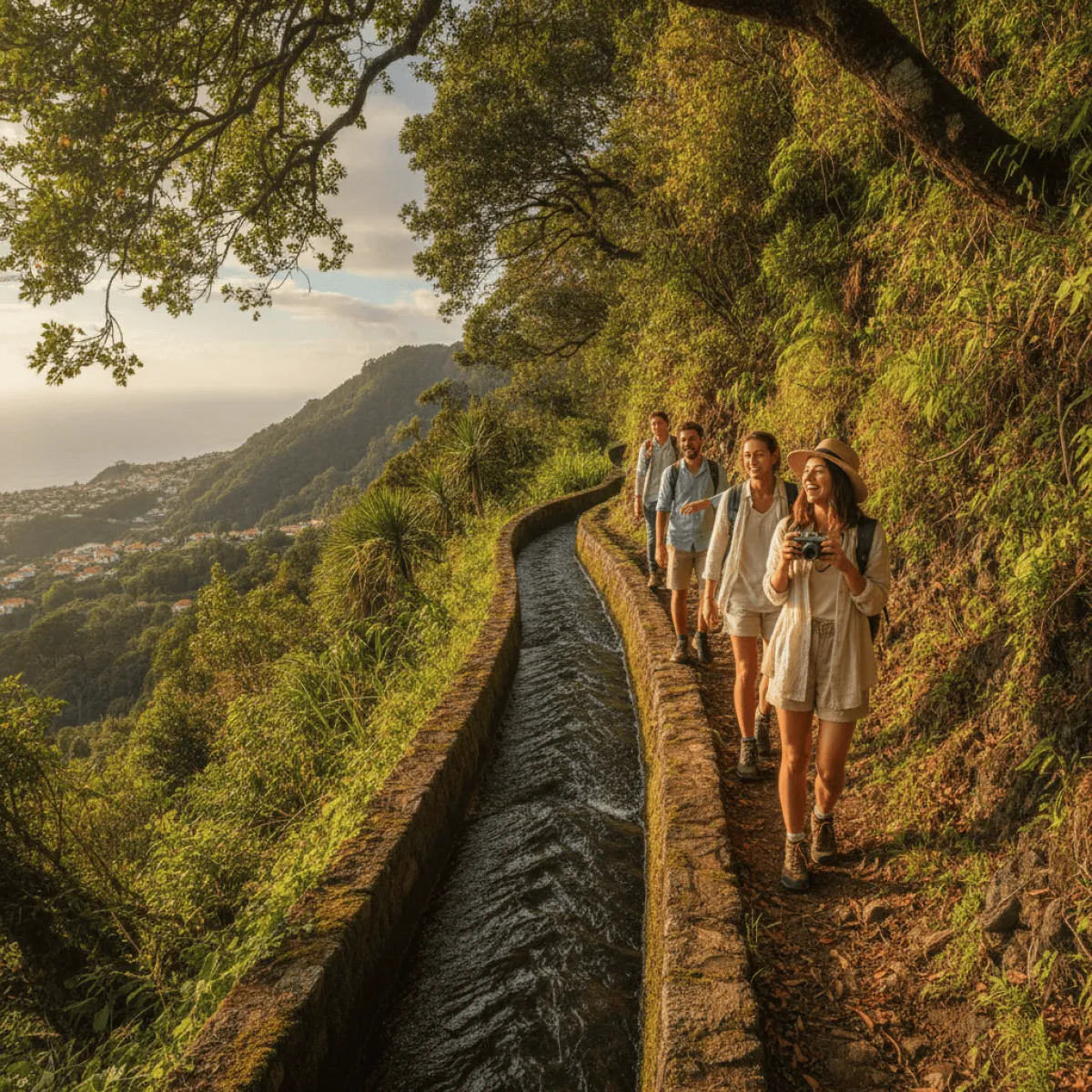
At seven in the morning in August, the Queimadas car park already has three rental vans and a handbag that nobody should have brought on a levada. By ten, it's full. By eleven, people are putting on beach sandals next to a sign that says, in four languages, that the trail has an 800-metre tunnel with no light. This is the first lesson of summer on Funchal's levadas: heat isn't the problem, other people's schedules are.
The levadas were designed in the 16th century to bring water from the rainy north to the dry south of the island. Seven hundred years later, they're the best excuse to spend a whole day walking at 1,000 metres while, down below, Funchal sizzles at 30 degrees. The trick is knowing which to walk, when, and where to eat when you come down hungry like someone who's earned lunch.
Why summer is, actually, the best time
There's a received wisdom that levadas are for spring, when everything flowers. April and May have their charm, and we've written about that in our dedicated guide to Funchal's essential April levada walks. But summer has three advantages nobody mentions: fourteen hours of daylight, waterfall water that stays cold even when the air doesn't, and dry days in the north that make viable the trails which, in January, are pure slip-and-slide.
The heat stays in Funchal. Climbing to 1,500 metres at Pico do Areeiro on an August day means putting on a sweater at six in the morning. At 1,000 metres in Rabaçal, the thermometer rarely passes 22 degrees in high summer. It's the island's natural air conditioning, and it costs the price of petrol and the effort of your legs.
The 7:30am rule
Leave Funchal between seven and seven thirty in the morning. This isn't an exaggeration. The car parks at the popular trails (Caldeirão Verde, Rabaçal, 25 Fontes) fill between nine and ten, and anyone arriving after eleven spends the rest of the day overtaking groups of fourteen people with hiking poles. Madeira has fifty thousand tourist beds. In August, half of them want to walk a levada. Do the maths.
Caldeirão Verde: the classic that still earns it
Yes, it's in every brochure. Yes, parking is expensive (the Queimadas Park charges five euros per person in 2026, check locally). And yes, it's still the trail to recommend to anyone doing only one this summer. The reason is water: twelve kilometres round trip, almost no climbing, ending at a hundred-metre waterfall that drops into a circular pool you can swim in (carefully, and in August the water sits around 14 degrees).
The trail passes through four tunnels. Headlamp, not your phone torch. The third tunnel is 200 metres long with curves and total darkness. People who go in with phones end up pressed against the wall letting through those who came prepared.
If you're planning this trail as the highlight of your trip, it's worth reading our complete Caldeirão Verde guide, with details on transfers, gear, and the small differences between a good day and a wet, bad one.
How to get there from Funchal
A rental car is the most flexible option: 45 minutes on the VR1 to Santana, then 15 minutes through the interior to Queimadas. The final road is narrow and gets morning fog, drive slowly. Without a car, there are shared transfers from Funchal that cost between 35 and 50 euros per person with a guide. Worth it if you've never walked a levada with tunnels, you lose flexibility but gain security.
Rabaçal and 25 Fontes: the water trail
If Caldeirão Verde is the trail of scale, Rabaçal is the trail of abundance. The laurisilva forest (UNESCO World Heritage since 1999) is denser here, darker, wetter. The classic trail is the 25 Fontes: eight kilometres round trip, ending at a lagoon ringed by dozens of jets of water coming out of the rock. It isn't 25. It's more. Nobody's counted recently.
The critical point is access. The road that drops from the 1,300 metres of Paul da Serra down to Rabaçal has been closed to private cars since 2019. You either park at the top and walk down (40 minutes of tarmac descent, brutal coming back) or take the official shuttle, which costs three euros per person, return. The shuttle only runs until 5pm, plan accordingly.
Paul da Serra, that plateau at 1,400 metres, is the biggest surprise for anyone who only knows Madeira from postcards. It looks like Scotland. Loose cows, heather, wind, and in August it can sit at fifteen degrees while Funchal is at thirty. Bring a fleece even if you think you're mad. You're not.
Levada dos Balcões: for when you have three hours
Not every day can be eight hours of walking. The Levada dos Balcões, at Ribeiro Frio, is the opposite of Caldeirão Verde: three kilometres round trip, almost flat, two short tunnels, and a final viewpoint over the Faial valley with views of Pico Ruivo and Pico do Areeiro. You can do it in an hour and a half without rushing.
The secret is stopping at Casa do Ribeiro Frio for a coffee before or after. Local trout is on sale for anyone wanting to make a meal of it (Madeira has been farming trout in pools since the 1950s). It's not the island's best trail, but it's the island's best trail for someone with a 6pm flight.
The parallel option: gardens worth the effort
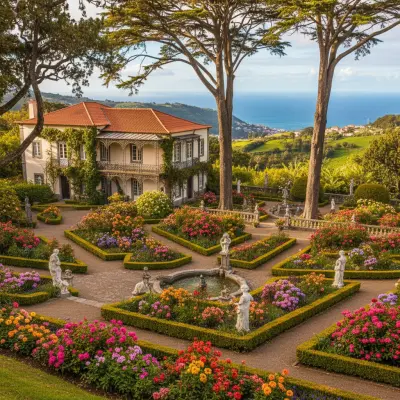
Some days your legs say no. Some days rain in the north kills the plan. For those days, Funchal has three gardens that rival any trail in botanical density and, in some respects, beat them, because somebody designed them.
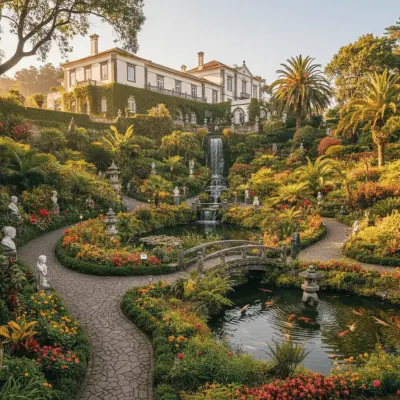
The Monte Palace Tropical Garden is the most cinematic of the three. Seven hectares of oriental garden, koi carp ponds, and a collection of Portuguese azulejos from the 15th to 20th centuries displayed on panels through the grounds. You go up by cable car from Funchal (16 euros return, or just go up and come down in the famous wicker basket sleds for 35 euros for two passengers, worth doing once in your life).
The Madeira Botanical Garden, on the other side of the valley, is more serious, more didactic, more botanical in the literal sense. Eight euros entry, species from every continent, and a viewpoint over Funchal bay that justifies the visit on its own. Go late afternoon, with the oblique light.
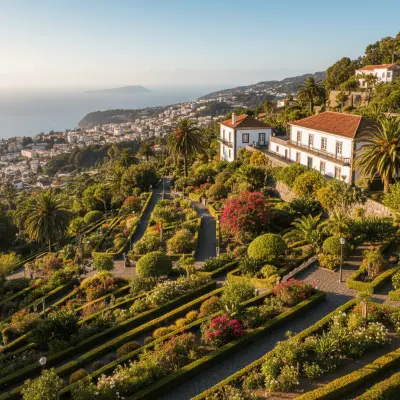
And then there are the Palheiro Gardens, at 500 metres altitude, on the Blandy family estate. It's the most British garden in Portugal, in the best sense: 19th-century landscape design, rare camellias (go in January to see them, but in summer the roses are at their peak), and a silence that costs fifteen euros to enter.
Where to eat when you come down hungry
There's one school that says after a levada you eat wheat soup at a roadside restaurant. There's another that says you go down, swim, rest for two hours, and dine properly. Both are right.
For the first school, any house in Santana or Camacha will do. Skewered beef on bay laurel sticks, fried corn, bolo do caco with garlic butter. Fifteen euros and done.
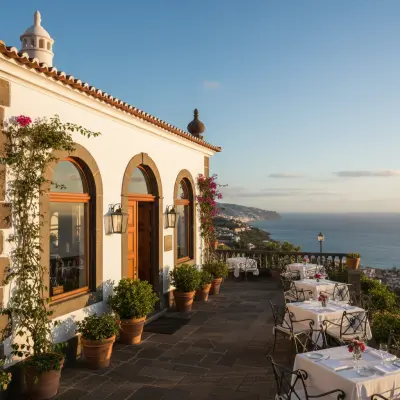
For the second, Casal da Penha is the right answer on a normal night. Serious Madeiran cooking without turning into a caricature, tuna in every possible form in June (the best month for tuna, as detailed in our guide to Funchal in June), and a terrace that catches the Atlantic air on even the warmest nights.
For the night when you want to understand why Madeira has two Michelin stars on an island of 250,000 people, it's Il Gallo d'Oro, at the Cliff Bay. It's not cheap (tasting menu from 180 euros), but chef Benoît Sinthon works with Madeiran producers like nobody else. Book two weeks ahead in August.
The gear that matters (and what doesn't)
What matters: trail shoes with grippy soles (levadas have wet stone sections where you slip), a small backpack with two litres of water, a real headlamp (not your phone, again), a windbreaker even in August, and a salty snack for mid-trail. Madeira bananas bought at the Lavradores market the night before make you look like a local.
What doesn't matter: hiking poles on flat trails (Caldeirão Verde, Balcões, 25 Fontes don't justify them), dedicated GPS (mobile signal is reasonable), and waterproof trousers in August (you'll sweat more than you'll get wet).
The tunnels and the heights
Two honest conversations. First: the tunnels are long, dark, and sometimes low. Anyone with serious claustrophobia should avoid Caldeirão Verde. Levada dos Balcões has short tunnels with light visible at the other end. Start there if you're unsure.
Second: many levadas have a handrail on one side and a 300-metre drop on the other. Most people cross without thinking about it. Anyone with vertigo should ask before choosing a trail. The staff at most hotels can answer, and there are now apps with photos of the critical points.
If you still have a day
After the levadas, the dinner, and the rest day on Calheta beach (yes, there's a yellow sand beach in Madeira, imported from Mauritania in 2004), some people want more. For them, two directions.
First: a morning in the Atlantic. The south of the island has waves gentle enough for total beginners, and our guide to a surf lesson in Funchal explains how to do that without humiliating yourself more than strictly necessary.
Second: a day in Santana, 50 minutes north. The thatched-roof cottages are tourism, but the rest of the municipality is where rural Madeira still exists. Our itinerary for 24 hours in Santana shows how to do it without setting foot in a fridge-magnet shop.
Madeira isn't an island to do. It's an island to walk, slowly, along the levadas, with pauses for swims in waterfalls that have been there for five hundred years waiting. Summer is, contrary to the brochure calendar, the best time to do this. Leave early, lace up properly, and leave the poles at home.