Funchal in June: Atlantic Festival and Gardens at Peak
Four Saturdays of fireworks over the bay, gardens in their second bloom, tuna in season, and levadas at their best. An opinionated guide to doing Funchal in June without falling for the €90 hotel-terrace trap.
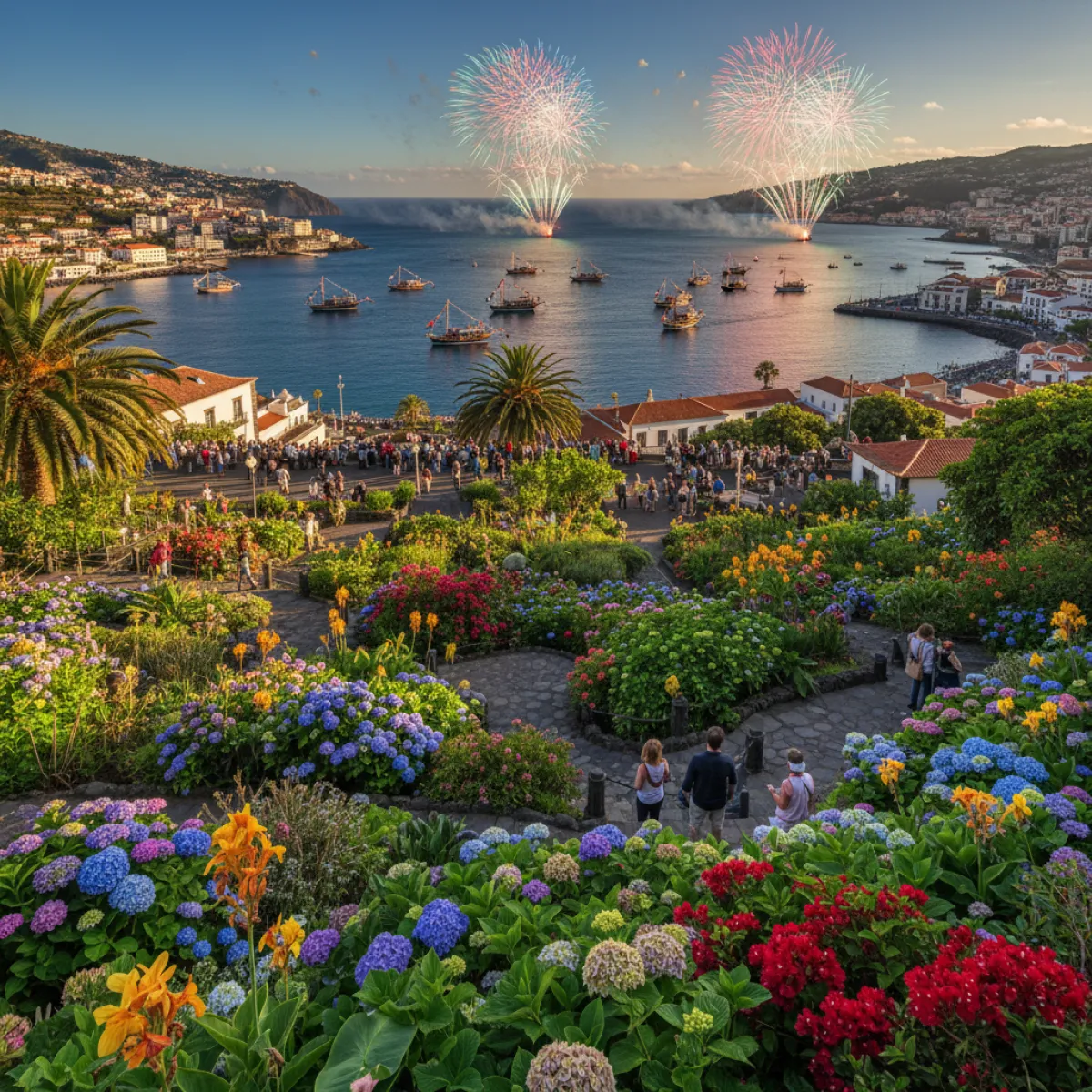
June in Funchal isn't the August crush or the unreliable rain of May. It's that short window when daytime temperatures sit around 22°C, the sea hovers near 21°C, and the city decides to spend four consecutive Saturdays setting fireworks off over the bay. The Atlantic Festival, every Saturday in June at 10:30pm, turns the marginal into a free grandstand, and any hotel with a port view raises its rates accordingly. Is it worth it? Yes, but there are smart ways to do this and there are ways that involve being wedged between cruise passengers eating melted ice cream on Avenida do Mar.
This guide assumes you've already read our broader Funchal in June guide and now want to go deeper: the gardens at the precise moment jacarandas hand the baton to hydrangeas, the best perches for the fireworks without paying €180 a night, and where to eat after 11pm when the rest of the city has packed up.
The Atlantic Festival, demystified
The Atlantic Festival is technically two events overlapping. On Saturday nights, there's the international pyrotechnic competition, with teams from different countries competing across four sessions of roughly 20 minutes each. In parallel, throughout the month, there are free concerts by the Madeira Classical Orchestra and regional ensembles on stages around the centre, mainly at Praça do Município and near the Cathedral.
Things kick off around 10:30pm and last long enough to catch a coffee afterwards. My advice, after watching this from four different angles in four different years: skip Avenida do Mar. Too close, too packed, and the smell of grilled chicken from the kiosks overwhelms everything else. The best viewpoints are, in order:
- The Pico dos Barcelos viewpoint, at 355m elevation. Take a taxi (€12 to €15 from the centre) around 9:30pm, bring a bottle of Verdelho, and prepare to share the space with Madeiran families who know exactly what they're doing.
- Forte de São Tiago, in the old town. Closer to the action, more intimate, with the bonus that it's a five-minute walk from the restaurants on Rua de Santa Maria for a late dinner.
- The Monte cable car halted at the top, if you can time the last descent (check the schedule that day, they often extend it on festival nights). Panoramic view, no crowd, and you descend toward the show at exactly the right moment.
Avoid, categorically, the hotel terraces selling fixed €90-per-person menus for "dinner with fireworks view". The fireworks last 20 minutes. The fish will be cold.
The gardens in June: timing is everything
This is where most visitors get it wrong. They come in April for the Flower Festival, see the floral carpet on Avenida Arriaga, and assume the gardens are at their peak. Wrong. In June, with drier air and longer days, the island's gardens enter their second explosion: hydrangeas in every shade of blue, agapanthus opening up, permanent strelitzia, and the highland proteas hitting their peak.
Monte Palace Tropical Garden
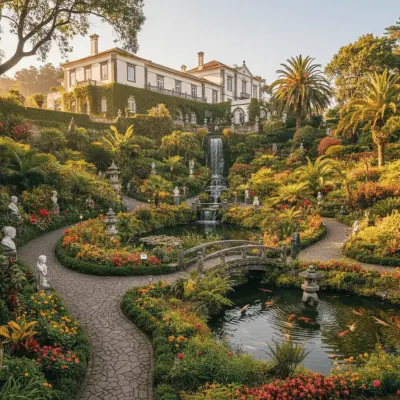
The Monte Palace Tropical Garden sells the most tickets and largely justifies the hype, with caveats. The oriental gardens with koi ponds and the 15th-century Portuguese azulejos are genuinely impressive. The African art museum in the lower level is a peculiar surprise nobody mentions.
Practical tip: take the cable car up from Funchal (return trip around €18), but walk down the Monte paths or, if you're brave, take the famous wicker basket sled. The basket ride costs €30 for two passengers, lasts 10 minutes, and is exactly the type of absurd tourism worth doing once for the story. Warning: it doesn't take you down to the centre, it drops you halfway, after which you'll need a taxi or bus to finish the descent.
The Botanical Garden
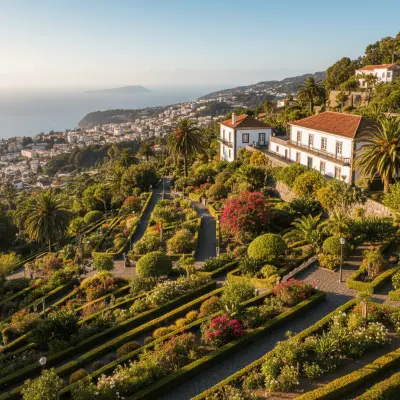
The Madeira Botanical Garden is the garden for visitors who want to take this seriously. More than 2,500 species, organised by geographic origin, with a breathtaking view over the João Gomes valley. The cactus and succulent section, with that colourful geometric pattern you see from above in photographs, is especially photogenic in June with the more angled afternoon light.
Go early, 9am when it opens. Pay the €7.50 entry. Block two hours. Don't try to combine this with Monte Palace on the same day, it's too much for one morning and everything blurs in your memory.
Palheiro Gardens
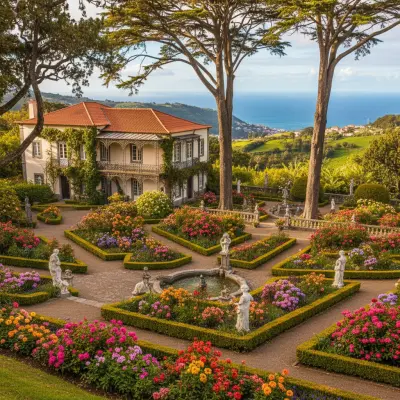
Then there's what I consider the best garden in Funchal, though it's the least visited of the three: Palheiro Gardens, also known as Quinta do Palheiro Ferreiro. It sits eight kilometres from the centre at 500m elevation, and was designed by the Blandy family over more than a century. It's an English garden with a Madeiran undertone, and it's where you see the proteas, late camellias, and serious rose gardens.
Open Monday to Friday mornings, closed at weekends. Ironically, it's on these weekdays that it sits empty while Monte Palace receives 2,000 cruise passengers. Go on a Wednesday morning, pay the entry, bring a water bottle, and wander. It's the spot where you understand that Madeira isn't just volcano and sea, it's also a subtropical micro-England invented by 19th-century merchant families.
Where to eat, June edition
June brings two things to the Madeiran table: tuna (peak season runs May to September) and the red fruits from the slopes, particularly the cherries from Jardim da Serra that usually hit the markets in the first half of the month.
Serious lunch: Casal da Penha
For a lunch that stretches out, Casal da Penha does what Madeirans call comida da terra with some refinement, but no pretension. Order the tuna steak, thick-cut and medium-rare, with molho de vilão (garlic, parsley, vinegar). Get the espetada on a laurel skewer only if it comes shared and you're properly hungry, because the portion is generous. Budget €25 to €35 per person with house wine.
Special dinner: Il Gallo d'Oro
If you want to do the dinner of the year and have €250 per person to spend (yes, you read that right), book three months ahead at Il Gallo d'Oro, in The Cliff Bay Hotel. Two Michelin stars, chef Benoît Sinthon, Mediterranean cooking with local produce. Not for every night. For one night. Go for the tasting menu, let the sommelier pick the wines, and put your phone away for three hours.
Late tasca
After the fireworks, with the city still awake, the places that stay open are on Rua de Santa Maria, in the old town. The painted doors (the Art of Open Doors project) are all lit up, there's live music squeezed into half a square metre of pavement, and you can get a plate of grilled limpets with bolo do caco until midnight. I won't recommend a specific tasca because they change hands, and what was good two years ago might be tourist-trap today. Trust the principle: if you hear locals speaking Portuguese to each other, you're fine. If there's a plastic menu in six languages at the door, walk on.
Levadas in June: the ideal window
If there's a perfect month for the levadas, it's June. The trails have dried out from winter, the vegetation is lush but not suffocating, and temperatures at higher elevations are comfortable (15 to 18°C in 1,000m zones). Before you go, read our detailed guide to essential levadas around Funchal, which still applies in June with the caveat that you'll want to start earlier (8am) to dodge the heat that builds from 1pm.
The queen of levadas is still Caldeirão Verde, in Santana, with that amphitheatre finale and a waterfall plunging 100m. It's roughly 13 kilometres round-trip, with four unlit tunnels where a head torch is not optional. If you want to do this properly, with a guide and transport, look at the guided Caldeirão Verde experience we organise from Funchal.
For those who want to combine Caldeirão Verde with a slower stay, use the opportunity to spend the night in Santana. Our 24-hour Santana itinerary explains how to manage the time between the typical thatched houses, the Pico Ruivo viewpoint (closer than it seems from here), and the local restaurants.
The sea, now that it's warm
In June, the sea hits a temperature where you can swim without the Atlantic shock that makes the less hardy give up immediately. Praia Formosa, west of Funchal, is the most accessible urban beach, but it's pebble. For proper sand, you need to head to Porto Santo (an overnight ferry or 15 minutes by plane) or accept that in Madeira the sea is accessed via natural pools, bathing complexes (the Lido, the Barreirinhas) or Doca do Cavacas.
Surfers find June swell more inconsistent than winter, but the water is warmer and there are regular waves on the western side of the island. For anyone who's never been on a board but always wanted to try, a surf lesson with Surf Clube da Madeira is an honest way to find out if this is for you, with instructors who speak Portuguese and English and all gear included.
Practical stuff nobody told you
- Flights: Cristiano Ronaldo airport is notorious for crosswinds on its runway. Cancelled flights or diversions to Porto Santo happen. Don't book tight connections on the way home.
- Car rental: essential if you want to leave Funchal. Budget €25 to €40 per day in June. Get comfortable driving on sharp curves and 20% gradients.
- Where to stay: the triangle between Lido, the Cathedral, and the Old Town covers 90% of needs. June is shoulder season, expect to pay €80 to €150 per night for a decent hotel. Apartments in the old centre are usually good value.
- Money: almost everywhere takes cards, except some tascas and out-of-hours taxis. Keep €50 cash in reserve.
- Clothing: the classic visitor mistake is bringing only summer clothes. Up at Pico do Areeiro at 1,818m, mornings can sit at 10°C even in June. A jumper and windbreaker are mandatory for any hike above 1,000m.
Four Saturdays, four programs
If you're in Funchal for a week and want to catch two festival Saturdays, organise yourself like this: arrive on Thursday, gardens on Friday, fireworks on the first Saturday, levada on Sunday, rest and city on Monday, drive the north coast on Tuesday, and leave on Wednesday. If you stay for the second Saturday, watch the fireworks from a different angle (each session features different teams, it's worth comparing).
June isn't the cheapest or the warmest month in Funchal, but it's the best-orchestrated. The flowers are ready, the tuna is in season, the fireworks happen four Saturdays in a row, and August hasn't yet arrived with cruise passengers doubling the city's population. If you have to pick a month for a first time in Madeira, this is it.