Funchal Flower Festival: How to Navigate the Spring Blooms
Forget the cruise-ship clichés: Funchal's Flower Festival is a high-octane urban takeover that demands a solid strategy and a stiff poncha. Discover how to dodge the crowds on Avenida Arriaga and where to find the best limpets in the city.
Spring Fever in Funchal
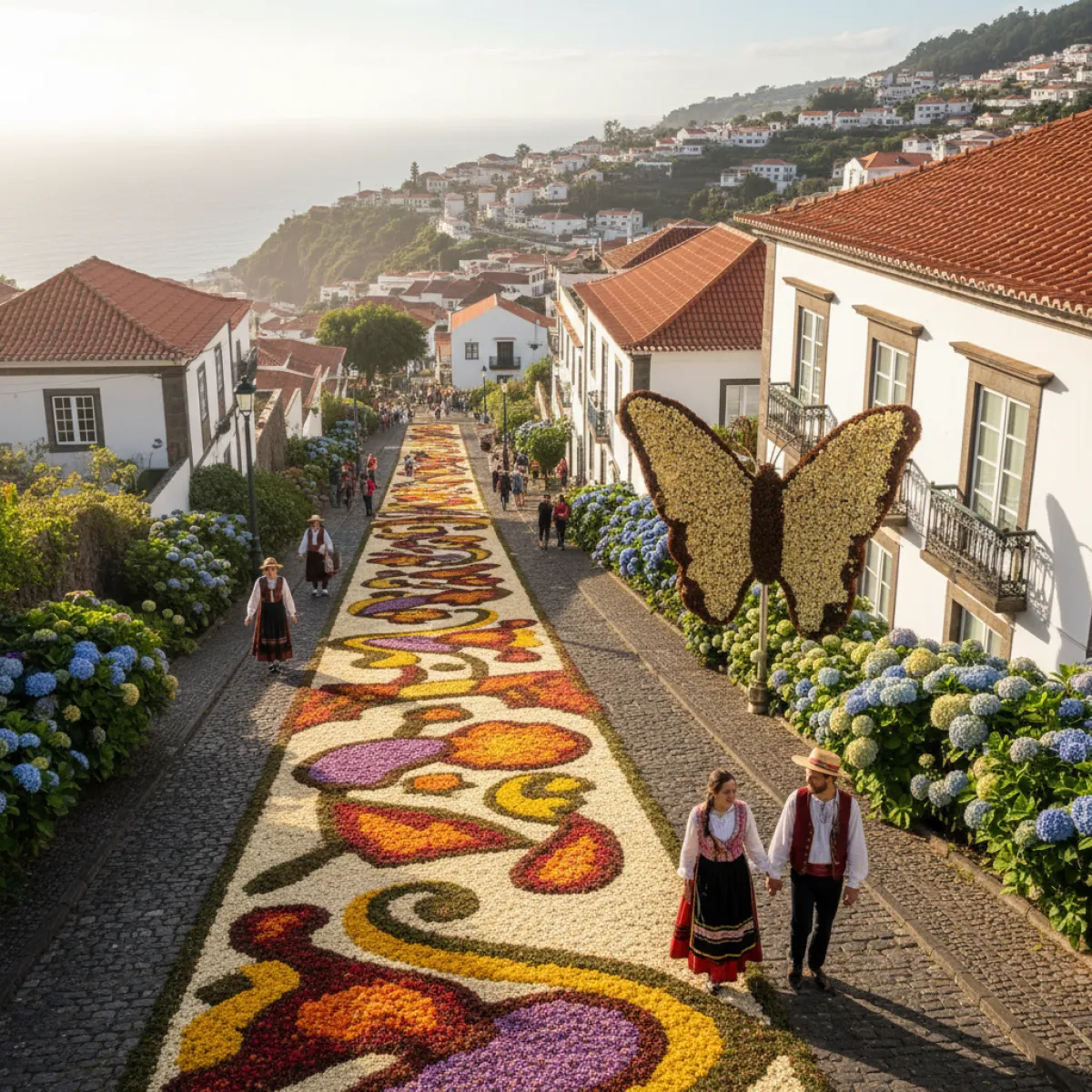
Arriving in Funchal in May is akin to stepping into a Wes Anderson film set that has been aggressively overtaken by an army of over-caffeinated florists. The air doesn’t just smell of the Atlantic; it’s a thick, heady cocktail of fennel (from which the city takes its name), proteas, and the charred sugar scent of queijadinhas fresh from the oven on Rua da Carreira. The Flower Festival isn't just a marketing ploy for the tourism board; it’s a total urban takeover. If you think this is merely a spectator sport for cruise-ship retirees, you’re mistaken. There is a logistical sophistication and a near-obsessive aesthetic in the floral carpets along Avenida Arriaga that would command the respect of any Berlin-based graphic designer.
During these weeks, Funchal vibrates with an intensity that teeters on the edge of chaos, but there’s a method to the madness. The jacarandas are at their peak, carpeting the cobblestones in a shade of purple so vivid it looks like a cheap Lightroom filter come to life. To navigate this without being trampled by a tour group, you need a strategy. Forget the city center between 11:00 AM and 3:00 PM if you value your sanity. The secret lies in the early hours, when the dew still clings to the orchid petals and the waiters at Café Ritz are just beginning to set out the wicker chairs. This is when The Madeira Flower Festival: A Guided Immersion into Funchal's Floral Heritage makes the most sense, revealing the months of manual labor behind every float.
The Parade and the Wall of Hope: The Festival's Pulse
The main event is, of course, the Grand Allegoric Parade. If you haven’t booked a seat in the grandstands months in advance, prepare to sharpen your elbows. Thousands of participants march to a soundtrack that oscillates between stylized folk and Euro-pop, all draped in real blossoms. It’s a spectacle of excess. However, the most genuine moment occurs at Largo do Município. The Wall of Hope (Muro da Esperança), where children place flowers to call for world peace, is a ritual dating back to 1979. It retains an emotional weight that is refreshingly free of commercial artifice. It’s here that you see the character of an island that lives in a constant, tactile dialogue with the soil and the mountain.
Once you’ve witnessed the wall, make your strategic exit from the tourist epicenter. Walk toward the Zona Velha (Old Town), but ignore the tourist traps on Rua de Santa Maria with their painted doors. Instead, seek out the alleyways where the sharp scent of vinegar and garlic signals a proper espetada. Food in Madeira is serious business, and during the festival, prices in the obvious spots tend to spike. Go where the noise isn’t.
Dining Strategy: Casal da Penha
If you’re looking for a gastronomic sanctuary that maintains its dignity amidst the bustle, Casal da Penha is the choice for the discerning traveler. Located near the Lido but far enough away to escape the megaphone-wielding guides, this restaurant is an institution. Don’t come here looking for nitrogen foams or pretentious deconstructions. Come for the fresh catch of the day, the limpets (lapas) grilled with garlic butter and lemon (around €10 a plate), and service that still values professionalism over speed. The upper-floor terrace is the ideal spot for a late dinner, shielded from the brass bands still echoing in the center.
Expert tip: order the octopus or the Madeiran-style tuna steak with milho frito. Milho frito, for the uninitiated, are cubes of cornmeal cooked with kale and savory, then fried until they are crisp on the outside and molten inside. It is comfort on a plate. Pair it with a crisp, dry white wine from the island, perhaps an Atlantis or Terras do Avô, and the floral frenzy of the day will suddenly feel like a distant, pleasant memory.
The Great Escape: Câmara de Lobos
When the surfeit of petals and crowds begins to fray your nerves, do as Winston Churchill did and seek refuge down the coast. A short drive from Funchal brings you to Câmara de Lobos: The Fishing Port That Seduced Churchill. This village isn’t just a postcard; it’s a working harbor. The colorful xavelha boats rest in the bay while fishermen play cards or dominoes in the local taverns.
Stopping at Taberna da Poncha or any hole-in-the-wall with a laurel branch over the door is mandatory. Order a Poncha Regional. It’s made with cane spirit (aguardente), honey, and lemon juice. Avoid the passion fruit or strawberry versions, those are for people who don’t actually like the taste of alcohol. The regional is the real deal, mixed with a "caralhinho" (the traditional wooden stirrer) right in front of you. It costs between €3 and €4 and has the uncanny ability to make any visitor feel like a local in under ten minutes. A word of caution: poncha hits you faster than the cable car climbs to Monte.
Northern Contrast: São Vicente's Brutalism
For a radical shift in scenery, cross the Encumeada pass toward the north coast. While Funchal is sunny and manicured, the north is dramatic, dark green, and battered by the Atlantic. In São Vicente, the visual language changes entirely. If you’re traveling with an eye for design, don’t miss The New Northern Brutalism: Contemporary Art and Design in São Vicente. There is a concrete architecture here that fuses with the basalt cliffs in a way that is almost violent yet strikingly beautiful, a necessary visual palate cleanser after the delicate blooms of Funchal.
If, however, you’re traveling with a crew in tow, the focus shifts. The north demands hiking boots and a tolerance for the mist that can roll in without warning. The guide São Vicente: A Family Expedition to Madeira’s Untamed Northern Coast is essential for planning forays into volcanic caves and the levadas that snake through the Laurissilva forest. Life in the north is slower and cheaper: a prego em bolo do caco (the superior Madeiran steak sandwich) will set you back about €5 at a local café.
Adrenaline vs. Aesthetics: Surfing Funchal
Not everything in Madeira is about looking at landscapes or eating your weight in lapas. If floral contemplation doesn’t satisfy your adrenaline needs, the ocean provides the solution. It might seem counter-intuitive to surf on a volcanic rock, but the waves here are world-class. For those looking to learn or refine their technique, Surf Lessons in Funchal with Surf Clube da Madeira: A Complete Guide is your starting point.
Surfing in the morning and watching the parade in the afternoon is the kind of contrast that defines modern Madeira. Surf Clube da Madeira knows the secrets of the tides and the best spots, like Praia da Alagoa in Porto da Cruz or, on specific days, breaks closer to Funchal. A lesson costs roughly €30 to €45, depending on whether you’re in a group or going private. It’s the perfect way to wash off the city dust and feel the raw power of the Atlantic.
Practical Logistics for Spring Survival
- Transport: Funchal’s center is a gridlock during parades. Use the yellow buses (Horários do Funchal) or ride-sharing apps like Bolt. If you rent a car, park it in the peripheral lots like Almirante Reis and walk.
- Timing: The flower exhibition in Praça da Restauração opens early. Arrive by 8:30 AM to see the displays before the selfie-stick battle begins.
- Costs: An espresso (a "bica") is around €0.80 to €1.50. Dinner for two at Casal da Penha with wine will run you €60–€80.
- What to Wear: Funchal’s weather is temperamental. It can be scorching on the Avenida and raining in Monte fifteen minutes later. Layers are your best friend.
The Flower Festival is a rite of passage. It can be commercial, it can be loud, but it is Funchal at its most exuberant. If you know where to eat, when to flee, and which poncha to drink, you’ll head home smelling of orchids and convinced that spring in Madeira has no rival in Europe. Just don’t try to take the seeds on the plane without checking the rules, customs is far less poetic than the Wall of Hope.