Funchal Flower Festival: A Local’s Strategy for the Floral Chaos
Forget the generic tourist pamphlets. In Funchal, the Flower Festival is a blend of botanical obsession and organized chaos, learn where to find the best limpets and how to escape to the wild North when the petals become too much.
The Scented Siege of Funchal
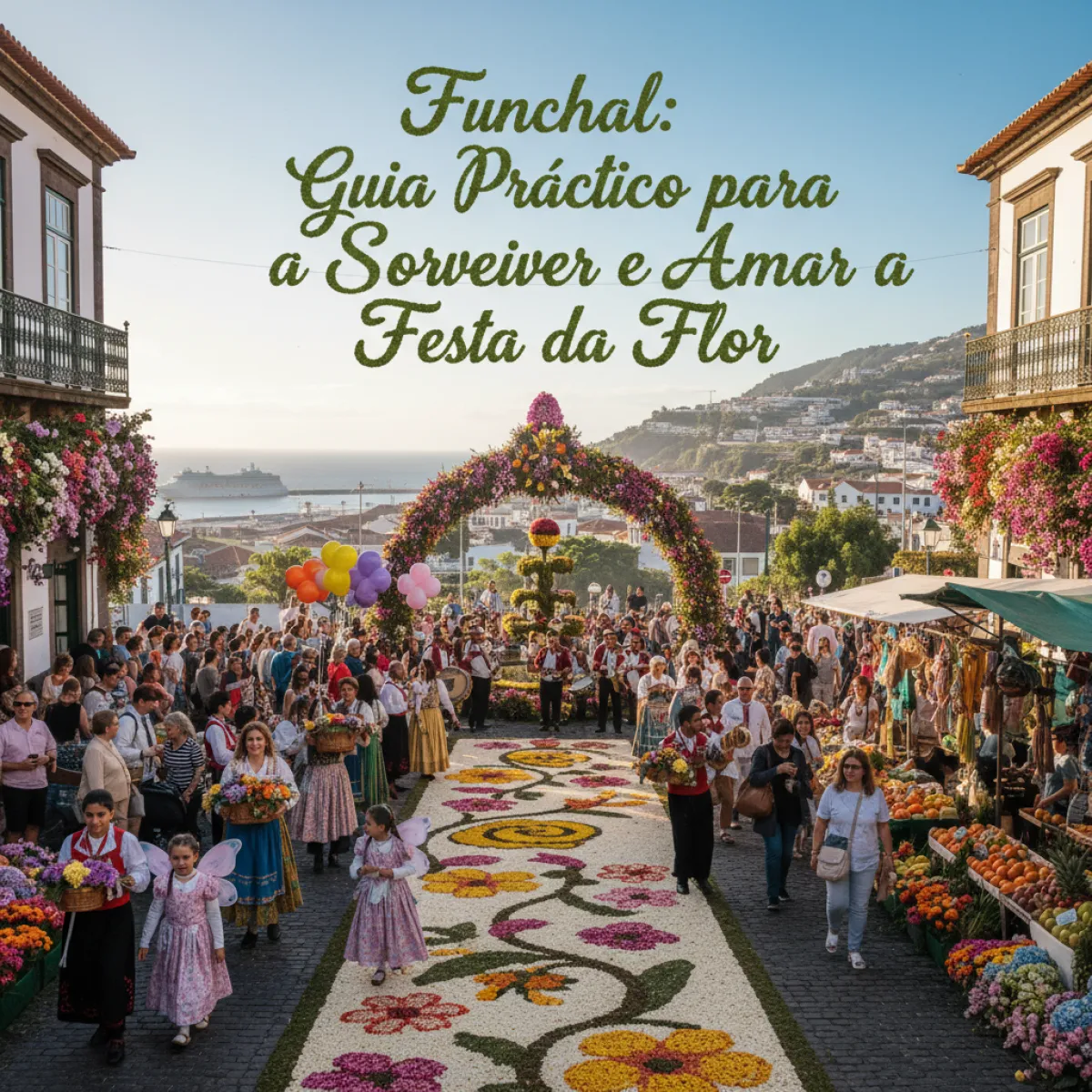
May in Funchal is not for the faint-hearted, or the pollen-sensitive. The city transforms into an amphitheater of colors so saturated they make most travel documentaries look like they were shot in black and white. But let’s be blunt: the Flower Festival (Festa da Flor) is, for many, an exercise in navigating a sea of cruise ship passengers who descend upon the harbor with the strategic subtlety of a Roman legion. However, if you know where to step, this is the moment Madeira reveals its true self, a fascinating mix of botanical obsession, fierce community pride, and a staggering ability to turn tons of petals into ephemeral masterpieces.
The preparation doesn't start on the main stage; it starts in the quintas and gardens clinging to the island’s steep hillsides. The smell of cut gorse and eucalyptus begins to drift down the mountains in open-back trucks weeks before the first parade. To truly understand what drives this island, forget the VIP grandstands for a second. Focus on the grandmother spending her afternoon meticulously pinning anthurium stems to a wire frame, or the groups of local women assembling flower carpets on Avenida Arriaga with the precision of watchmakers. It is a Herculean task, performed with the quiet patience of people who know their work will wilt in forty-eight hours.
The Wall of Hope: A Rare Moment of Sincerity
One of the most authentic rituals takes place in the Largo do Município. The "Wall of Hope" (Muro da Esperança) is where children from across Funchal bring a single flower to place in a temporary wall, symbolizing a call for world peace. It could easily feel like a Hallmark cliché, but there is a gravity to the event that commands respect. Watching a toddler struggle to reach the wall with a giant protea is a window into the island’s soul (the non-metaphorical kind). The square, with its wave-patterned calçada and the austere facade of City Hall, provides a stark, basaltic backdrop to the fragility of the floral display.
If you want to skip the Sunday parade’s logistics, this Saturday morning immersion is far more rewarding. To get the full context of why the island goes through this annual madness, consider The Madeira Flower Festival: A Guided Immersion into Funchal's Floral Heritage. You’ll learn that the Bird of Paradise (Estrelícia) isn't just a pretty plant; it’s a cultural icon that traveled from South Africa only to decide that Madeira was where it truly belonged. Understanding the ecology turns a simple sightseeing trip into a study of the island's botanical identity.
Where to Eat: Escaping the Tourist Menu
When the crowds on the seafront become unbearable, do what the locals do: head slightly uphill or towards the edges of the Lido district. Casal da Penha is my go-to recommendation for anyone who values substance over spectacle. Forget the places with laminated photos of burgers on the sidewalk. At Casal da Penha, the service is old-school, the terrace is a shaded sanctuary, and the fish is treated with genuine reverence. Order the grilled limpets (lapas), they arrive sizzling in their own shells with garlic butter and a squeeze of lemon, and follow it up with the black scabbard fish (espada) with banana. It sounds like a culinary disaster on paper, but it’s a Madeiran classic that works brilliantly when done right.
Expect to pay around 60-80 euros for a proper lunch for two, including wine and starters. It’s the kind of place that feels special without the hollow pretension of the "concept restaurants" that have recently plagued the city center. It’s reliable, high-quality, and refreshingly devoid of gimmicks.
The Antidote: Saltwater and Scenic Harbors
After forty-eight hours of smelling pollen and watching people dressed as hydrangeas, you will need a sensory palate cleanser. My advice? Get in the water. Surf Lessons in Funchal with Surf Clube da Madeira: A Complete Guide offers a radical shift in perspective. The Atlantic here is deep, ink-blue, and incredibly refreshing. Looking back at Funchal from a surfboard, with the mountains rising like green walls behind the terracotta roofs, is a view no viewpoint (miradouro) can replicate. It’s the perfect way to wash off the festival’s intensity.
If surfing isn't your speed, drive ten minutes west to Câmara de Lobos: The Fishing Port That Seduced Churchill. Yes, it’s where Churchill painted, and yes, it’s the spiritual home of poncha, but look past the postcards. Watch the colorful "xavelhas" (fishing boats) come in and the fishermen playing cards in the shade. It’s a town that has managed to maintain its gritty, salty edge despite its proximity to Funchal. Grab a "Prego" (steak sandwich) in a local kiosk and drink a Nikita (a weirdly delicious mix of beer, ice cream, and pineapple) while watching the tide.
The Northern Escape
For those who find Funchal’s floral fever a bit too manicured, the North Coast is the ultimate corrective. Driving through the Encumeada tunnel is like passing through a portal to a different island. Where the South is sunny and terraced, the North is wild, foggy, and dramatic. São Vicente is the place for travelers who want to see the Madeira of myth. The guide São Vicente: A Family Expedition to Madeira’s Untamed Northern Coast is an excellent resource for navigating this territory where the Laurissilva forest seems ready to reclaim the asphalt at any moment.
Madeira isn't just about rustic traditions, though. If you have an eye for architecture, check out The New Northern Brutalism: Contemporary Art and Design in São Vicente. There is a specific style of modern architecture on the island that uses raw concrete to dialogue with the volcanic basalt cliffs. It’s a sharp, intellectual contrast to the soft petals of Funchal, reminding you that Madeira is a place of deep complexity and rugged design.
Practical Survival Tips
- Transportation: Do not try to drive into central Funchal on the weekend of the main parade. Roads are closed arbitrarily, and parking becomes a mathematical impossibility. Use the yellow public buses or walk.
- Poncha Strategy: Never buy pre-mixed poncha from a gift shop. True poncha is made to order using a "caralinho" (the wooden stirrer). If you don't see fresh lemons being squeezed, walk away.
- Footwear: Funchal is built on an incline. The Portuguese pavement (calçada) is beautiful but can be dangerously slippery when wet or worn down. Wear sneakers with good grip. Leave the heels for the floats.
- Market Timing: The Mercado dos Lavradores is a must-see, but go at 8:00 AM on a Friday. By Saturday afternoon, it’s a stage set for tourists where the prices of "passion fruit-hybrids" soar to absurd levels. Always ask for the price per kilo before you commit.
At the end of the day, the Flower Festival is a testament to the island's ability to convince itself, and the rest of the world, that it is the center of the botanical universe for a week. And you know what? It actually is. Lean into the chaos, drink the poncha, and appreciate the sheer effort it takes to turn a volcanic rock in the middle of the Atlantic into a garden. Just make sure you know where the nearest exit to the North Coast is when the petals start to overwhelm you.