Faro on a Plate: Regional Dishes and Where to Find Them
Xarém with cockles costs nine euros at the right taverns and is the dish that separates those who know the real Algarve from those who only saw the postcard. An honest guide to Faro's table, from the pastry shops downtown to the cataplanas that take forty minutes to reach you (and rightly so).
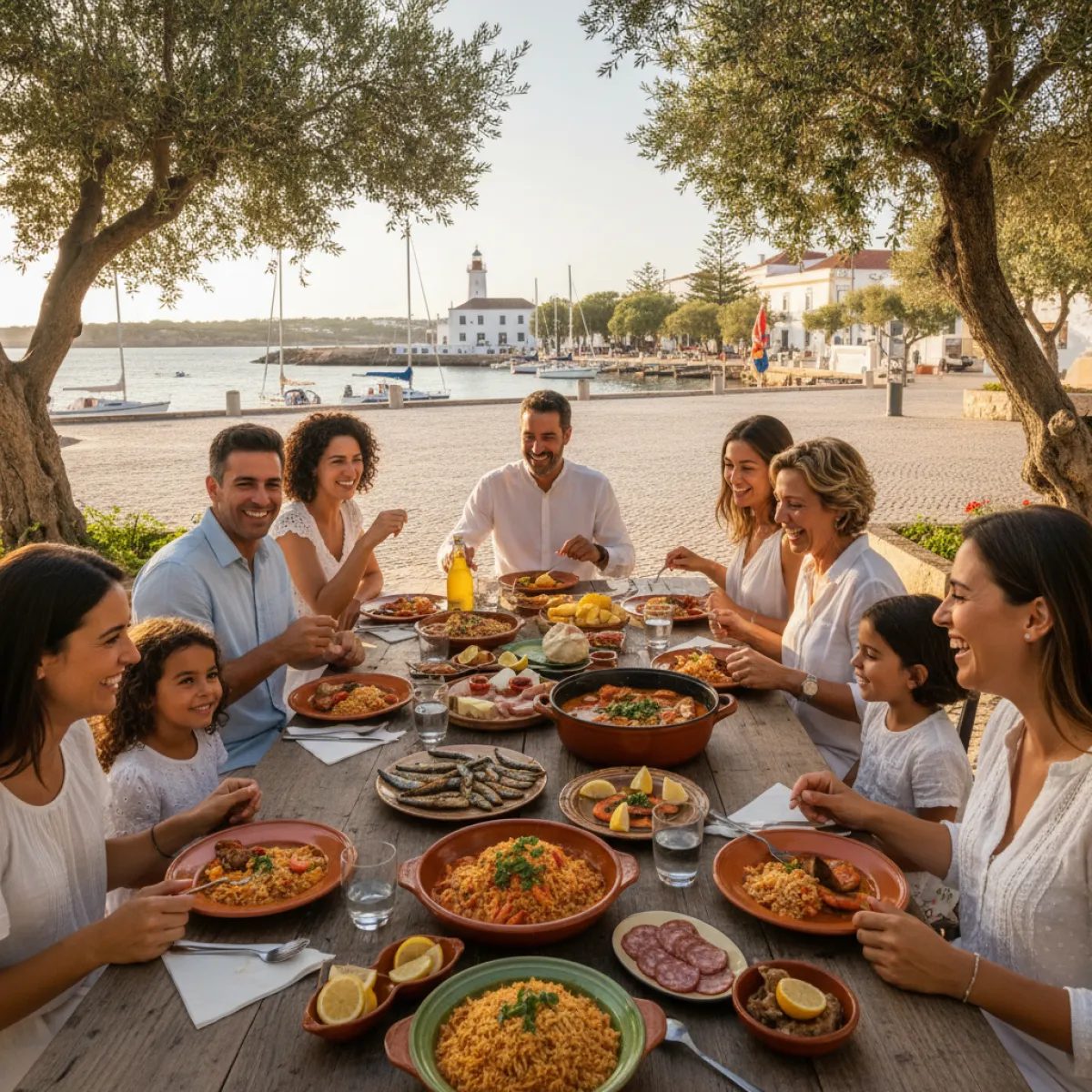
There's an old line among Faro locals: if you want to understand a city, follow the smell of bread at seven in the morning. In Faro, that smell comes from two or three streets in the old town, mixes with the salt from the Ria Formosa, and by eight is layered with roasted coffee drifting out of the pastry shops. That's where any serious conversation about eastern Algarve food has to start, and that's where this guide starts.
Faro has a culinary identity problem, and the problem is simple: tourists land at the airport, rent a car, and bolt for Albufeira or Lagos without eating a single decent meal in the city. Worse, they eat the laminated version of Algarve cuisine (frozen sardine, factory cataplana, seafood rice with one and a half prawns) and go home convinced they know the food of the south. They don't. The good cooking in Faro happens in the places where lawyers from the courthouse have lunch, where hospital staff drink their morning coffee, in the taverns where you hear more Portuguese than English. This article is about those places, and what to order when you get there.
Algarve breakfast starts with puff pastry
Before we get to the fish and the rice dishes, we need to talk about pastry, because in Faro the day begins, and often ends, at the door of a pastelaria. Algarve convent sweets are different from the rest of the country: there's a lot of almond (which grows in the hills above Faro), dried fig, egg yolk, and cinnamon. The result is a family of dense, perfumed sweets that owes more to North Africa than to Lisbon.
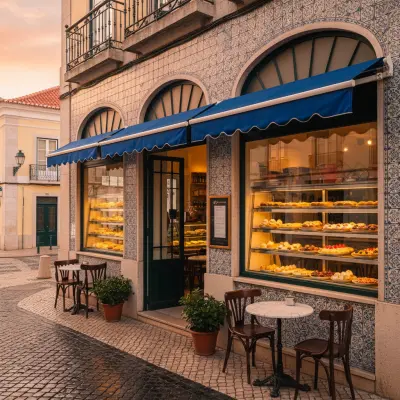
Start at Pastelaria Gardy, on Rua de Santo António, the city's pedestrian artery. It's the historic pastry shop of Faro, founded in the mid-twentieth century, and it's the kind of place where Faro locals still argue about football over an espresso and a custard tart. Order the folar de Olhão around Easter, or a D. Rodrigo, that caramel-and-egg-yolk sweet wrapped in silver paper that looks like a child's candy and tastes like a Syrian dessert. The coffee is decent, the service is efficient without being friendly (which, in my view, is the correct balance for a neighbourhood pastry shop), and prices are fair.
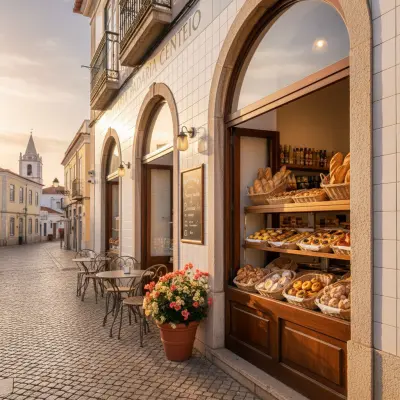
Those who prefer bread before sugar should cross over to Pastelaria Padaria Centeio. The name says it all: bread is the protagonist here, and there's a dark, dense, slightly sour rye that's the best partner imaginable for mountain goat cheese or a slice of black pork presunto from the Alentejo. Order a simple sandwich, with their bread and a thread of olive oil, and you'll understand why the Algarvians lean savoury for breakfast rather than sweet. Open early, closes early, avoid lunch peak if you want a table.
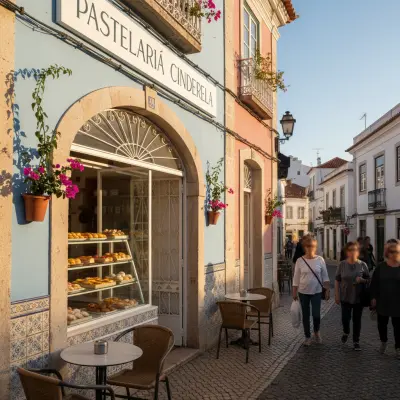
Third in the trilogy is Pastelaria Cinderela, and this is my favourite for reasons that aren't entirely objective. It has the look of an eighties Portuguese pastry shop that nobody bothered to renovate (thank God): marble counters, glass cases with yellow light, staff who know the regulars by name. The almond cakes are excellent, but what you have to order is the morgado de figo, that compact bar of dried fig, almond, chocolate and cinnamon that looks like a medieval energy bar and is probably how the Moors survived desert crossings. Pair it with a medronho if it's after eleven. If it's before, ask for a galão.
The fish: what to order and where
The Ria Formosa is the engine of all Faro cooking. Everything that comes out of it, and a lot does, defines the flavour of the eastern Algarve. There's a real difference between eating fish in a Faro restaurant and one in Lagos or Albufeira: here, the fish is local, caught by small boats, and on your plate within hours, not days.
Xarém with cockles
Start with the least touristy and most essential dish: xarém. It's a corn flour porridge, a direct cousin of Italian polenta and Angolan funje, slow cooked in stock and served with conquilhas (the small pale clams gathered from the sandbanks of the Ria Formosa). It's a fisherman's dish, cheap, dense, and in neighbourhood taverns it costs between nine and twelve euros. It's also the dish that separates those who know the real Algarve from those who only know the postcard.
Where to eat it? Look for taverns away from Rua de Santo António, ideally near the municipal market or around the train station. If a menu is in English only, walk away. If it's in Portuguese, English and German, with German below Portuguese, you're probably fine.
Cataplana of monkfish and prawn
Cataplana is the Algarve's flagship dish, and also the most sabotaged. A good monkfish and prawn cataplana should smell of coriander, saffron and ripe tomato, and never, ever, contain french fries inside (yes, that happens in tourist traps). The real thing has thick chunks of monkfish, coastal prawns, boiled potato, onion, pepper, garlic, white wine, coriander, and the right time on the stove. It's not a dish for one: minimum portion is two, average price is 22 to 30 euros per person, and it takes 25 to 40 minutes to reach the table. If it arrives in five minutes, run.
Grilled squid with sweet potato
The Algarve produces the best sweet potato in Portugal, especially the one from Aljezur (which has Protected Designation of Origin), and there's a very Faro way to eat it: boiled or grilled, alongside whole grilled squid with sea salt and olive oil. It's the kind of dish that doesn't photograph well but that, eaten at the right moment, by the Ria, with a cold local white wine, makes you forgive a lot. Around 14 to 18 euros at the more honest places.
Razor clam rice
The lingueirão (that long mollusc that looks like a living cigar) is a Ria Formosa specialty, and it's sublime in a soupy rice with coriander and chilli. It's even better when eaten after you've seen it come out of the sand: if you go kayaking through the Ria Formosa, there's a good chance you'll cross paths with shellfish gatherers picking them by hand at low tide. Eating what you watched being harvested is one of the few forms of food tourism that still makes sense.
The convent sweets (and where to eat them properly)
We've covered the coffee-and-pastry shops, but there's a tier above: convent sweets. Faro was a convent town for centuries, and from those convents came a tradition of egg yolk, almond and sugar sweets that survives in a few houses, especially around festivals and specific seasons.
- Dom Rodrigos: egg threads with almond, wrapped in silver paper. Sweet, intense, eat one at a time.
- Morgados de figo: already mentioned, the best thing that ever happened to dried fig.
- Estrelas de figo: a more elegant variant, star-shaped, filled with almond.
- Queijinhos de figo: small, round, look like cheese but are pure fig and almond.
- Bolo de tacho: cooked in a copper pot, with cane honey, spices, dried fruit. Rare, ask before you go.
Most of these can be found at the three pastelarias above, but if you want to go deeper, head to Faro's municipal market in the morning (Monday to Saturday, opens at seven) and look for the stalls run by older women still making them at home. Prices are low, quality is high, and the conversation, if you speak Portuguese, is worth double.
Where to have lunch like a Faro local
If you want a serious, long lunch in Faro, ignore the historic centre (which is expensive and average) and look for one of the taverns on the parallel streets. The rule is simple: if there are more local cars than foreign plates parked outside, you're in the right place. The daily set lunch runs 9 to 13 euros, includes soup, bread, main, coffee, and sometimes a drink.
What to order:
- Sopa de cação: yellow broth of dogfish (a small shark), bread, garlic, vinegar. Robust, sour, perfect.
- Estupeta de atum: salad of shredded salt-cured tuna, tomato, pepper, onion, olive oil. A western Algarve snack you see less and less.
- Polvo à lagareiro: grilled octopus with garlic, olive oil, smashed potatoes. Pricey, but Faro's value-for-money is better than Lisbon's.
- Bifanas: simple, but Algarve bifanas with chilli sauce are a religion of their own.
When to go, and how to plan your day
Faro eats best between October and May. In summer, the central restaurants are full, prices climb, and service speeds up to the point that the meal loses its character. In October, with 22 degrees at lunchtime and the Ria at low tide, it's a different city.
A decent food day in Faro might look like this:
- 08:30: breakfast at one of the pastelarias above. I pick Cinderela, but it's personal taste.
- 10:00: walk through the old town, with a detour through the city's hidden corners (Bone Chapel, Cathedral, Arco da Vila).
- 11:30: municipal market, taste convent sweets, coffee and a medronho.
- 13:00: lunch at a tavern outside the centre. Book ahead, even if it looks empty.
- 15:30: boat trip through the Ria Formosa, let lunch settle on the water.
- 19:30: petiscos and wine at a small bar in the centre. No cataplana, please.
For those who want to dig deeper into the local culture, I recommend this guide to traditions and experiences of the authentic Algarve, which covers the human side of the city and helps explain why people eat what they eat. And if you're travelling with kids, it's worth glancing at our Silves family guide, because a day in Silves pairs very well with Faro food (it's forty minutes by car, and Silves has the best market in the Algarve on Saturdays).
What to avoid
I'll be direct, because the reader deserves honesty. Avoid:
- Restaurants with photos of the dishes by the door. In Portugal, this is almost always a bad sign.
- Cataplanas served in less than twenty minutes.
- Sangria. It's not Algarve, it's not Portuguese, and locals drink beer or white wine.
- Menus in seven languages. Three is the maximum acceptable.
- Waiters who jump to English before you've said a word. It's polite, but it's a symptom.
And if you head west, remember that the cooking changes. The Lagos neighbourhood guide is useful for understanding the western coast, where dishes carry more Moroccan influence and less ria fish. They're different Algarves, and both deserve a visit.
The essentials, in three sentences
Faro is eaten slowly, outside the centre, and with time. The good cooking here is from the Ria, the hills, and the convent, in that order of importance. And if you leave the city without trying xarém with cockles, a morgado de figo, and a cataplana made the right way, you didn't meet Faro: you only met its shadow at midday.