Faro by Bike: Cycling Routes for Every Level
Faro is one of the few genuinely flat cities in the Algarve, and that changes everything. Five cycling routes, from a ten-kilometre loop through the old town to a sixty-kilometre crossing to Tavira, with strategic stops for coffee and pastries.
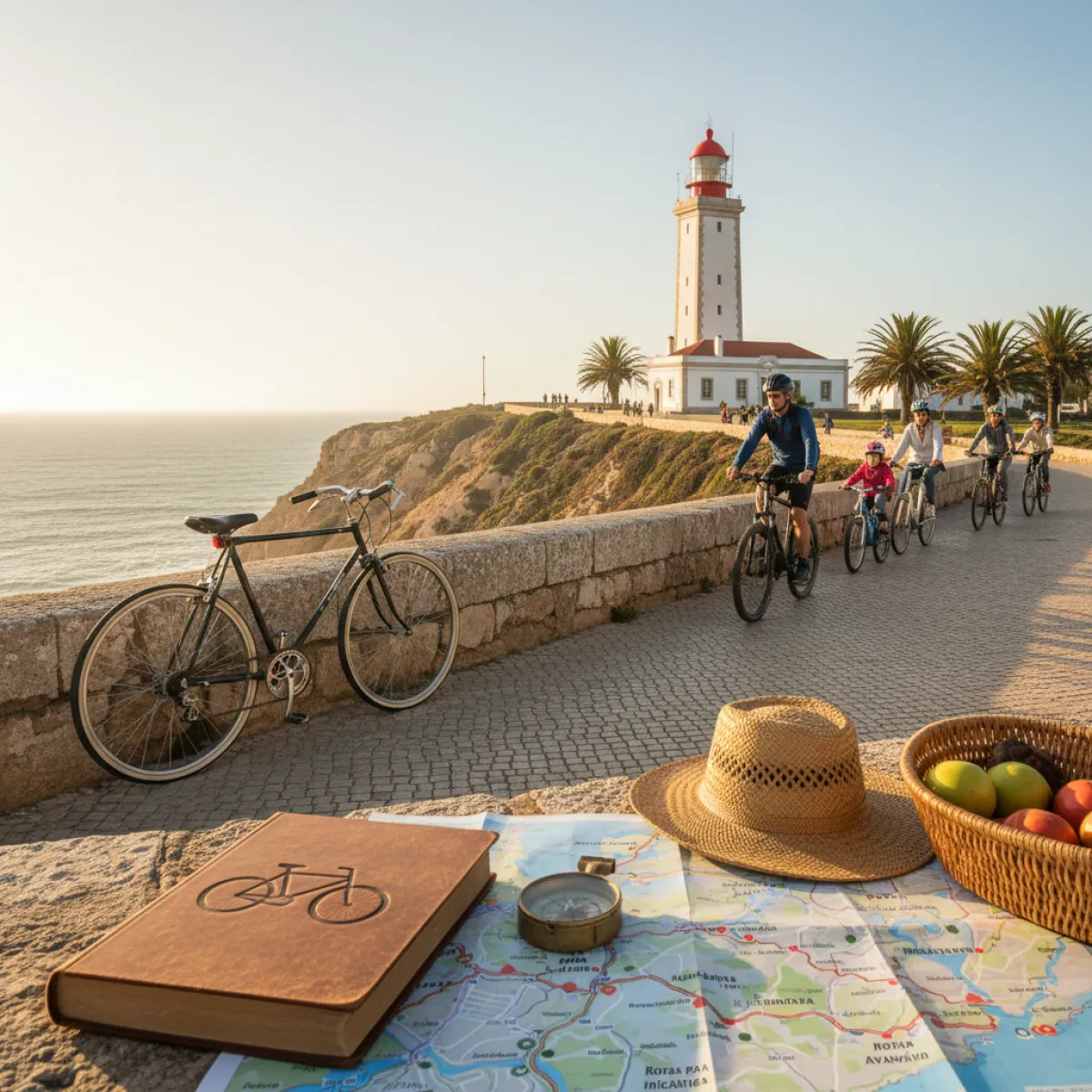
There's something nobody tells you about Faro: the city is flat. Not flat the way Lisbon pretends to be flat in the Baixa before launching you up Calçada do Combro. Genuinely flat. Faro sits at sea level, leaning against the Ria Formosa, and the topography is so forgiving that cycling here is less an exercise and more a way of moving slower than a car and faster than a walk. It's exactly the right pace for a city that refuses to be hurried.
The problem is that almost nobody cycles in Faro. Tourists rent scooters, locals drive, and the bikes you see on the streets usually belong to foreign residents who figured out the obvious before everyone else. A pity. Because between the marina, the Ria, the Mata de Vale do Carro pine forest, and the dirt tracks winding toward Olhão, Faro has probably the best network of flat cycling routes in the Algarve. Here are the ones worth doing, from "haven't ridden a bike since I was twelve" to "I own lycra and I'm not afraid to wear it".
Before you ride: where to rent and what it costs
You'll find several rental shops near the marina and the train station. Prices run from 10 to 15 euros a day for a decent urban bike, climbing to 20 to 30 euros for an e-bike, which I'd recommend if you're planning more than 20 km or carrying a child seat. Check opening hours locally, but most shops open around 9am and close in the late afternoon.
One practical tip: always ask them to throw in a proper lock and bring a full water bottle. Public fountains exist in Faro but they're not numerous, and in summer dehydration arrives before hunger. Helmets aren't legally required for adults on urban roads, but wear one anyway.
Level 1: The city loop (10 km, flat, no stress)
This is the route for people who haven't pedalled in years, for families with small children, and for anyone who wants to see Faro the way it should be seen: inside the old walls, along the edge of the Ria, with strategic coffee stops.
Start at the marina. Leave the train station, cross the Jardim Manuel Bivar, and enter the old town through the Arco da Vila. Inside the walls, the bike becomes more of an excuse to get lost in the cobbled lanes than a means of transport: you'll have to go slowly, sometimes on foot, because Portuguese cobblestones are merciless on thin tyres. It doesn't matter. This is the old heart of the city, and any honest guide will tell you it deserves to be explored without rush, ideally following the trail of the Algarve capital's lesser-known corners, from silent courtyards to small chapels nobody photographs.
Exit through Porta Nova, turn left, and follow the seawall to the Doca de Recreio. From here on the road is smooth asphalt with views over the Ria. If it's Saturday morning, there's a market at Largo Dr. Francisco Sá Carneiro, and the detour is worth it just for the fish stalls.
Mandatory stop: halfway round, swing back into the centre and find Pastelaria Gardy on Rua de Santo António. It's one of the oldest pastry shops in Faro, with a marble counter and waitresses who'll call you "querida" even if it's your first time inside. Order a galão and a folhado de salsicha. You'll re-enter Portugal's caloric framework, but that's the point.
Level 2: Faro to Olhão along the ecovia (24 km round trip, flat)
This is the most genuinely useful route. There's a partly signposted ecovia connecting Faro to Olhão through the salt-pan and channel landscape of the Ria Formosa. It's not a perfect bike path, you'll share the road with cars in places and ride packed earth in others, but it's dead flat and the scenery makes up for every bump.
Leave Faro through the airport district, cross the salt pans (you'll see flamingos if you're lucky and it's between October and March) and enter Olhão through the old quarter. Halfway, there are improvised viewpoints over the Ria where you can stop to photograph fishing boats coming up the channel.
In Olhão, lock the bike near the municipal market. The two market pavilions, one for fish and one for fruit and vegetables, are the best in the Algarve, and that's not local exaggeration. Have lunch on the market terrace at one of the small restaurants doing fresh-grilled fish to order. Cycle back to Faro the same way but in the late afternoon, with the sun dropping over the salt pans. The light turns apricot, and even people who don't enjoy cycling will admit it was worth it.
Level 3: Faro to Estoi and Milreu (30 km round trip, undulating)
Now we're in "I know what I'm doing" territory. The climb from Faro to Estoi isn't alpine but it's steady, around 200 metres of cumulative elevation over 12 km. For a regular cyclist, it's a pleasant morning. For a beginner, it's where the more expensive e-bike rental pays for itself.
The destination earns the effort. Estoi has a restored pink palace, a formal garden that looks lifted from a Romantic painting, and a few minutes' ride away are the Roman Ruins of Milreu, with mosaics that survived two thousand years almost intact. Check opening times locally before you go, because both the palace and the ruins have closing days that shift seasonally.
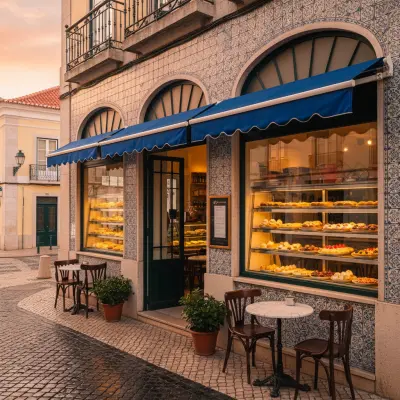
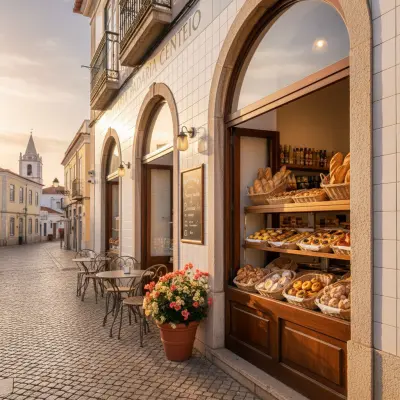
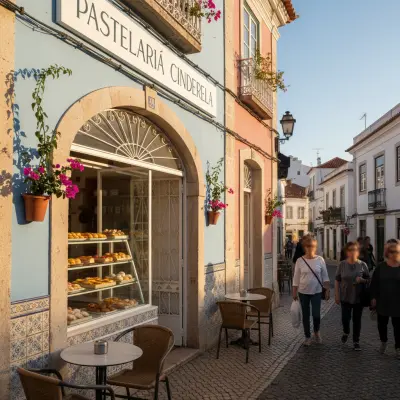
Back in Faro, do the technical stop at Pastelaria Centeio or, if you want something quieter and more old-school, at Pastelaria Cinderela. At either, ask for a D. Rodrigo if there's any left, or a morgado, and drink real water before throwing yourself at the sugar.
Level 4: Praia de Faro across the bridge (16 km round trip, flat but windy)
Praia de Faro sits on Ilha de Faro, connected to the mainland by a narrow bridge. The route is short and flat, but there's one detail nobody mentions: the wind. On nortada days, pedalling back is a small test of patience. Go early or at the end of the day, avoid the central hours when traffic to the beach is heaviest.
The bridge is narrow and shared with cars, so dismount and walk the bike across if you feel uneasy. On the other side, the beach road has a decent shoulder and takes you to the eastern tip of the island, where the asphalt ends and the dunes begin.
If you're already on the island, consider locking the bike and taking a boat trip through the Ria Formosa from Faro in the late morning. It pairs perfectly with the morning's cycling. For a more active and quieter experience, you can also explore the Ria by kayak and skip the tour boats altogether, which is probably the best way to see the channels from the inside.
Level 5: Faro to Tavira along the coast (60 km one way, flat)
This is the serious route. Sixty kilometres from Faro to Tavira, passing Olhão, Fuseta, and Cabanas. It's flat, it's beautiful, and it's too long to do as a round trip in a day unless you're a regular cyclist. The practical solution: ride out, train back. Regional trains between Tavira and Faro accept bikes outside peak hours, and the ticket costs just over 3 euros. Confirm the schedule locally and check that bikes are allowed on the day you go.
Do this on a weekday, outside high season. The secondary roads between Olhão and Fuseta cross orchards of fig, carob, and orange trees, and there are stretches where you'll be alone on the road for kilometres. In Tavira, have lunch at the Mercado da Ribeira (now mostly a craft gallery, but with decent restaurants on the upper floor) or at one of the restaurants on Praça da República. Catch the late afternoon train back to Faro with shaking legs and the reasonably justified feeling that you did something significant with your day.
When to go and what to avoid
The best time to cycle around Faro is between March and May, and again between October and November. Temperatures hover at 20 to 25 degrees, there's little wind, and the roads are quiet. In July and August, ride before 10am or after 6pm, or you'll be contributing to the Algarve's heatstroke statistics.
Avoid riding the N125 between Faro and Olhão, even if the GPS tries to convince you it's the shortest way. It's a fast road with little shoulder and lorry drivers in a hurry. Whenever possible, stick to secondary roads and ecovias, even if they add 20 minutes. The difference between a good and a bad cycling day in the Algarve is exactly that choice.
To better understand what you're riding through, it's worth reading beforehand about the traditions and lived culture of the authentic Algarve, especially if you're stopping in small villages. Knowing the difference between a real cataplana and a tourist version is a decent form of respect for the place.
Riding with kids (and keeping your sanity)
Faro is one of the most family-friendly cycling cities in the Algarve, precisely because of the flat topography. For young children, stick to Level 1 and Level 2. For older kids on their own bikes, the route to Praia de Faro works well if you avoid peak traffic.
If you're planning to extend the cycling trip into other parts of the Algarve with kids, take a look at the honest family guide to Silves, which will save you time and false expectations. And for a complementary visit to another interesting Algarve city by bike, the Lagos neighborhood guide is a good starting point, although Lagos is considerably hillier than Faro.
The closing argument
There are cities in Portugal where cycling is an act of faith against the topography, against the traffic, against a local culture that insists on treating cyclists as moving obstacles. Faro is not one of them. Here, riding a bike is simply the most logical way to move between the historic centre, the Ria, the beaches, and the inland orchards. It's cheap, it's quiet, and it gives you an intimacy with the Algarve no rental car can offer. Rent a bike for one day. By late afternoon you'll realise you wasted precious time doing other things.