Estremoz by the Cup: Cafés Worth Sitting Down For
In Estremoz, the gadanha is the pastry that defines the town, and Pastelaria Formosa has been making one of the best since 1961. A café crawl around Rossio Marquês de Pombal, with everything worth ordering at the counter.
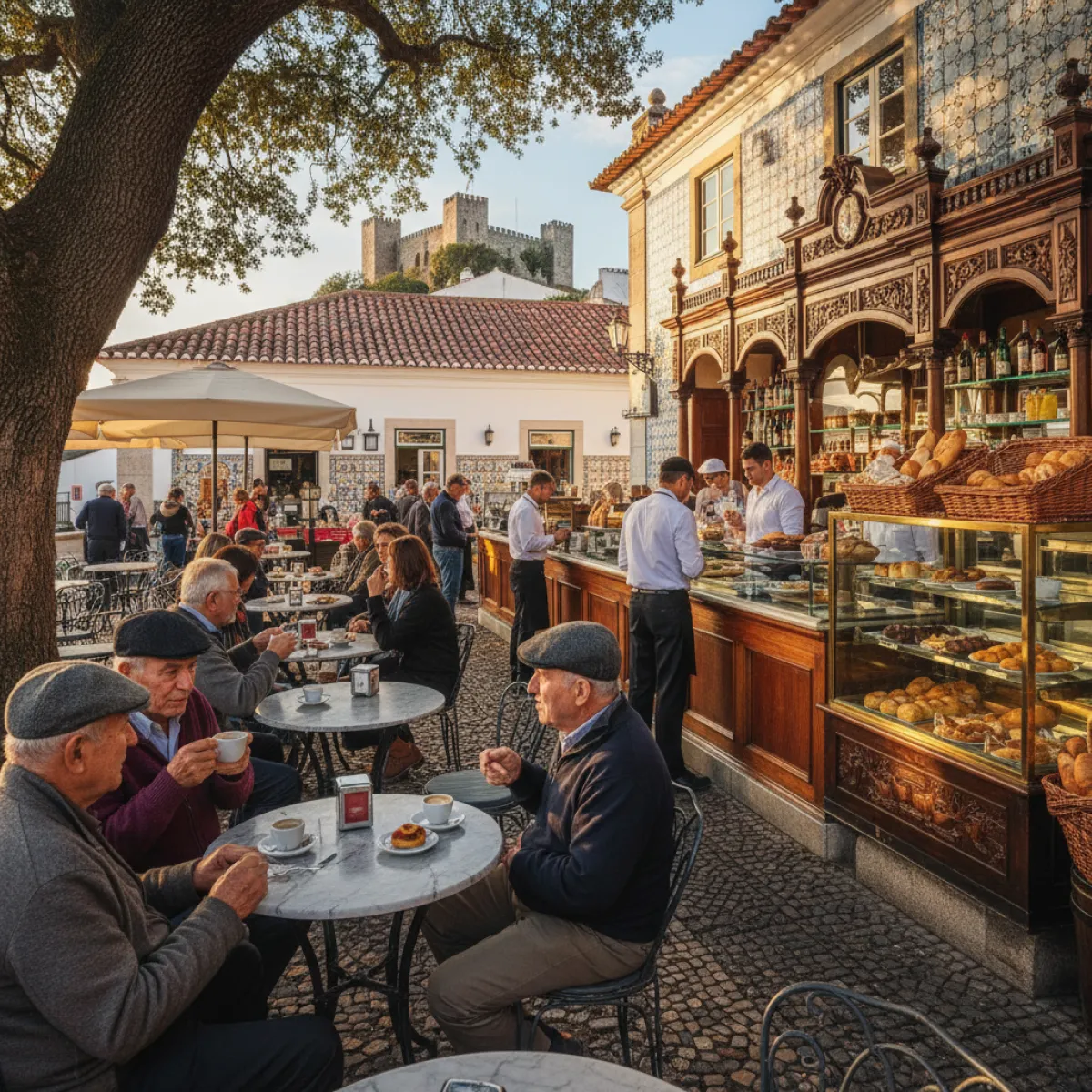
Estremoz wakes up slowly. It's a town that doesn't rush, and you can tell by how people drink their coffee: standing at the counter with a newspaper open on the marble, or sitting on the terrace overlooking Rossio Marquês de Pombal watching the world go by. The square, which many consider one of the largest and most beautiful in Portugal, is the obvious starting point for any café crawl. This is where the town breathes, especially on Saturday mornings when the traditional market fills the Rossio with stalls selling cheese, cured meats, olive oil, and fruit from the surrounding countryside.
But let's get to the point: where to sit, what to order, and what to skip.
Café Alentejano: the classic that needs no introduction
At number 13 on Rossio Marquês de Pombal, Café Alentejano has been here for over sixty years. The interior retains a faded art deco charm, with mirrors and dark wood that seem untouched since the 1960s. It's not pretty in the Instagram sense. It's beautiful because it's real.
Come in the morning for coffee and toast. The coffee is strong, as it should be, served without fanfare. At lunchtime, the Alentejano transforms into a full restaurant, and the value for money is among the best in town. But for our purposes, the right moment is breakfast or mid-afternoon. Sit by the first-floor window, order a bica (espresso), and look down at the Gadanha Lake below. There are worse ways to lose twenty minutes.
A word of warning: service can be a touch brusque, especially when it's busy. It's not unfriendliness, it's the Alentejo pace. Don't rush and you'll be fine.
Pastelaria Formosa: where you come for the pastry
Formosa is Estremoz's pastry shop of record, open since 1961. Also in the Rossio area, you can smell puff pastry baking early in the morning. This is where you should try two local specialties you won't easily find elsewhere: the gadanha and the queijada de Estremoz.
The gadanha is an almond and egg cake, moist inside, moderately sweet. Its name comes from the statue in the middle of Gadanha Lake, right there in the square. It's a pastry that defines Estremoz, and Formosa makes one of the best. The queijada de Estremoz uses fresh sheep's cheese instead of the curd cheese more common in other regions. The result is a thin, crispy shell with a creamy, slightly savoury filling. Order both with a galão (milky coffee) and you won't need anything else until lunch.
The toast on Alentejo bread is also excellent: dense bread, thick crust, toasted just right. If you want something more substantial around midday, there are homemade soups and empadas that solve the problem without any fuss.
Formosa opens at 7:30am on weekdays, 8:30am on Sundays, and closes at 7pm. Come early on Saturday to catch the market on the Rossio and get the freshest pastry.
Pastelaria Aliança: ice cream and coffee, no complications
Aliança is more low-key than Formosa, but it has two strengths: the coffee is consistently good and the ice cream is among the best in town. It's not the kind of place that shows up in tourist guides, which means you'll find more locals here.
Come in the late afternoon when the Alentejo heat starts to break. Order an ice cream and a coffee, sit down, and observe. Aliança doesn't try to impress anyone, and that's exactly why it works. For elaborate convent sweets, stick with Formosa. For everyday coffee, Aliança is more than enough.
Café Águias d'Ouro: the Rossio from a different angle
Café Águias d'Ouro is another of the historic establishments lining the Rossio. Less touristy than the Alentejano, it has the advantage of a terrace where, on Saturday mornings, you're right in the middle of the market action. The coffee is solid, the atmosphere is local, and the price is honest. Don't come expecting specialty coffee or latte art. Come expecting a well-pulled espresso and a place where nobody is going to hurry you along.
What to order (and what to skip)
In Estremoz, and across the Alentejo more broadly, convent sweets reign supreme. The traditional pastries of this region are made with eggs, almonds, and sugar, a direct inheritance from the convents scattered across the Alentejo landscape. Beyond the gadanha and queijada, look for sericaia: a moist cake made with eggs, flour, and cinnamon, traditionally served with plums from nearby Elvas. Not every pastry shop has it, but when you find it, order without hesitation.
What to skip? The industrial croissants and the cakes that look like they came out of a factory. At any of these pastry shops, ask what's been made in-house that day. The answer will always be better than what's front and centre in the display case.
As for coffee: bica or galão, depending on the hour. Morning: galão with hot milk. After lunch: short, strong bica. Expect to pay between €0.70 and €1.20 at any of these places. Check locally, because prices change.
The Rossio as ritual
What makes Estremoz special isn't any single café but the ritual. The Rossio Marquês de Pombal square is the stage, and the cafés are the box seats. On Saturdays, the traditional market fills the square with stalls of local products: sheep's cheese, cured sausages, honey, aromatic herbs, hand-painted ceramics. Have breakfast at Formosa, wander the market, and finish with a second coffee at the Alentejano. That's a morning well spent.
On Sundays, the rhythm changes. The square is emptier, the cafés quieter, and there's a particular stillness that only small interior towns can offer. It's the ideal day to climb to the upper town, walk along the castle walls, and come back down for a longer stop at a terrace.
After coffee
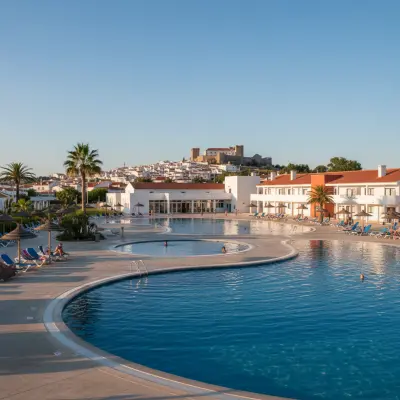
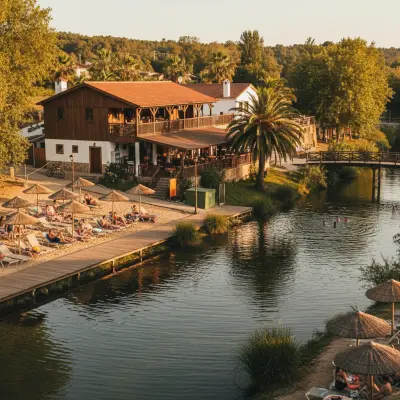
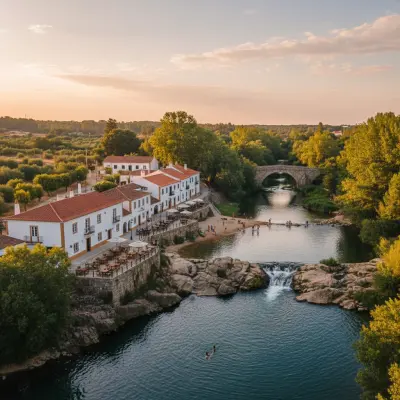
Estremoz is compact. In a day, you can see the upper town, the municipal museum, and still have time to rest. In warmer months, the Complexo de Piscinas Municipais de Estremoz is a good way to escape the Alentejo heat. If you prefer something wilder, Praia Fluvial de Fronteira or Praia Fluvial das Azenhas d'El Rei offer a swim in scenery quite different from the coastal beaches.
And if Estremoz leaves you wanting to explore more of the Upper Alentejo, Portalegre is less than an hour away. We have a guide to a real weekend in Portalegre, free of tourist traps, and another on where locals actually eat in Portalegre, which pairs well with a trip through the region.
Getting there and how long to stay
Estremoz is about ninety minutes from Lisbon via the A6. Train isn't practical: the nearest station with regular service is Évora, and from there it's another 45 minutes by car. Driving is your best bet. Parking in the centre is easy outside market days.
For a café crawl, half a day is enough. But Estremoz deserves at least one night. The town in the late afternoon, with that golden Alentejo light hitting the white marble facades, is a hard argument to counter.