Elvas: The Geometry of Defiance and the Aesthetics of the Border
Explore Elvas, the Alentejo's stone sentinel, where military architecture reaches its peak. A guide to navigating the world's largest bulwarked fortifications and tasting its unique borderland gastronomy.
The Anatomy of Resistance: Entering Elvas
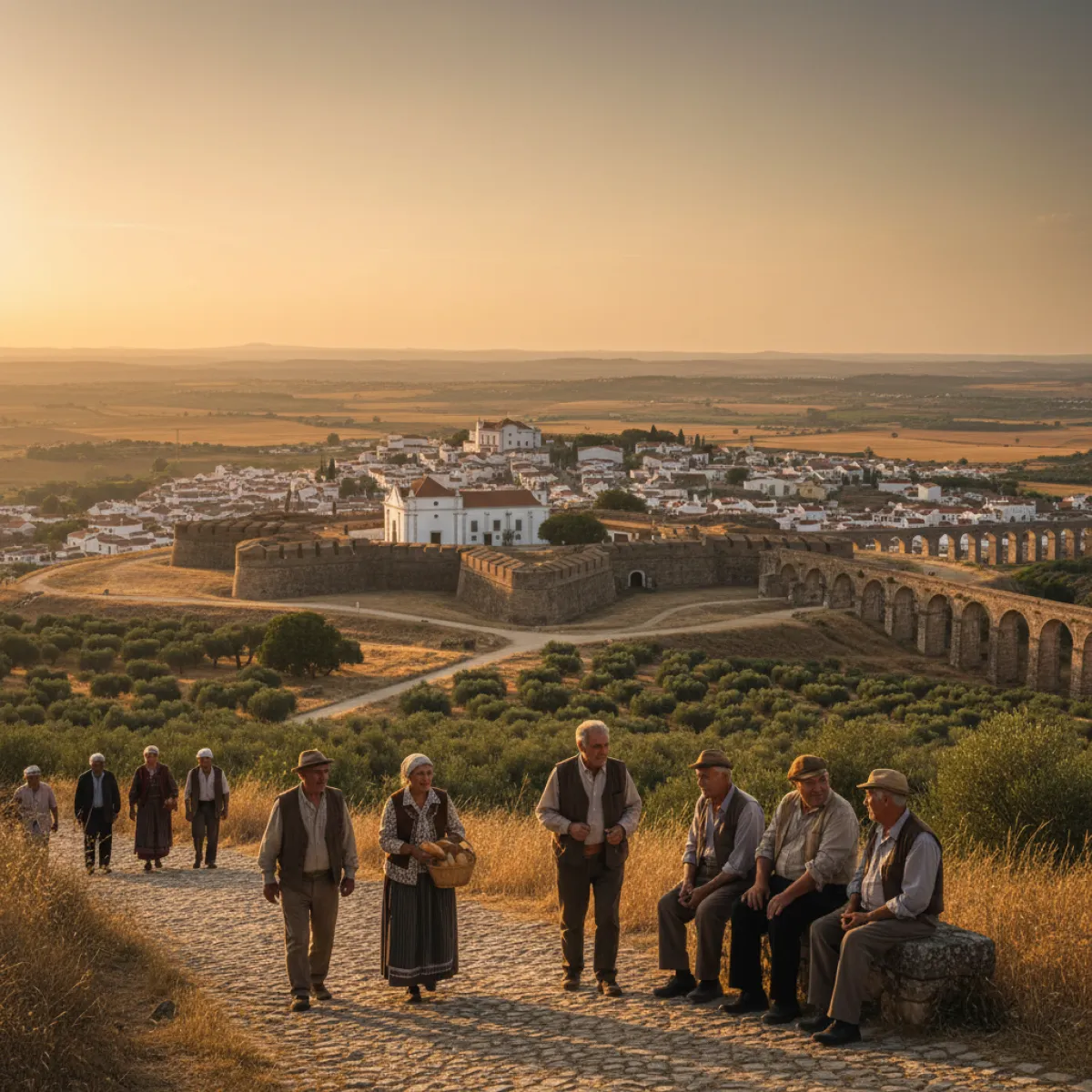
Arrival in Elvas is defined by a singular, overwhelming structure: the Aqueduto da Amoreira. This 8.5-kilometre sequence of four-story arches does not merely transport water; it announces the scale of human ambition in this corner of the Alentejo. Completed in the 17th century after more than a hundred years of labour, it serves as a prologue to a city defined by its refusal to fall. Elvas is a garrison town, a military masterpiece carved into the dry hills of the borderlands. While Stone and Silence: A Sentimental Guide to Évora captures a city of poetic decay and intellectual depth, Elvas is its tactical sibling, hard-edged, vigilant, and uncompromisingly functional.
The Star of the Border: A Masterclass in Bastions
To walk the perimeter of Elvas is to study the evolution of gunpowder warfare. The city is the world's largest site of bulwarked fortifications, a title that sounds academic until you stand in a dry moat and look up at the sheer volume of masonry. This is not the whimsical fortification of a medieval castle; it is the precision engineering of the 17th and 18th centuries. Every angle of the star-shaped walls was calculated to allow for interlocking fields of fire. The town is not just protected by walls; it is encased in a weapon. For the visitor, this means a literal hike through history. The ramparts offer a stark contrast to the Alentejo's softer landscapes. If you have spent time following Évora: The Slow Pulse of the Alentejo, the shift in energy is palpable. Here, the pulse is not slow; it is disciplined.
Forte da Graça: The Sovereign Summit
Visible from miles away, the Forte de Nossa Senhora da Graça sits atop the highest hill like a stone crown. It is arguably the most sophisticated military structure of its era. Inside, the architecture is a labyrinth of strategic intent. The Governor’s House, with its elegant central courtyard and panoramic views into Spain, sits atop layers of barracks, cisterns, and powder magazines. The dry moats and drawbridges are kept in a state of preserved readiness. Visiting requires at least two hours and a willingness to navigate steep stone steps. It is a place that prioritizes survival over comfort, a theme that resonates throughout Elvas. While One Day in Évora: A Precision Itinerary for the Alentejo Capital focuses on the seamless flow of heritage, a day in Elvas is an exercise in vertical exploration and military logic.
Intramural Elvas: Granite and Tradition
Inside the walls, the town is a dense grid of whitewashed houses and narrow lanes that funnel towards the Praça da República. The former Cathedral (Igreja de Nossa Senhora da Assunção) dominates the square. Its architecture is heavy, with thick buttresses that reflect the town's defensive mindset, yet it contains surprising Manueline flourishes. The streets are less manicured than those of its western neighbours, maintaining an air of lived-in authenticity. You will see local residents carrying bags of fresh bread from small padarias, ignoring the UNESCO plaques. The town demands to be explored on foot, but be prepared for the incline; Elvas is a city of slopes. The atmosphere is quiet, almost austere, reflecting a history of border tension that only evaporated in the late 20th century.
The Alentejo Table: Lamb, Plums, and Patience
Dining in Elvas is an unpretentious affair, centered on the heavy, honest flavours of the border. The Ensopado de Borrego (lamb stew) is the definitive order, tender chunks of lamb served over thick slices of Alentejo bread that have been soaked in a herb-heavy broth. It is food for soldiers and farmers, designed to sustain. However, the true icon of the city is the Elvas Plum. These green gages are preserved through a painstaking process of repeated boiling in sugar syrup and sun-drying, a tradition that dates back centuries. They are traditionally served alongside Sericaia, a soufflé-like dessert of eggs, milk, and cinnamon. A meal at a local institution like 'Taberna do Adro' in nearby Vila Fernando is an essential experience for anyone seeking to understand the regional palate. Budget approximately €30 to €50 for a full dinner including a robust local red wine.
Practicalities: Navigation and Climate
Elvas is a high-contrast destination. In winter, the wind off the Spanish plains is biting; in summer, the heat is a physical weight, often exceeding 40°C. The ideal time to visit is during the shoulder seasons, late March to early June, or October. Navigating the town requires sturdy footwear, as the cobblestones are uneven and the forts require significant walking. Budgeting for the trip should include entry fees for the primary forts (Graça and Santa Luzia) and the Military Museum. While many treat Elvas as a brief stop on the way to Madrid or Lisbon, it warrants a dedicated stay of at least two days to truly grasp the scale of its defensive landscape. It is not a city of 'sights' in the traditional sense, but a singular monument to the endurance of the Portuguese state.
