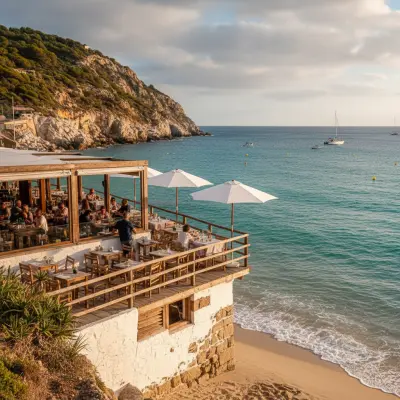
Easter in Arrábida: Folar, Local Sweets and What to Eat
Easter in Arrábida is all about the table: folar at breakfast, tortas de Azeitão at tea, spoonable sheep's cheese, and Moscatel to close. A greedy guide between mountain and sea in April.
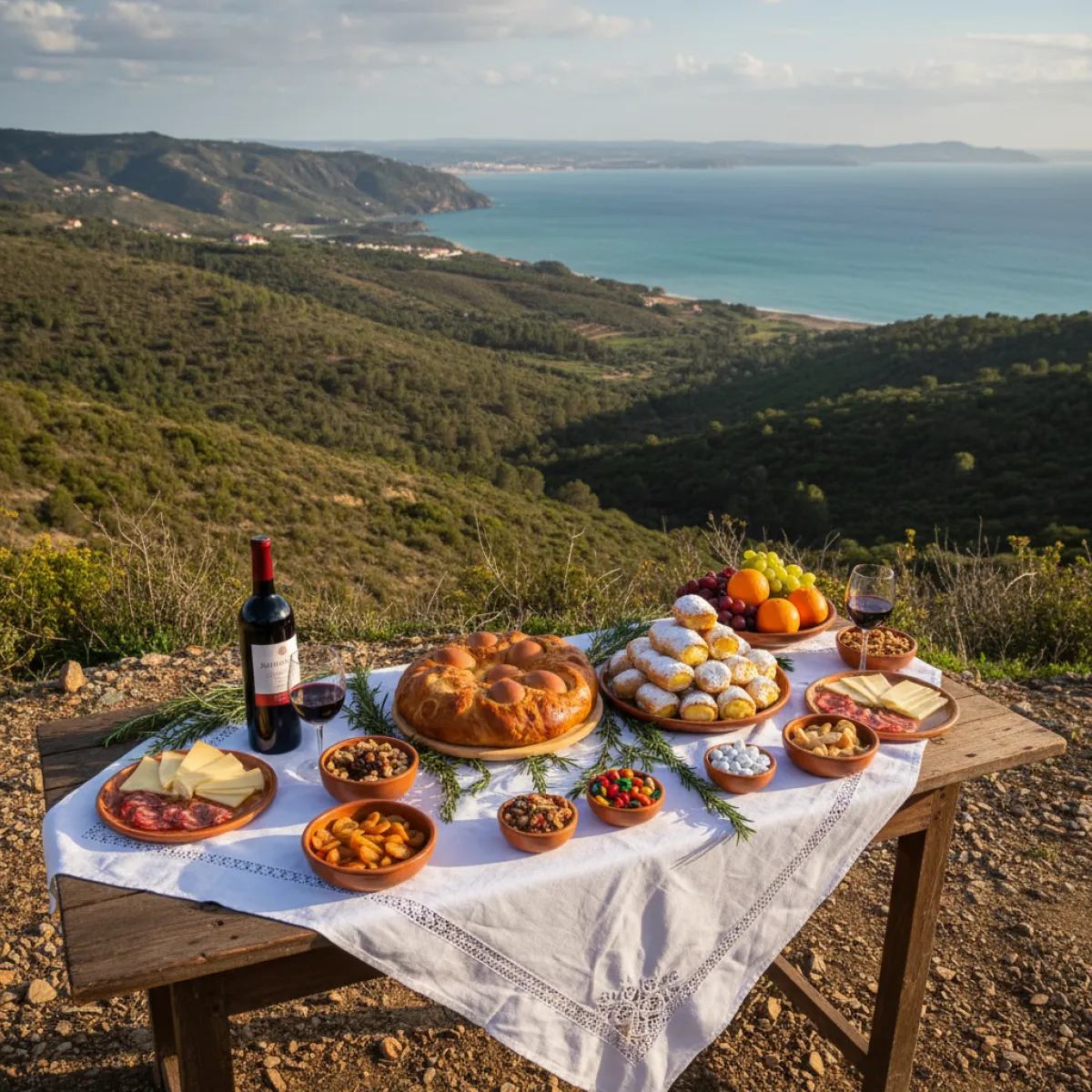
There's a reason Easter in Arrábida doesn't feel like Easter anywhere else. It's not just the weather, though April here already hints at summer, with afternoons pushing 22°C and a light that makes the turquoise water at Praia do Portinho da Arrábida look unreal. It's that the Easter table in this region brings together mountain and sea, convent pastry and sheep's cheese, Moscatel and folar, in a combination no other corner of Portugal can match.
If you come to Arrábida in April only for the beaches, you're missing half the trip. The other half is on the table.
Folar: Easter Bread That Still Matters
Let's start with the basics. Folar da Páscoa is, at its core, an enriched bread, eggs, olive oil, sometimes cinnamon, with whole hard-boiled eggs tucked into the dough and held in place by strips of pastry shaped into a cross. Tradition says godparents give folar to their godchildren. In practice, every decent bakery between Setúbal, Azeitão, and Sesimbra starts making them from mid-March, and they sell out before Easter Sunday.
In the Setúbal region, folar tends to be sweeter than in the north, where versions are often stuffed with cured meats and sausage. Here, the dough gets sugar, lemon zest, and sometimes aniseed, giving it a fragrance that fills the kitchen. It's a dry sweet, not sticky or overly sugary, and you eat it sliced at breakfast or tea time, ideally with a strong coffee.
If you can't find it at a neighbourhood bakery, try the traditional pastry shops in Azeitão. The village lives off its sweets the way other places live off beach tourism. Speaking of which...
Tortas de Azeitão: The Sweet That Justifies the Detour
If you can only eat one sweet thing in Arrábida, make it a torta de Azeitão. Full stop. Don't overthink it. It's a thin roll of egg-based pastry with a filling of egg cream and almond, dusted with cinnamon, and with a texture unlike anything else in Portuguese pastry. Moist inside, slightly crisp outside, and with that lemon-and-cinnamon flavour that's the signature of southern convent sweets.
The recipe supposedly came from the Alentejo in the early 20th century, brought to Azeitão by a family that opened Pastelaria Regional Cego, founded in 1901, and still a reference today. That's where many locals buy theirs, though other pastry shops in the village make perfectly good versions. Expect to pay around €3-4 per individual torta, or you can buy a whole one for the Easter table.
If you enjoy exploring Easter pastry traditions across the region, it's worth the detour to Mafra, we have a dedicated guide to Easter sweets in Mafra that pairs well with this trip.
Arroz Doce: The Classic That Never Fails
Another mandatory presence at the Easter table is arroz doce, Portuguese rice pudding. In the Setúbal area, it's made with plenty of cinnamon and lemon, and the surface is decorated with patterns drawn in cinnamon powder, a tradition taken surprisingly seriously. In many families, decorating the arroz doce is almost a competition. If you visit a tasca or regional restaurant during Easter week, ask for it as dessert. It's usually available even when it's not on the menu.
Beyond the Sweet: The Savoury Side of Easter
Easter in Arrábida isn't all sugar. Roast kid (cabrito assado) is the centrepiece of Sunday lunch in many homes across the region, oven-roasted with potatoes, garlic, and rosemary, basted with white wine. Many restaurants around Setúbal and Azeitão feature cabrito as a daily special throughout Holy Week, but book ahead. Restaurants fill up at Easter.
Then there's queijo de Azeitão, and here we enter sacred territory. This soft sheep's milk cheese, with Protected Designation of Origin, is made with raw milk and thistle rennet. When it's perfectly ripe, you cut off the top and eat it with a spoon. It's creamy, slightly tangy, and absolutely addictive with Alentejo bread and a glass of red from the Setúbal Peninsula.
To accompany all of this, sweet and savoury, Moscatel de Setúbal is non-negotiable. A glass of aged Moscatel, served cool, with notes of orange blossom, caramel, and dried fruit, is the perfect closing to any Easter meal. Look for bottles from producers like José Maria da Fonseca, whose cellar in Azeitão can be visited (check hours locally, especially during the holiday).
After the Meal: What to Do on a Full Stomach
April in Arrábida is the perfect month to balance table and nature. The Serra da Arrábida is green and in bloom, the trails are walkable, and the suffocating summer heat hasn't arrived. A hike through the Natural Park after Easter lunch is almost medicinal.
And then there are the beaches. Even though the water is still fresh, and it is, don't kid yourself, Praia do Creiro and Praia da Figueirinha in April are a completely different experience from the August chaos. Easy parking, near-empty sand, and the kind of quiet you only get off-season. Bring a towel, a book, and the leftover folar.
For those who want to extend the trip and explore the broader cultural context of the region, Lisbon's local traditions and neighbourhoods make a natural complement, especially since many of the Easter traditions still alive in Arrábida share roots with the same convent and popular influences.
Getting There and Where to Stay
Arrábida is about 40 minutes from Lisbon via the A2 motorway. Driving is the most practical option, especially if you want to visit both the beaches and the villages between Azeitão and Sesimbra. TST buses (Transportes Sul do Tejo) connect Setúbal to Azeitão, but weekend and holiday schedules can be limited, check locally.
For accommodation, Azeitão and Sesimbra both have good options, from rural tourism to small hotels. In April, prices are still in low season, meaning you can find double rooms from around €60-80 per night. Book ahead if you're coming over the Easter weekend.
The Essentials: What You Can't Miss
- Torta de Azeitão, at any pastry shop in Azeitão. Cego is the historic reference.
- Folar da Páscoa, look for it at local bakeries from mid-March. Take some home.
- Queijo de Azeitão, buy a whole one (around €5-8) and eat it with a spoon and bread.
- Moscatel de Setúbal, a glass after dessert. Or two.
- Arroz doce, ask at the restaurant, even if it's not on the menu.
- Cabrito assado, if you find it, book a table.
Easter in Arrábida is one of those experiences that rewards anyone willing to go beyond the obvious. The beaches are extraordinary, yes, but the table is where it all comes together. The folar broken at breakfast, the torta de Azeitão at tea time, the cheese eaten by the spoonful before the Moscatel, it's a sequence that, once lived, stays in memory with more force than any beach photograph. Come hungry. Leave longing to return.