Climbing in Linhares da Beira: Routes, Rock and Beds
Linhares da Beira has the castle, has the paragliding, and has clean granite asking for ropes. An honest guide on routes, federations, and why sleeping well matters more than you think.
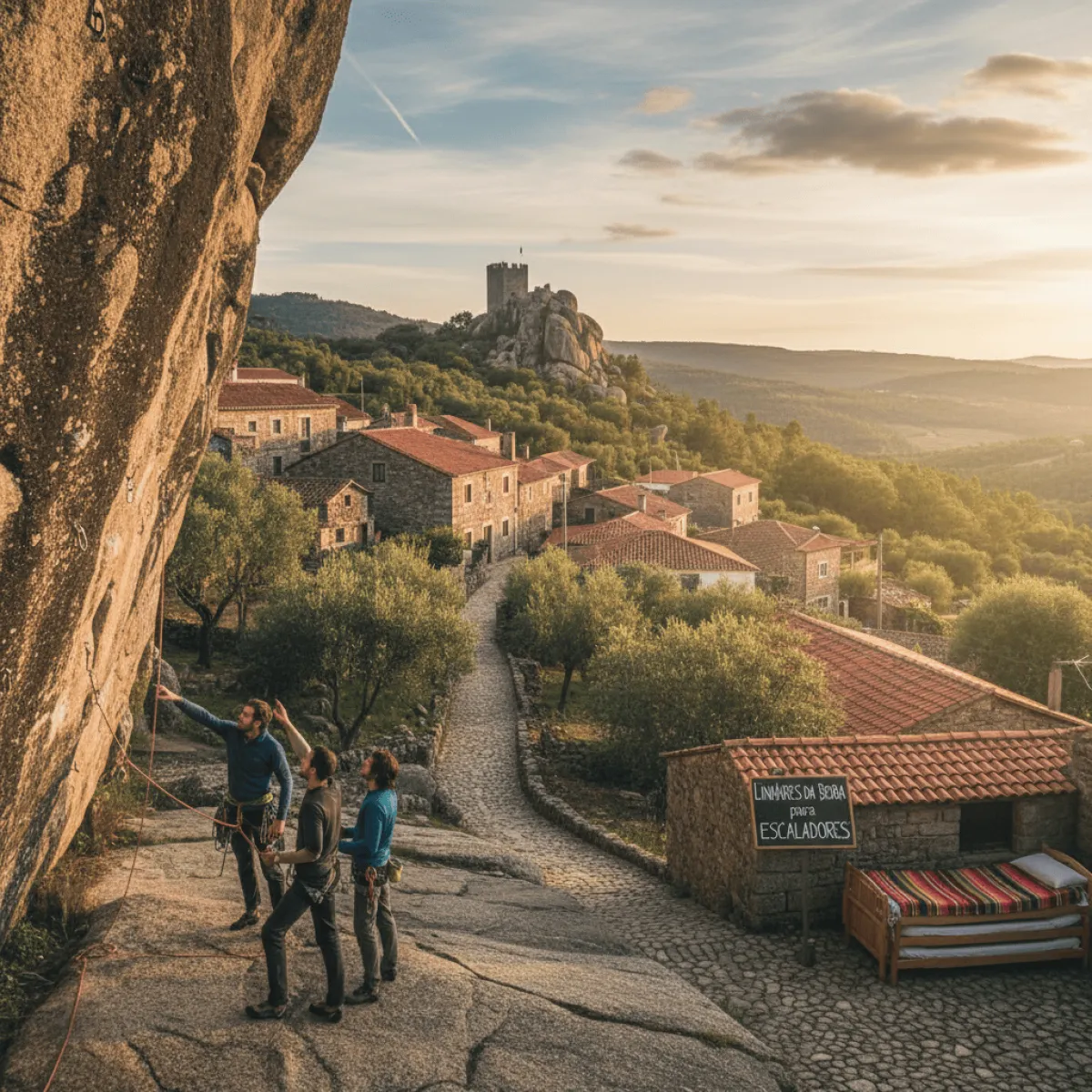
There is a moment, usually around eight in the morning, when the granite of Linhares da Beira is still cold to the touch and the Mondego valley below looks like a map laid out to dry. That is when you put your climbing shoes on. Two hours later the rock will be hot like a kitchen plate and any decent crimp will demand twice the effort. This is the first thing to understand about climbing in Linhares: the mountain has hours, and they are not negotiable.
For most visitors, Linhares da Beira is associated with its Templar castle, the coats of arms carved into the granite houses, and one of the best paragliding launches in the country. Climbing is the lesser known chapter, partly because the local community prefers it that way. There is no circus here, no queue like in Sintra. What there is, instead, is quality granite, predictable wind most of the year, and a historical village that works perfectly as a base camp.
The terrain: what this rock actually is
The Beira massif is medium to coarse grained granite, with superb friction when it is clean and dry. The texture is abrasive, the sort that eats finger skin in three days, and that punishes climbers who overgrip out of habit. Cracks are clean, often parallel, and several sectors invite a more classical trad style with removable protection. There are also blocks scattered down the slope for bouldering, although the local bouldering community is tiny and most of the beta lives in field notebooks that pass from hand to hand.
What sets Linhares apart from other Portuguese granite destinations is not the height of the routes, it is the setting. You climb with a view of the Mondego snaking below, you hear cow bells, and by mid afternoon there is almost always a paraglider drawing figure eights above your head. For anyone who has done every route in Cantanhede or grown tired of the lines at Sintra, this is another planet.
Main sectors and what to expect
Most of the activity is concentrated on the southern and western slopes around the castle, where the walls catch morning sun and fall into shade after two in the afternoon during summer. Grades typically range from 4c to 7a, with a healthy concentration of moderate routes between 5c and 6b, which is where most climbers on holiday want to be. There are open projects in higher grades, but they are poorly marked and depend on local knowledge.
A few lines to keep in mind:
- Castle sector: short routes, 12 to 18 metres, good concentration of 5+ and 6a. About fifteen minutes on foot from the village.
- Mondego walls: longer, 20 to 30 metres, technical cracks. This is where regulars spend the day.
- Slope blocks: scattered, require a crash pad and patience to brush off lichen. Do not expect an organised bouldering area.
A serious note about fixed gear: some sectors were bolted more than a decade ago, and the state of the hangers and anchors is variable. Before clipping with confidence, look at what is in front of you. If the bolt looks tired, it is. Always carry extra slings, a length of cord for reinforcing dodgy anchors, and never give up your helmet: loose rock in the less frequented zones is real, not paranoia.
Federations, insurance and the boring but essential part
In Portugal, climbing falls under the Federação de Campismo e Montanhismo de Portugal (FCMP), which issues the federated sports licence. It is not mandatory for outdoor climbing, but it is strongly recommended: it covers accident insurance, gives access to certified training, and in the event of mountain rescue can save you an unpleasant invoice from the national emergency service INEM. The licence costs, depending on the modality, between 30 and 50 euros per year, and is issued through an affiliated club. The clubs in the Coimbra and Covilhã regions are the most active on the west side of the range.
For high mountain and technical climbing, the Federação Portuguesa de Montanhismo e Escalada (FPME) is the reference for progression courses on rock, self rescue and route opening. If you are getting started seriously, take at least one basic course before venturing out alone in Linhares. This is not a place to learn how to clip.
For foreign visitors: a UIAA licence from any equivalent European federation is, in practice, accepted for insurance purposes by local clubs when they organise joint outings. Always check the geographical coverage of your policy before travelling. In case of serious accident, the number to call is 112; mention "climbing" and the approximate location, and coordination with the INEM mountain team is usually quick.
Where to sleep, and why not to camp
Linhares is a small historical village. There is no organised campsite, and sleeping in your car near the paragliding launch is frowned upon by local authorities. Some people do it, but I would not recommend it: the village lives off respectful tourism, and it only takes a minority leaving rubbish to shut doors for everyone else.
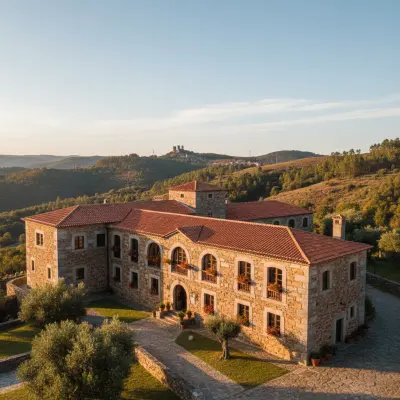
The most sensible option, especially if you are planning three or four days of climbing, is the INATEL Linhares da Beira Hotel Rural. It sits inside the village, includes breakfast in most rates, and the staff is used to sporty guests, meaning nobody looks at you sideways when you turn up at eight in the evening with chalk on your trousers and the face of someone who has done six pitches on the wall. Rates vary with the season, and summer weekends fill up weeks in advance, particularly when paragliding conditions are good.
Travellers on tighter budgets can find rural tourism houses in surrounding villages such as Forninhos or Vila Cortês da Serra, a short drive away. Check locally: many of these houses do not have a strong online presence and bookings are made by phone.
Getting there and getting around
From Lisbon, it is about three and a half hours by car, A1 to the Guarda exit, then A23 and national road to Linhares. From Porto, count about two and a half hours. There is no useful public transport to reach the village: assume you need a car, and ideally one with enough boot space for rope, packs and possibly a bicycle for short transfers between sectors.
Once in the village, it is all on foot. The streets are cobbled, steep, and parking is concentrated at the entrance. Do not try to drive up to the castle: you will regret it, and so will the locals.
Combining climbing with other things (because nobody climbs eight hours a day)
Most climbers I know reach the third day with their fingertip skin begging for mercy. That is when Linhares reveals itself as a more complete destination than it first appears. The local air invites free flight, and there is significant overlap between communities: many climbers in Linhares also fly, and vice versa. If you want to try, there are two good starting points, one more focused on logistics in the practical guide to paragliding flights, and another centred on the experience itself, with the perspective of a flight over the Mondego valley. A tandem flight with a certified pilot typically costs between 80 and 120 euros, depending on duration and operator.
For a day in the car, in tourist mode, the Covilhã to the Schist Villages road trip is a good way to see the opposite side of the range without repeating the granite landscape you already get in the village itself. In April and early May, the detour to Fundão and the Gardunha range in cherry blossom makes up for any rainy day, and the elevation difference often means there is sunshine in Fundão when Linhares is fogged in.
If you are in peak fitness and the rock starts to feel too easy, the Zêzere glacial valley is an hour away by car. The Manteigas and snow wells guide gives the context for a full day of hiking that will make your calves complain in earnest.
When to go, when not to go
April, May, September and October are the golden windows. Mild temperatures, dry granite, long days. June is viable but starts getting too hot on south facing walls from eleven in the morning onwards. July and August are for morning sessions only or sectors in permanent shade. Winter is variable: it can be fantastic on sunny days following a cold front, or unworkable for weeks if humidity does not lift. Do not visit between mid December and mid February without flexibility to change plans.
One piece of advice worth what it is worth: look at the wind forecast, not just precipitation. Linhares sits in a wind corridor that can turn exposed anchors unpleasant and, on the higher sectors, frankly dangerous. Sustained wind above 30 km/h is time to go eat migas and come back tomorrow.
Eating and drinking: the essentials
The village has few dining options, and that is for the best. Look for regional dishes: roast kid goat, stuffed bucho, Serra da Estrela cheese, and when in season, veal on the grill. The cheeses between October and April are the best, owing to the production cycle of the churra mondegueira sheep breed. To stock up between sessions, buy from the supermarket in Celorico da Beira: in the village proper there are taverns and small cafés, and outside meal hours you may find everything closed.
Hydration is a serious matter on sun struck granite. Count on at least three litres per person on a climbing day, plus an extra litre for rinsing scrapes and washing dust off your hands before eating.
The etiquette of Linhares
Linhares is a living village, classified as one of the Historical Villages of Portugal. Greeting people you pass on the street is not folklore, it is basic good manners. Do not lay ropes across the access path to the castle in the middle of a Saturday afternoon. Do not leave chalk marks on the holds of the most visited routes. Do not cut across signposted private land.
And, importantly, share information with the local clubs. If you opened a new line, register it. If you noticed a bolt coming loose, send a message to the equipper, who is usually identified in the local guidebooks. Climbing in Portugal is a small community, and Linhares is one of its less saturated jewels. Keep it that way.
In summary, without turning it into a listicle
Linhares da Beira is not a destination for clipping fifty routes in three days and posing for a photo at every anchor. It is a place for climbers who appreciate clean granite, a landscape that stops time, and a village with real history to come back to at the end of the day. Get your federation licence, bring proper gear, sleep at the INATEL and eat Serra cheese with warm bread. It is no more complicated than that, and at the same time, it is all of that.