Chaves Under Cover: A Rain-Proof Guide to the North
Forget the outdoor itineraries; when it rains in Chaves, the move is to retreat into steaming pastries, ancient Roman thermal baths, and a Siza Vieira museum that feels like a concrete ark.
The Pastel Ritual: Breakfast as a Survival Strategy
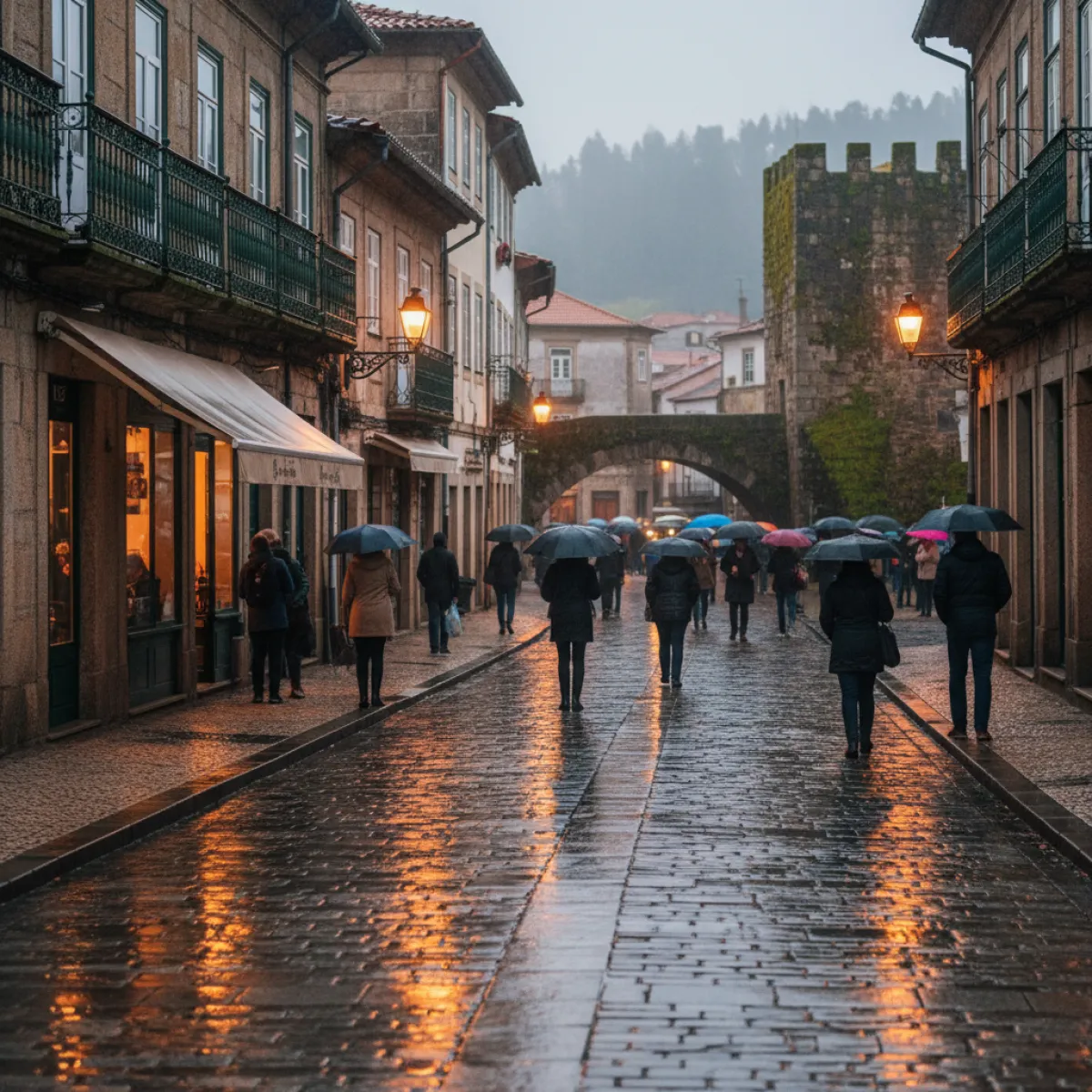
When the clouds clamp down over the Tâmega valley and the rain starts lashing against the Roman bridge, the amateur traveler sulks. The pro, however, knows that Chaves in the rain is a blessing in disguise. It’s an excuse to retreat into the city’s many fortresses of gluttony and steam. Your day should begin at Rua de Santo António. Skip the generic cafes on the outskirts and head straight for Pastelaria Maria or D'Chaves. The air here is thick with the scent of rendering lard and toasted pastry. This is the birthplace of the Pastel de Chaves.
A real Pastel de Chaves is a masterclass in texture: dozens of layers of puff pastry that shatter at the slightest bite, revealing a core of seasoned veal that must be moist enough to satisfy but not so wet that it ruins the crunch. If it’s served cold, send it back. It should be hot enough to make you wince. Pair it with a short, punchy espresso and watch the locals navigate the puddles outside. It’s the breakfast of champions and the only logical way to start a day when the weather has gone to hell.
Thermal Immersion: Steaming Like a Roman
Once you've fortified your stomach, it's time for the spa. There is a profound, almost primal satisfaction in being submerged in 37°C mineral water while watching rain hit the skylights. The Romans were many things, but they weren't idiots; they recognized 2,000 years ago that Chaves sat on a goldmine of geothermal healing. For a deep dive into the history of these waters, check out The Roman Legions' Legacy: Exploring the Ancient Thermal Springs of Chaves.
The modern Balneário is impressive, but I prefer the traditional Thermal Spa for a high-pressure jet massage. Don't expect the clinical, scent-diffused luxury of a Swiss clinic. This is Transmontano wellness: efficient, professional, and utilizing sodium-bicarbonate waters that leave your skin feeling like it’s been reborn. It’s a treatment for the body, but also for the traveler’s psyche, which can take a beating after three days of grey skies. You’ll walk out feeling light, nearly floating, ready to face the damp air with a newfound muscular nonchalance.
The Nadir Afonso Museum: Siza’s Concrete Ark
If the deluge continues, head to the Nadir Afonso Contemporary Art Museum. Even if you don't know your geometry from your cubism, the building is a pilgrimage site for any design enthusiast. Designed by the legendary Álvaro Siza Vieira, the museum is a long, white concrete vessel raised on pillars to allow the Tâmega river to flood beneath it without damaging the art. It’s a brilliant piece of architectural defiance against the very rain that’s currently ruining your shoes.
Inside, the acoustics are muted, and the light is soft. The works of Nadir Afonso, the architect-painter who once worked under Le Corbusier, are explosions of color and mathematical precision that provide a sharp contrast to the slate-grey sky. Take your time here. There is no line, no rush. The low windows keep you connected to the outside world, the flooded gardens and the churning river, while you remain perfectly dry and intellectually stimulated. It is, without hyperbole, one of the best places in Portugal to spend a stormy afternoon.
The Great Mountain Seafood Heist
It sounds like a prank: suggesting a seafood feast in a mountain town over 100 kilometers from the Atlantic. But Chaves has a long-standing love affair with the ocean, fueled by the trucks that have historically climbed the mountains from Vigo and Matosinhos. When the weather prevents outdoor exploration, the locals gather for hours-long sessions of cracking shells and drinking crisp whites. To understand the ritual, read The Seafood Feast Ritual in Chaves: A Coastal Celebration in the Heart of the Mountains.
Head to Restaurante Carvalho or Pensão Flavia. Order a massive platter of spider crab, barnacles, and prawns. Pair it with a local white wine from the Trás-os-Montes region, yes, they make whites here with a flinty acidity that cuts through the rich seafood perfectly. The atmosphere is loud, unpretentious, and utterly genuine. No foam, no edible flowers, just raw product and stained napkins. It’s the ideal way to kill three hours while waiting for a break in the clouds.
For the Restless Soul
If the rain stops for even an hour, grab the opportunity. The air in Chaves after a downpour is incredibly crisp. You could try a quick ride on the river path as described in Cycling the Border: A Journey on the Ecovia do Tâmega with Tamega E-bike. But if the heavens remain open, consider a short drive to see how neighboring towns handle the cold. The culinary resilience of the region is best explored in Beyond the Alheira: Mirandela’s Culinary Resilience.
For those who find beauty in desolation, a thirty-minute drive into the mountains will bring you to the edge of the world. The winter atmosphere there is hauntingly beautiful, and you can find more about it in The Silence of Montesinho: A Winter Retreat in the Last Frontier of Portugal. There is something profoundly comforting about watching the rain fall on ancient schist houses while you sit by a roaring fireplace with a glass of port.
Adega Faustino: The Ultimate Bunker
End your day at Adega Faustino. This isn't just a bar; it's a cathedral of regional products. The walls are lined with bottles and barrels, and the history is thick enough to cut with a knife. This is where you go for a glass of robust red and a plate of real Chaves ham, cured in the mountain air, the fat translucent and melting at room temperature. Faustino is a bunker of hospitality. It doesn’t matter if the Tâmega is threatening to burst its banks or if the wind is howling through the castle battlements. Inside, life is made of conversation, regional bread, and the kind of human warmth you only find in Transmontano cellars. Order the grilled linguiça or the scrambled eggs with wild asparagus if they have them. It’s comfort food without a filter, for those who know that traveling is about adapting to what the land gives you. And in Chaves, even when it gives you rain, it gives you everything else you need to be content.
