Chaves Museums: Siza Vieira’s Concrete vs. Roman Steam
Forget generic itineraries. In Chaves, the secret is knowing how to distinguish Siza Vieira's masterful concrete from the ancient humidity of Roman baths, while avoiding dusty museum traps and focusing on what truly matters: living history and exceptional food.
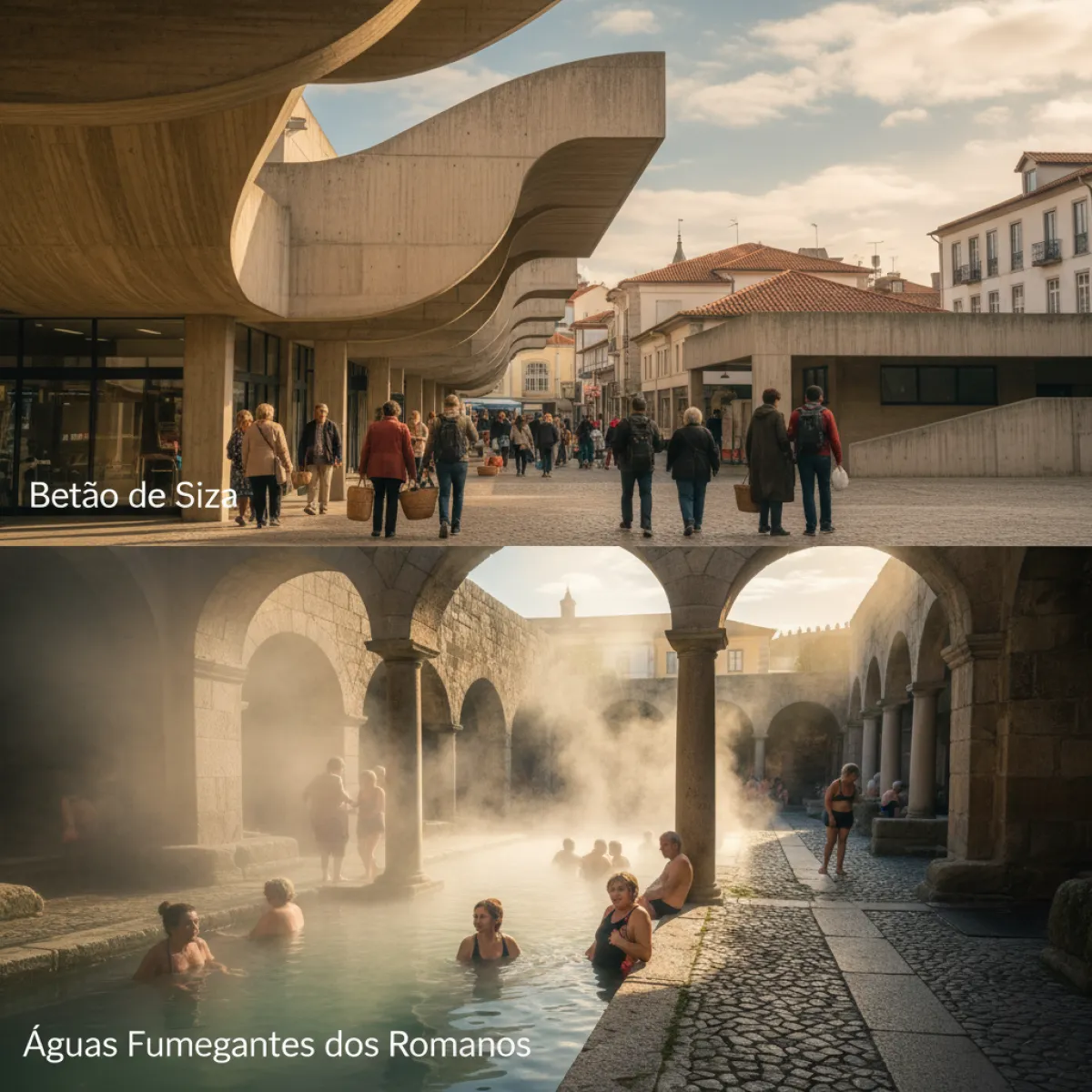
The Chaves Dilemma: Where to Spend Your Time
Chaves is not a city to be consumed in a hurry, squeezed between a photo op at the N2 milestone and a quick pastry. It is a border town, possessing that typical Trás-os-Montes grit tempered by a level of sophistication that many visitors overlook. When it comes to museums, the offering is surprisingly dense for a city of its size, but not everything that glitters is gold (or polished granite). There are places that justify every cent of the ticket price, and others that, frankly, only serve as a refuge from the rain if there isn't a decent tavern nearby.
If you arrive around 9 AM, park near the Tâmega River. The air here has a particular scent: a mix of river humidity and the aroma of lard and puff pastry wafting from the bakeries on Rua Direita. Before entering any museum, grab a *pastel de Chaves* at D’Chaves or Pastelaria Maria, it must be hot enough to burn your fingers, and the pastry should crumble all over your coat. With your stomach lined, head toward the historic center. This is where the real journey begins.
The Essential: MACNA (Nadir Afonso Contemporary Art Museum)
Do not visit Chaves without entering MACNA. Even if you think contemporary art is a conspiracy to sell blank canvases, this building by Álvaro Siza Vieira is a masterclass in how concrete can be elegant. Situated on the right bank of the Tâmega, the museum seems to float above the ground, a white, geometric structure contrasting with the greenery of the park. Siza designed it to withstand the river’s floods, elevating it on concrete blades that create a mesmerizing play of shadows in the courtyard below.
Inside, the silence is absolute. The works of Nadir Afonso, the master of geometrism who was also an architect and worked with Le Corbusier, are the perfect match for Siza’s walls. Do not expect sentimentality; Nadir’s art is mathematical, rigorous, almost obsessive. It is a museum for those who appreciate structure, line, and light. The ticket costs around 5 euros (check locally) and is worth every cent for the peace you feel walking through its long, minimalist corridors. It is the perfect antidote to the chaos of any modern metropolis.
The Revelation: Roman Thermal Baths Museum
For decades, Chaves knew it had a Roman past, but no one expected to find a thermal complex of this caliber while trying to build an underground parking lot. The Roman Thermal Baths Museum of Aquae Flaviae is, without exaggeration, one of the most important archaeological finds in Europe in recent years. Unlike many ruins where you need a vivid imagination to see more than three stacked stones, the structure here is crystal clear.
The pools still retain their water circulation systems, and you can feel the humidity and heat that the thermal waters still emit. It is a physical experience. The museological project is excellent, featuring metal walkways that allow you to hover over the excavations without disturbing the heritage. For those who want to dive deeper into this topic, The Roman Legions' Legacy: Exploring the Ancient Thermal Springs of Chaves provides the necessary context to understand why Roman soldiers traveled from so far to heal their wounds in these waters. The museum is open from Tuesday to Sunday, and I highly recommend the guided tour if available.
The Keep and the Museum of the Flaviense Region
The castle of Chaves has seen better days in terms of military glory, but its Keep (Torre de Menagem) remains the city's visual anchor. Inside, the Museum of the Flaviense Region is a curious mix of archaeology and ethnography. It is worth climbing the steep wooden stairs to reach the top. The view from there, over the city’s terracotta rooftops and the Spanish mountains in the distance, is unbeatable.
However, if you are short on time, the museum itself can be toured quickly. The Roman pieces (stelae, milestones) are interesting, but after seeing the Thermal Baths, the impact is lessened. Use this spot for geographic orientation before deciding where to have lunch.
What to Skip (If You Are in a Hurry)
Now we enter opinionated territory. The Military Museum, housed in what remains of the fortifications, is your typical museum of weapons, uniforms, and battle maps that you’ve seen in dozens of other cities. Unless you are an enthusiast of siege tactics or World War I, it is perfectly skippable. Spend that time instead walking across the Trajan Bridge, which has spanned the Tâmega for nearly two thousand years and continues to support the weight of history (and pedestrians) without complaint.
Another one that can wait for a second visit is the Chaves Railway Hub. Located at the old station, it’s a bit of a trek from the center. If you are traveling with kids who love steam locomotives, go for it. Otherwise, the collection of rolling stock from the old Corgo Line is nostalgic, yes, but lacks appeal for the average traveler looking for the essence of Chaves. Trains haven’t reached the city in decades, and the museum seems to reflect that melancholic abandonment.
Beyond the Display Cases: The Flaviense Experience
A museum does not end at the building's walls. In Chaves, culture is lived at the table. After a morning of culture, the body demands sustenance. If you want something that avoids the obvious and enters the realm of the epic, seek out The Seafood Feast Ritual in Chaves: A Coastal Celebration in the Heart of the Mountains. It might seem counter-intuitive to eat seafood in a mountain town, but the locals have elevated this to an art form, born from proximity to Galicia and the high standards of local palates.
To digest it all, nothing beats a bit of exercise. If it’s a sunny day, rent a bike and explore the riverbank. Cycling the Border: A Journey on the Ecovia do Tâmega with Tamega E-bike is the best way to see how the city merges with the rural landscape. The path is flat, easy, and visually rewarding.
Practical Tips and Logistics
- Schedules: Most museums are closed on Mondays. Plan your visit for mid-week to avoid the weekend crowds coming over from Spain.
- Parking: Forget the historic center. Leave the car near the Public Garden or by the river and do everything on foot. Distances are short and the city is best discovered by walking its narrow streets.
- What to order: Besides the pastel de Chaves, look for the local ham (presunto) and the *folar* (the savory kind, stuffed with meats). At O Príncipe or Pensão Flávia, the food is honest and unpretentious.
If you have an extra day, don't just stay in the city. Chaves is the gateway to wilder territories. You can head north to find The Silence of Montesinho: A Winter Retreat in the Last Frontier of Portugal, or head south toward Mirandela to discover what lies Beyond the Alheira: Mirandela’s Culinary Resilience. Trás-os-Montes does not reveal itself to a hurried glance; it requires time and a willingness to navigate mountain roads.
Chaves is a summary of Portugal: it has Roman scars, medieval defenses, and Siza Vieira’s modernity. Choose your museums wisely, eat like a king, and don’t be afraid to get lost in the streets that smell of history and woodsmoke. It is in that balance between the new concrete and the old stone that the true magic of this land resides.
