Chaves: From Castle Heights to the Tâmega’s Golden Hour
In Chaves, light isn't just illumination; it's a compositional tool. Discover where to capture the perfect reflection on the Tâmega River and why you should only climb the Keep just before closing.
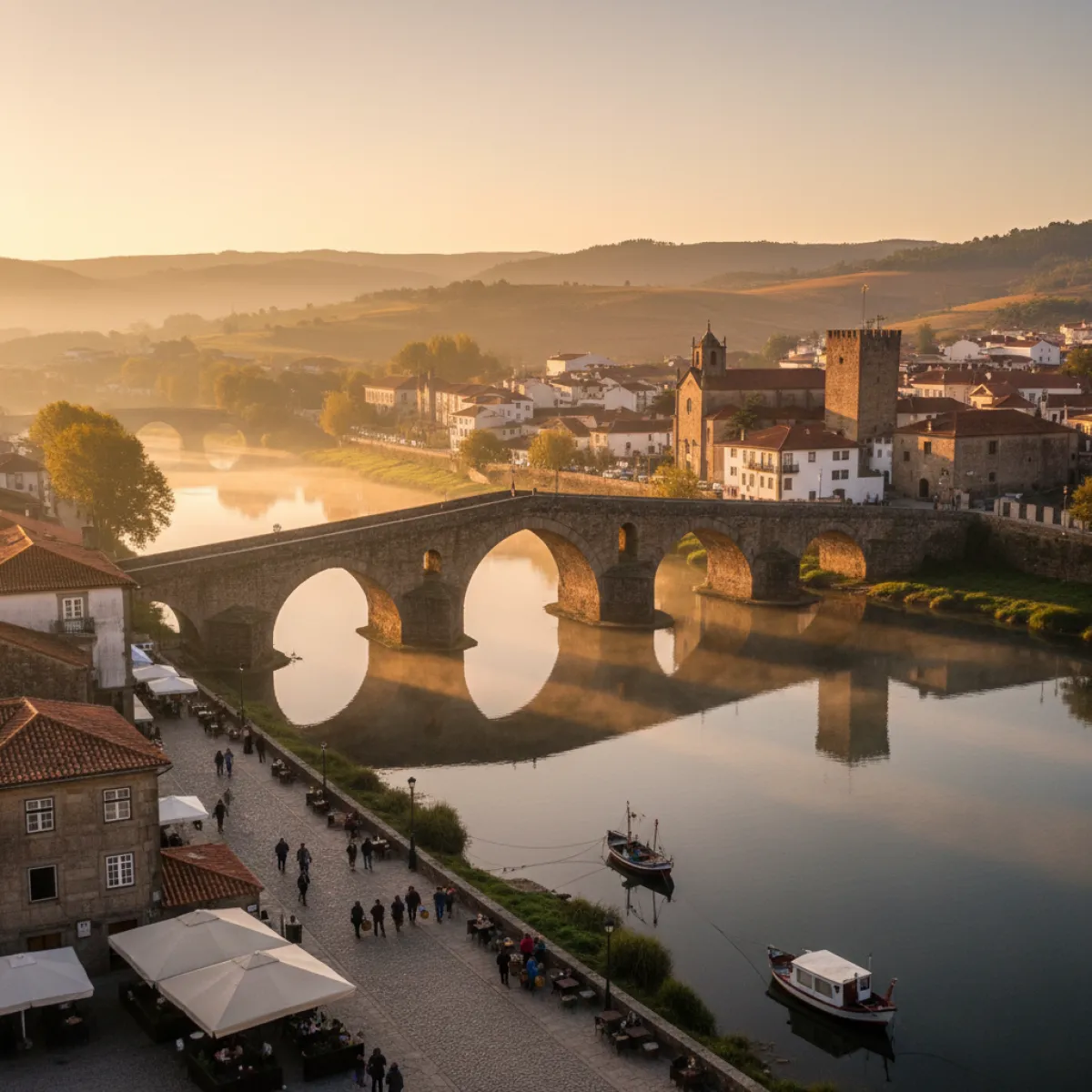
The Border Perspective
Forget the notion that Chaves is merely a border stop for those crossing into Spain. For those with a camera over their shoulder or simply a keen eye, this city is an exercise in patience and geometry. Here, the sun doesn't just rise and set; it negotiates with the granite of the ramparts and the persistent mist rising from the Tâmega River. If you want to capture the essence of this land, you must learn to read the shadows before you press the shutter.
Chaves is a city of physical and historical layers. Let’s start with the obvious: the Trajan Bridge. But don’t just cross it like a rushed tourist. The secret to the perfect photograph here is humidity. During winter, the steam from the thermal springs mixes with the morning chill, creating a natural diffusion that no software filter can replicate. It is in this setting that we understand The Roman Legions' Legacy, where water at 73 degrees Celsius has dictated the city's rhythm since Roman times. The best light? 8:30 AM on a November morning, when the low sun begins to pierce the mist and illuminate the stone arches that have stood for two millennia.
From the Keep to the Old Quarter
Climbing the Torre de Menagem (The Keep) is mandatory, but timing is everything. Most visitors make the mistake of ascending at midday, when the light is harsh, flat, and merciless to the castle’s details. My advice: save your ascent for the last hour before closing. From here, you have a 360-degree view of the valley, and it’s the moment when the slate roofs and the colorful balconies of Rua de Santo António gain a deep, rich saturation. Look south towards Praça de Camões. This is where military architecture meets daily life, and the long shadow cast by the tower creates perfect leading lines for a dramatic composition.
After descending, lose yourself in Rua Direita. It is one of the most photogenic arteries in Trás-os-Montes, with its painted wooden balconies. Don’t look for the perfect angle; look for the detail. The old man reading the paper at a tavern door, the smell of Pastéis de Chaves fresh from the oven (go to D' Chaves; ignore the industrial imitations), and the contrast between the dark granite and the vibrant colors of the facades. It’s a photograph of textures, not just landscapes.
The Tâmega and the Freedom of Two Wheels
If the bridge is the monument, the river is the oxygen. For nature and lifestyle photography enthusiasts, the left bank offers the best views of the city’s skyline. This is where the Ecovia do Tâmega comes in. Rent an e-bike and head north. The light filtered through the weeping willows by the river creates patterns of light and shadow that are a delight for any photographer. About two kilometers from the center, the urban bustle vanishes, and Chaves reveals its more rural form, with fertile fields framing the distant profile of the castle.
This route isn't just about physical exercise; it's about slow observation. Stop at the small wooden piers. The Tâmega's water is often a perfect mirror by late afternoon. If you’re lucky with zero wind, you’ll catch that shot of absolute symmetry everyone craves, with the bridge and tower reflected in the dark surface of the river.
Rituals and Gastronomy as Art
No one survives a day of visual exploration in Chaves without proper sustenance. And here, the food is as photogenic as it is delicious, if you know where to go. Forget the clichés of alheira for a moment and focus on the improbable. It might seem strange to find elite seafood in an inland city, but The Seafood Feast Ritual in Chaves is an institution that defies geography. The chromatic contrast of a platter of fresh seafood against heavy wooden tables is a record worth making before you put down the camera and pick up the cutlery.
For a quick snack, the Pastel de Chaves is the star. But beware: the lighting inside many bakeries is atrocious. If you want a photo that does justice to the puff pastry, take your pastel to the Jardim do Bacalhau. Eat it there, where natural light highlights every crisp layer. They cost about €1.20 and are worth every cent for the texture and the well-seasoned minced meat filling.
Beyond the Walls: Mirandela and Montesinho
Chaves is the hub, but the savvy photographer knows when to expand their horizon. About 45 minutes south, you will find Mirandela’s Culinary Resilience, where the Tua River offers a different water mirror and more open valley light. To the northeast, the landscape changes radically. The Silence of Montesinho awaits those who do not fear isolation. In winter, the schist and granite villages covered in snow or under a storm-heavy sky offer a powerful, monochromatic palette, the perfect antithesis to the urban vibrancy of Chaves.
Practical Tips for the Traveler
- When to go: October and November for morning mists and autumn colors; May for soft light and mild temperatures. Avoid August unless you want your camera to overheat and the harsh light to destroy your shadows.
- Equipment: A wide-angle lens for the Roman Bridge and a 50mm for balcony details and candid portraits. A lightweight tripod is essential if you want to capture the river at dusk.
- Logistics: Chaves is easily accessible via the A24 motorway. Park near Forte de São Francisco and explore on foot. The city rewards the walker.
In the end, Chaves doesn’t reveal itself to those looking only for the monument. It reveals itself to those who wait for the light to hit the right angle on the granite, to those who feel the thermal steam on their face, and to those who realize that the best photograph is the one that captures the weight of history without being heavy.
