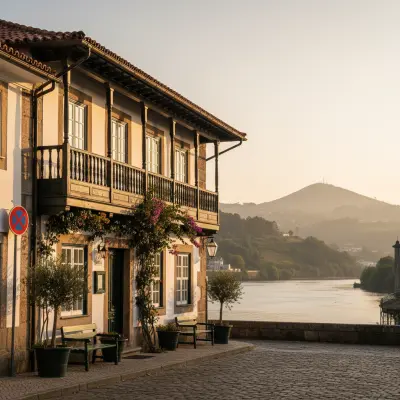
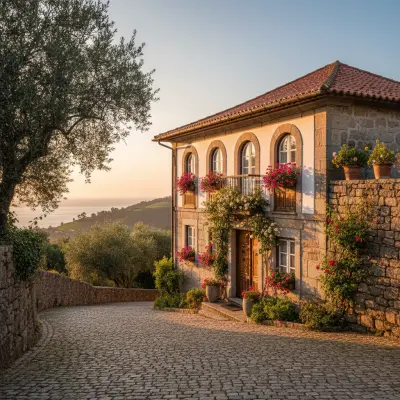
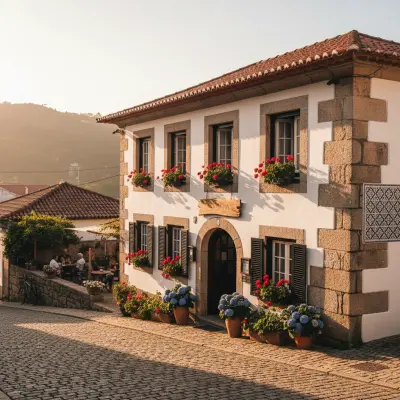
Caminha on Foot: The Neighborhoods Worth the Walk
Caminha fits on a single A4 map, and that is precisely the point. Five neighbourhoods to walk, with mandatory stops, views over the Minho and Galicia, and a ten-minute ferry that changes the perspective. Legs, not wheels.
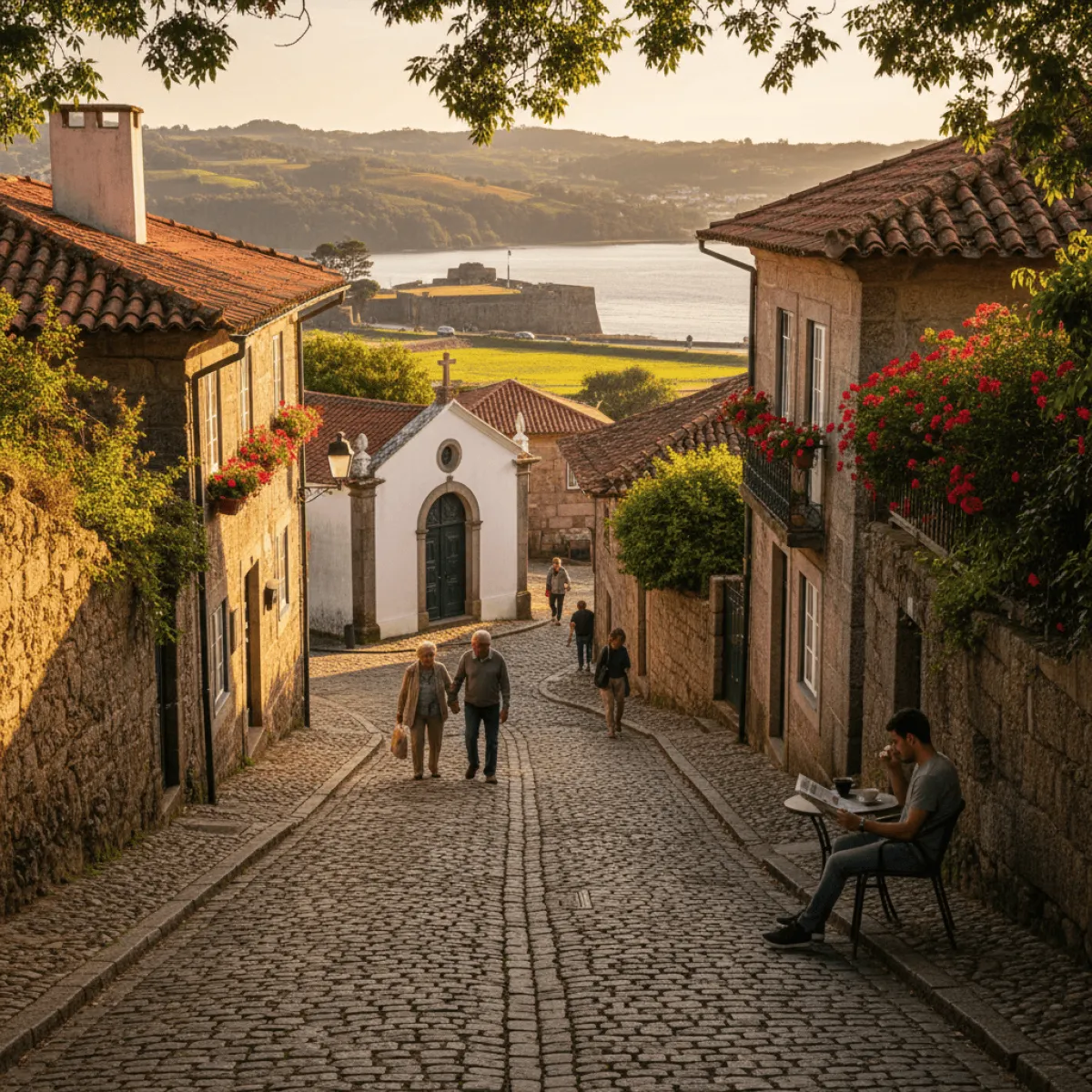
Caminha fits on a single A4 map. This is not a flaw, it is the whole point. Most people drive in, park near the river, walk fifteen minutes around the main square, buy a fridge magnet, and head on to Viana or Valença. That is a mistake. Caminha asks for legs, not wheels, and asks for more time than a quick coffee allows. Stay one night and you start to understand the place. Stay two and you stop wanting to leave.
This town, pressed against the Galician border at the meeting point of the Minho and Coura rivers, has an unusually intact urban grain. The medieval streets were never widened for tourism, the houses are still houses, and the cafés still serve more pensioners than backpackers. The result is a historic centre best taken on foot, with mandatory stops and detours nobody is going to signpost for you.
Here is the guide I would give a friend: five areas to walk, in the order that makes sense, with what to eat, drink, and notice along the way.
1. The Medieval Core: from the Clock Tower to the Main Square
Start at the Torre do Relógio. It is the old town gate, fourteenth century, and it still works as a psychological portal: cars on one side, stones on the other. Walk under the arch and you are on Rua Direita, which, as the name suggests, runs straight to the main square without fuss.
Praça Conselheiro Silva Torres, known to locals simply as a Praça, is the heart of the town. The Renaissance fountain at the centre is from 1551 and still runs. The houses around it have wrought iron balconies and Manueline windows that survived everything, including the architectural temptations of the 1970s. Sit on a terrace mid-morning, order a small beer, and watch the rhythm. There is no rush. There are greetings.
The Igreja Matriz is a few metres away, Gothic-Manueline, with a Mudejar wooden ceiling that justifies the trip on its own. If the door is open, go in. If not, come back in the morning.
What to do here
- Climb the Clock Tower if it is open (check locally, hours vary by season).
- Have your morning coffee at one of the cafés on the square. I will not name one, choose by the smell of the bread.
- Step inside the Igreja Matriz and look up. Mudejar coffered ceilings are very rare in the north of Portugal.
For sleeping right in this core, the most natural option is Donna Nega Alojamento Local, set in an old house a few steps from the square. It is the kind of place where you wake up to bells, not traffic.
2. The River Quarter: from the Walls to the Pier
Leaving the square via Rua da Corredoura, you drop down towards the river. Many visitors skip this part because it looks less picturesque: wider streets, nineteenth and twentieth century buildings, a few warehouses. It is also where the town actually breathes.
The river pier is where the Coura empties into the Minho, and where you catch the ferry to A Guarda, in Spain. It costs around 2 euros per foot passenger, takes cars too (more expensive), and the crossing lasts ten minutes. Take it, even if you do not plan to have lunch on the other side. The view of Caminha from mid-estuary is what you will remember.
Near the pier there is a small riverside park with benches facing the water. This is where locals walk their dogs at the end of the day. It is also where water-based experiences leave from, and there is one I recommend without hesitation: kayaking the Minho estuary. It runs two to three hours, with a guide, and it is the best way to grasp the geography of this liquid border.
Where to eat by the river
There are several restaurants along the riverbank. Look for the ones with menus in Portuguese before English, and where the daily specials change with whatever came in from the auction. Lamprey (in season, roughly January to April) and shad are the local stars. In May, June and July, order grilled sardines or sea bass. Avoid octopus à lagareiro out of season, it arrives frozen pretty much everywhere.
3. Rua da Corredoura and the Old Trade
Back uphill, Rua da Corredoura is the historic commercial spine. You still find grocery shops that smell of freshly ground coffee, cobblers who actually resole shoes, and drogarias that sell everything from paint to homemade shampoo. It is the kind of trade that is disappearing in Lisbon and Porto, and that here survives out of stubbornness.
Stop at Casa do Linho if you care about textiles. Minho linen is a serious product, not tourist decoration. Tablecloths, kitchen cloths, sheets: buy one piece and it will outlive your kitchen. It is more expensive than what you see in central Porto, but it is the real thing.
For a mid-walk coffee, there is more than one honest spot. The town has a café every twenty metres, all with the same machine, all with the same ham-and-cheese croissant. Pick the one with locals, not the one with flags outside.
If you are doing a wider Minho route and want to compare café cultures between towns, it is worth reading our Barcelos café guide afterwards. Caminha is quieter, Barcelos more theatrical, but both share a seriousness about coffee that you do not always find in Lisbon.
4. Santa Rita: a Climb Off the Map
Leave the centre via Rua de Santa Rita and start climbing. Three minutes in, you are off the tourist circuit. Houses become simpler, with vegetable gardens out the back, hens behind walls, vines crawling under roof tiles. This is where the real Caminha lives, away from the postcard.
Few people make the climb. It is a shame, because the view from the top, with the Minho widening towards the Atlantic and Galicia on the other side, beats any postcard. The Capela de Santa Rita itself is modest and rarely open, but the churchyard is a fine place to pause for ten minutes before walking back down.
For longer stays, this area has quieter accommodation than the centre. Litos AL Alojamento Local is an honest option, with the bonus of waking to birds rather than the bin lorry at 6am.
5. The Sailor's Quarter and the Walk to the Mouth of the Minho
The last area I recommend walking lies south, towards the river mouth and Praia da Foz do Minho. It is not strictly a neighbourhood in the traditional sense, more a transition zone between town and the pine forest that lines the river all the way to the sea.
Leave the square via Avenida Manuel Xavier and follow the river south. Within fifteen minutes you are on a packed earth path between pines and dunes. Within twenty-five, you are at the beach. The water is cold, this is the Minho mixing with the Atlantic, but it is one of the most beautiful and least crowded beaches in the north of Portugal. Outside August, it is almost yours alone.
For the way back, if you want variety, follow the disused railway line that linked Caminha to Vila Praia de Âncora. It is being converted into a greenway, and even where the work is unfinished, the path is flat and straightforward. Check locally on the state of the works before you plan that return route.
If you are arriving with a backpack and want a simple, central, well-run base between walks, Arca Nova Guest House & Hostel is the local benchmark. It has dorms and private rooms, it is run by people who know the town, and it sits within walking distance of everything described above.
How to plan the day (and what to eat between neighbourhoods)
If you have a full day, try this:
- 9am: coffee and toast on the main square. Do not eat too much, lunch matters.
- 10am to noon: medieval core and Igreja Matriz.
- Noon to 1.30pm: walk down to the river, the pier, the ferry to A Guarda and back (or the kayak, if you booked).
- 1.30pm to 3pm: lunch with the day's fish at a riverside restaurant. Budget 18 to 30 euros per person, with house vinho verde.
- 3pm to 4.30pm: traditional shops and Rua da Corredoura. Optional siesta.
- 5pm to 7pm: climb up to Santa Rita and watch the light fall on the estuary.
- 8pm onwards: a lighter dinner, perhaps Galician tapas and wine, which here is as easy to find as vinho verde.
If you have two days, save the beach walk for the second morning, with lunch back in town and a free afternoon for whatever you missed.
When to go, and when not
May, June and September are the sweet spots. Stable weather, long days, the sea bearable from mid-June. July and August fill up, especially weekends, with Spanish day-trippers crossing for lunch. Not unbearable, but the silence goes.
October and November have a light that earns the extra coat. December to February is cold and damp, with a grey Minho, but it has its charm if you like fireplaces and lamprey, whose season starts here in January.
If you are planning a longer Minho route with children, it is worth reading our Barcelos with kids guide too, because Caminha works very well as a second leg: less stimulation, more nature, perfect for unwinding after the Barcelos market. And if you are passing through Barcelos in May, do read what we wrote about the Festa das Cruzes, which coincides with the best window for Caminha.
One last note
Caminha is not an Instagram destination. There is no single iconic monument that justifies the trip on its own. What it has is human scale, a living border, and a way of life that still resists smoothing-over. Walk slowly, ask for directions even when you do not need them, and have dinner where the food arrives at the table before the menu does. That is how you learn a town.