Kayaking the Minho Estuary in Caminha: Between Portugal and Spain
Explore the wild islands of the Minho River by kayak, paddling between Portugal and Spain with Monte de Santa Tecla as your backdrop. This two-hour journey reveals border secrets and the biodiversity of one of Europe's most beautiful estuaries.
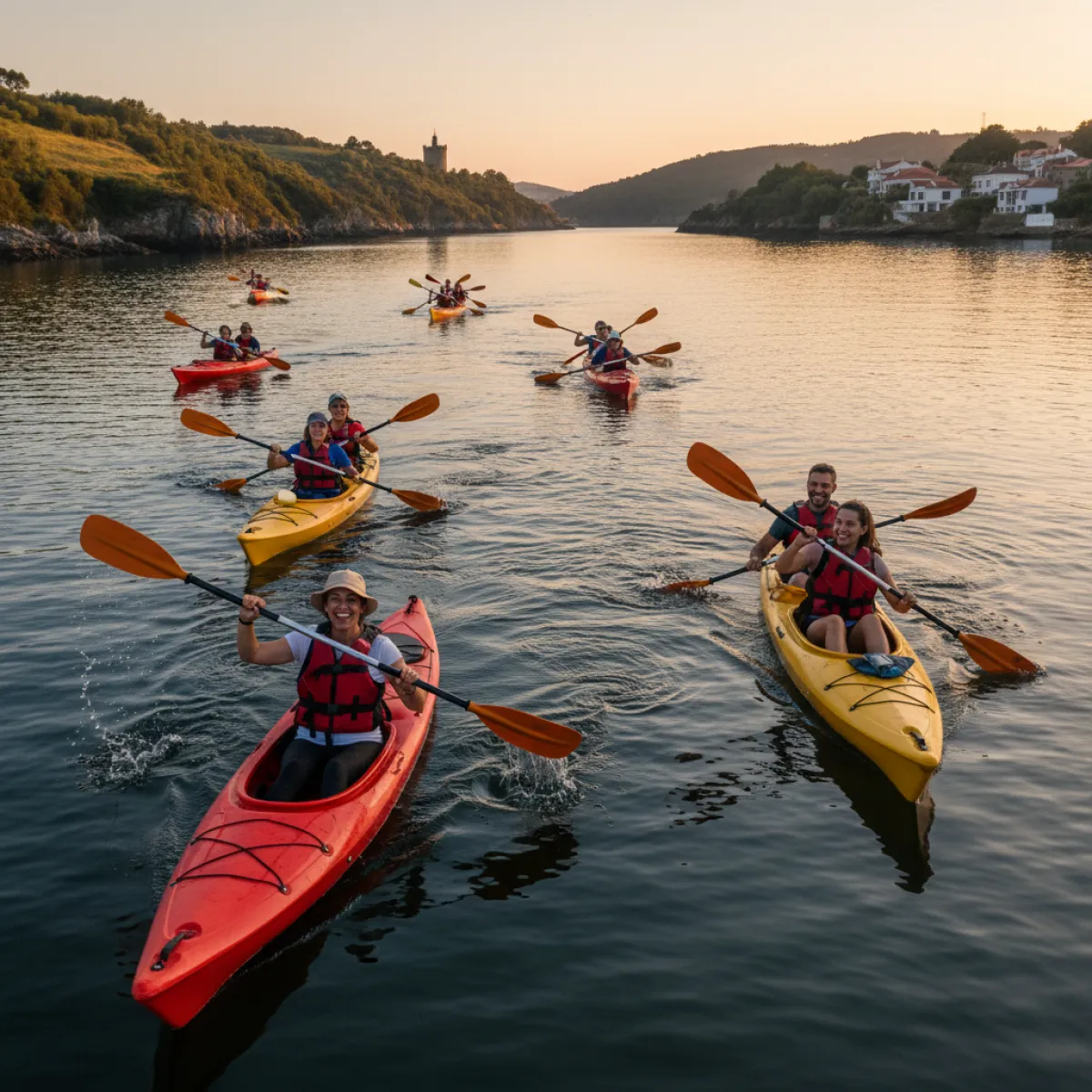
The Border You Feel in Your Paddle
There is something deeply grounding about navigating a river that isn't just water, but an invisible dividing line between two nations. In Caminha, the Minho River ceases to be a conventional waterway and becomes a shared space. Here, the border with Spain isn't a wall or a guard post; it's a current that pulls, a breeze blowing from Galicia, and a horizon where Monte de Santa Tecla in A Guarda watches over you with the gravity of a century-old protector.
Kayaking the Minho estuary is the best way to grasp this duality. Forget motorboats or quick ferry crossings. Sitting at water level, every stroke of the paddle brings you closer to or further from Spain. It is a physical, tactile experience, where the silence is only broken by the splashing of water and the occasional cry of a grey heron that completely ignores national sovereignties.
The Operator: MinhAventura and the Lanhelas Vibe
For this adventure, I unhesitatingly recommend MinhAventura. Based in the Caminha area, specifically operating out of Lanhelas, this team knows the Minho’s moods like nobody else. The meeting point is usually at the small pier in Lanhelas, a place that feels paused in time, where traditional fishing boats, the *carochos*, rest along the bank.
The tour I recommend is the Island Tour (Passeio nas Ilhas). It costs around €30 per person and lasts between two to two and a half hours. It’s the perfect amount of time to feel your arms working without reaching exhaustion, and it allows you to explore the heart of the estuary. The guide, usually a local with stories you won't find in history books, gives the basic rundown: how to hold the paddle, how to get into the kayak without taking an involuntary dip, and most importantly, how to read the tide.
Navigating Islands and Legends
The route takes you toward the islands of Boega and Amores. Boega Island is a massive green expanse surrounded by willows and acacia trees. It is Portuguese territory, but its proximity to the Spanish bank is such that you can almost hear the conversations of fishermen on the other side. Paddling along its banks is like entering a biodiversity corridor. If you're lucky, you might spot a kingfisher or the trail of an otter.
Amores Island (Island of Love), smaller and heart-shaped, is the highlight of the trip. Legend has it that a royal stag found refuge here, giving rise to the symbolism of Vila Nova de Cerveira. In a kayak, you can get close to sandbanks that disappear at high tide, places where the water is so shallow it feels like you're floating over a mirror.
Spain Next Door: Monte de Santa Tecla
While paddling, the Spanish bank exerts a constant fascination. Monte de Santa Tecla, with its Celtic *castro* at the summit, dominates the landscape. There are moments when, if you paddle hard toward the middle of the channel, you technically enter international waters. It’s a strange, liberating sensation. On the other side, you see the houses of Camposancos and the river mouth opening up to the Atlantic.
This is one of the richest ecosystems in the region, part of the Natura 2000 network. If you want to deepen your knowledge of the local fauna, it’s worth checking out our guide on The Silent Estuary: Birdwatching and Eco-Design in Caminha, which explores the more contemplative side of this area.
Tips from Someone Who’s Been There
My first recommendation is obvious: book the morning session. The light on the water is softer, the wind is usually calmer, and there’s almost no movement from other boats. Furthermore, the tide is the deciding factor. MinhAventura plans departures according to tide tables, which makes life much easier for those who don't want to fight the current the whole time.
- What to bring: A t-shirt (mandatory for safety and sun protection), a hat, sunscreen (the reflection off the water burns twice as fast), and plenty of water.
- Clothing: Wear shorts that can get wet. You are almost guaranteed to get splashed.
- Footwear: River sandals or flip-flops that stay secured to your feet. Don’t wear sneakers unless you want to walk around with soggy feet for the rest of the day.
- Insider Tip: At the end of the tour in Lanhelas, ask the guides where to find the best *arroz de debulho* or *sável* (shad, if it’s in season). They know the small taverns that don't show up on TripAdvisor.
Practical Booking Details
The experience can be booked directly through MinhAventura (minhaventura.com) or by calling +351 910 986 232. The meeting point is usually communicated during booking, but it is typically near the Minho River in Lanhelas or Caminha, depending on the day’s conditions.
If you’re looking for something that combines moderate physical exercise with a unique cultural and geographical immersion, this is the plan. It’s not just about paddling; it’s about being at the edge of two worlds, feeling the power of a river that, instead of separating, unites the people of both banks.
