Caminha on Foot: Neighborhoods Worth Walking
In Caminha, a car is wasted weight: twenty minutes gets you across the historic centre, and two hours is enough to understand why pilgrims keep missing the next morning's bus. An honest neighborhood-by-neighborhood guide for walkers.
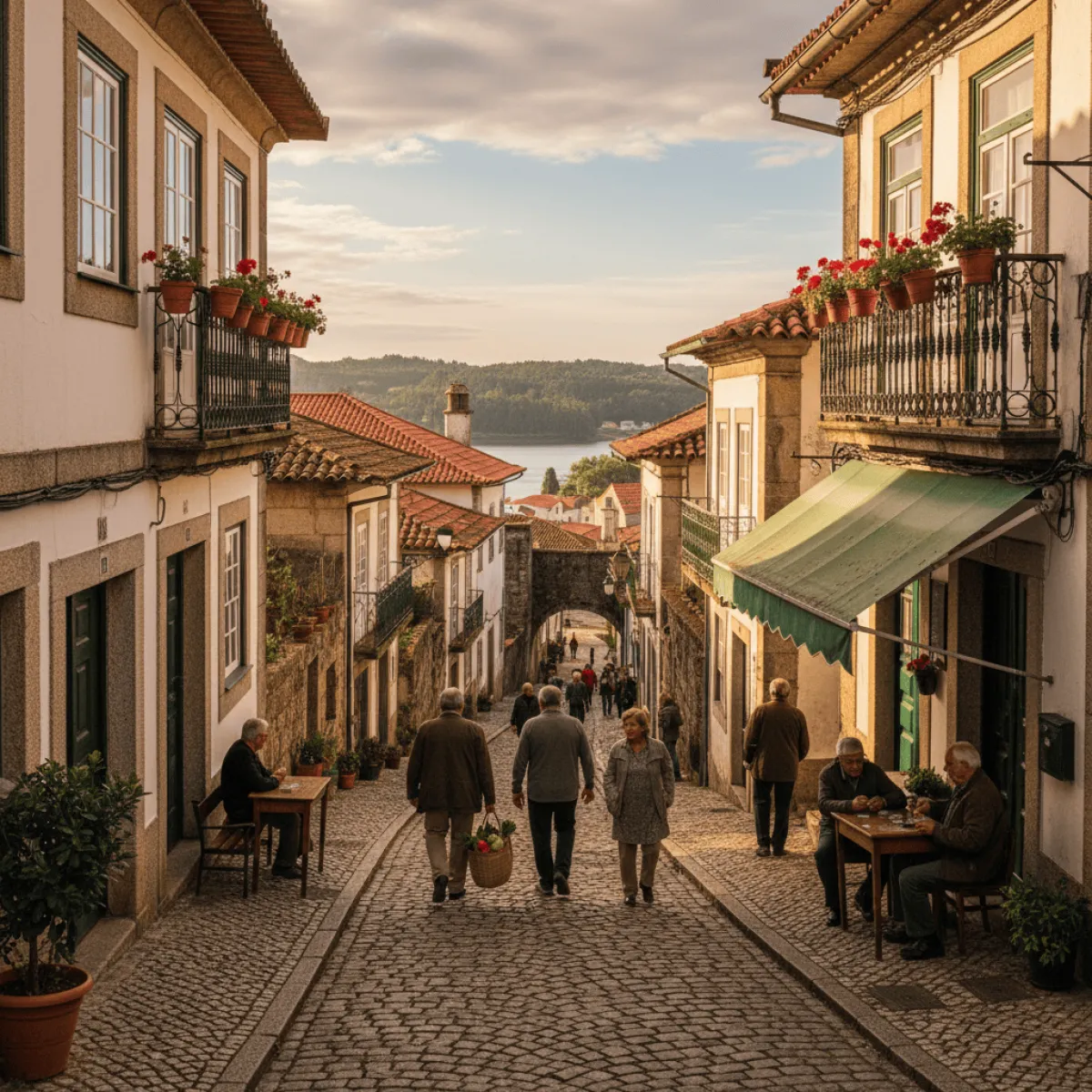
You don't drive Caminha. I mean, you can, but it misses the point. This little town in the far northwest of Portugal, pressed up against the river Minho with Spain on the other bank, was built at walking pace. Twenty minutes gets you across the historic centre end to end. Two hours, including a coffee stop, is enough to understand why so many pilgrims on the Portuguese Coastal Way decide to stay an extra night and miss the next morning's bus.
This isn't a monument-by-monument itinerary. It's a mental map, organized by neighborhood, of what to do with your feet in Caminha when the goal is to walk slowly, eat properly, and sleep well. Comfortable shoes are non-negotiable: the Portuguese cobblestones here are the real thing, uneven and unforgiving to anyone wearing heels.
The Walled Historic Centre: the Square and What's Around It
Start at Praça Conselheiro Silva Torres, or just "the square" to anyone who lives here. It's the heart of the town and three things matter: the 16th-century Renaissance fountain (Chafariz), the Clock Tower (Torre do Relógio), and a handful of café terraces where you can lose a morning without guilt. Sit with your back to the fountain, order an espresso and a pastry, and watch the town wake up. The retired men show up around 8:30am, the construction workers shortly after with the first hammers from the renovation works, and the German pilgrims from the Coastal Way around 10am, identifiable by the walking stick and the look of someone who slept badly.
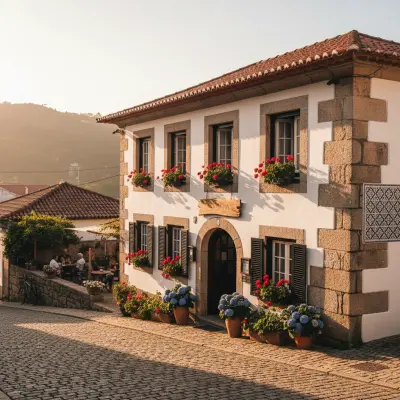
Three streets fan out from the square, each worth doing on foot, slowly. Rua Direita is the most commercial, still home to proper grocery stores, the kind where you ask for half a kilo of salt cod and the man behind the counter asks whether you plan to boil it or grill it. Rua da Corredoura is quieter, lined with 17th- and 18th-century houses bearing family crests, granite façades and small windows built for cold Minho winters, not Instagram. And Rua de São João slopes down toward the river, steep enough to make your knees complain on the way back up.
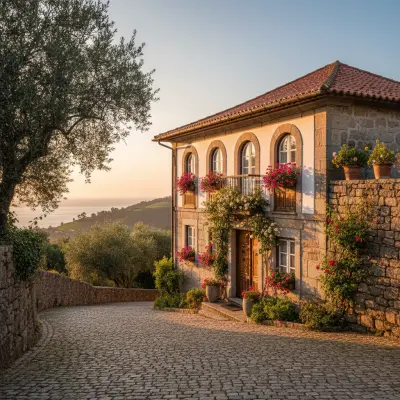
Inside the old walls is also where it makes most sense to sleep, if you want a Caminha experience that doesn't depend on a car key. Donna Nega Alojamento Local is a few steps from the square, in a restored building with the kind of quiet good taste you notice more in what's missing than what's been added. For travelers who prefer hostel energy without giving up a decent bed, Arca Nova Guest House & Hostel is the obvious pick, especially for pilgrims who want to share a beer with someone from Poland at the end of a hard day's walking.
Where to stop for coffee in the centre
- First thing in the morning, before 9am, any open pastelaria on the square will do. There's no major difference, and anyone who tells you otherwise is selling you something.
- For mid-morning, pick a terrace facing the Clock Tower. The sun hits there until around midday, and then you move tables.
- Don't order a cappuccino. It's meia de leite or galão here. Asking for cappuccino earns you the patient look reserved for tourists who tip well.
The Riverfront: Where Caminha Meets Galicia
Walk down Rua de São João to Largo do Terreiro and continue to the docks. This is where the town reveals what makes it different from anywhere else on the northern coast: the Spanish bank is literally on the other side, two hundred meters away, in A Guarda. A small ferry connects the two towns several times a day. The crossing costs about as much as a workers' lunch menu, though it's always worth checking locally for current schedules, which shift with the season.
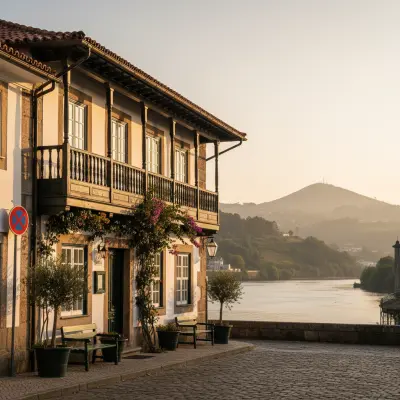
But the riverfront isn't only the dock. It's the whole strip between the old wall and the river, with restored warehouses, a small marina, and a pedestrian path that continues south to the freshwater beach of Areal. Walk it in late afternoon, with the sun setting over the Galician hills on the opposite bank. It's the kind of view that doesn't need a filter, and it justifies wearing real shoes instead of flip-flops.
If you want to do more than look at the water, the best way to know the estuary is to get into it. Some people rent bikes for the riverside ecotrail upstream, but the option I'd recommend is kayaking the Minho estuary between Portugal and Spain, which gives you a perspective impossible to get from land. White-washed A Guarda on your left, Monte de Santa Tecla rising behind it, and Caminha small and folded onto itself on your right. Two hours, moderate effort, worth every cent.
Also in this area, closer to the water but still walking distance from the centre, you'll find Litos AL Alojamento Local, a solid pick for travelers who want to be near the river without losing quick access to the cafés and restaurants of the historic core.
What to eat by the river
The rule is simple: fish and shellfish. The Minho gives lamprey from January to April (a strict season; outside it the lamprey is frozen and not worth your money), shad in spring, and eel pretty much year-round. The seafood rice dishes here are generous, usually portioned for two even when the menu doesn't say so. Always ask before ordering, and stick with the house wine, normally a local white vinho verde. Ordering red with lamprey is fine. Ordering red with grilled fish is amateur hour.
The Coura River and the Coastal Way
Crossing the bridge over the river Coura takes you into a more residential, quieter neighborhood where cobbles give way to asphalt and houses have backyards with grapevines and chickens. There are no monuments here. There is daily life, which is what many visitors say they want to see and then can't find when they get to a place.
This is the neighborhood the pilgrims of the Portuguese Coastal Way pass through on their way out of Caminha toward A Guarda via the ferry. If you've ever walked the Camino, you'll recognize the signs: the yellow arrows, the backpacks, the cafés that open before 7am because they know they're the day's first stop. Even if you're not walking the Camino, getting up early and doing this stretch on foot, from the centre to the ferry dock, is a good way to feel the rhythm of the town before it wakes up for visitors.
Further north, still walking distance from the centre but at a brisk pace (about twenty minutes), you'll find the train station area. The Minho line still runs, with trains south to Viana do Castelo and north to Valença. It's not frequent, but it's a decent option for a day trip without renting a car. Check schedules the same day, because they shift.
The Local Hill Climb: Caminha's Own Lookout
Caminha has its own viewpoint, sparing you the bus to Viana's Santa Luzia. Heading north out of the centre, you start the climb up the hill that overlooks the town. It isn't Viana's Santa Luzia, it's more modest, but it has the advantage of being doable on foot in about forty minutes from the square, with stops to catch your breath and take photos.
The path runs along narrow stone-walled lanes, mossy walls, and yards where every now and then a dog barks at whoever walks by. At the top, the view covers the Minho estuary, A Guarda on the other side, Monte de Santa Tecla in Galicia, and on clear days even the Atlantic to the west. Bring water. There are no cafés on the way, and in midsummer after 11am this climb is punishment.
When to go, one sentence per season
- Spring (March to May): the best season, long days, mild temperatures, religious and food festivals almost every weekend.
- Summer (June to August): busier, heat tempered by the river and the sea, best for the freshwater beach.
- Autumn (September to November): golden light, grape harvest, fewer tourists, restaurants start closing earlier.
- Winter (December to February): heavy rain, the town empties, but it's when you eat the best lamprey of the year. Bring a real waterproof.
Caminha as a Base: Day Trips on Foot and by Train
The trick with Caminha is that it fits in a day but rewards three. Use it as a base and run day trips elsewhere in the Minho. Vila Praia de Âncora is twenty minutes south by train, with one of the best Atlantic beaches in the region. Valença, with its intact star fortress, is half an hour to the north and gives you a full morning of walking the walls.
For travelers wanting to explore the wider region more seriously, the honest Barcelos family guide and the Barcelos café-by-café coffee guide are useful starting points for stretching the trip. And if you happen to be in the Minho in May, plan around the Festa das Cruzes in Barcelos, one of the most authentic religious festivals in the region, without the touristic excess of more famous ones.
Practical Notes, Without the Romance
- Getting there: by train from Porto via Viana do Castelo (about two hours, with a connection), or by car along the A28. You don't need a car to move around once you're here.
- Where to park (if you arrive by car): there's free parking down by the river, outside the walls. Parking inside the historic centre is a losing battle.
- What to spend per day: Caminha is still affordable by Portuguese standards. A decent meal runs between 12 and 20 euros per person, a room in local lodging between 50 and 90 euros depending on the season. Check locally.
- What to avoid: Sunday nights and Mondays, when many restaurants are closed. Get up early on Wednesdays, market day, the best moment to see the town truly alive.
- Languages: Portuguese obviously, but you'll also hear plenty of Galician, especially in cafés near the dock. Spanish works with everyone. English, depends on who's serving you.
Caminha isn't a flagship destination, and that's the point. It doesn't have Porto's traffic or the queues of Gerês. What it has is a human scale that's getting harder to find: a town you cross on foot, where the baker still knows people by name, and where the best thing you can do is slow down and listen to what the cobblestones have to say. Wear good shoes. You'll need them.