Caminha and the Sea: Where to Surf, Learn, or Just Watch
In Caminha, the water is colder than Instagram suggests and the north wind decides everything. An honest guide to where to surf, where to learn, and when it's better to stay on land with a coffee.
There's a border in Caminha that doesn't appear on tourist maps: the line where the river Minho stops being a river and starts being the Atlantic. You can see it with the naked eye from the top of Forte da Ínsua on a clear day. The dark, fresh water of the estuary meets the lighter salt water, and for a few metres there's a band of foam that changes colour with the tide. It's in that zone, and along the beaches that stretch south toward Vila Praia de Âncora, that you decide whether Caminha is a fishing village that discovered tourism, or a surf town disguised as a fishing village. The honest answer: it's both, simultaneously, and that's exactly what makes it interesting.
I've been coming to Caminha since before surfing was fashionable in Portugal. I remember the first rental boards in Moledo in the early 2000s, when there were maybe three schools on the entire northern coast and almost no foreigners. Now there are waiting lists for August lessons, vans shuttling boards between Moledo and Âncora, and weekenders from Porto who pronounce Caminha the way people pronounce Ericeira. The town has handled the transformation better than most: still small, still has its Wednesday market, still more fishing boats than catamarans. But the sea changed everything, and this guide is about how to read that sea, choose where to enter, and know when it's better to stay on land with a coffee and watch.
Why Caminha is different from other surf zones
The first thing to understand is geographic. Caminha sits at the very northern tip of the Portuguese coast, basically pressed against Galicia, and that means two practical realities. First: the water is cold. Colder than Peniche, colder than Sagres, and a great deal colder than what Instagram suggests when you see white-sand summer photos. In summer the water sits around 17 to 18 degrees Celsius, in winter it drops to 13. Bring a wetsuit. Always. Even in August. Anyone who tells you otherwise either never went in or got out after five minutes.
Second: the swell here is generous. The coast between Caminha and Viana do Castelo catches northwest swells with almost full exposure, and there are beaches that work practically year-round. For someone learning, that's a double-edged sword: good days are frequent, but aggressive days are too. This is not a coast for unsupervised beginners. If you've never surfed, don't show up alone with a board rented from any random shop. Go with a school.
The beaches that matter
Moledo: the social beach
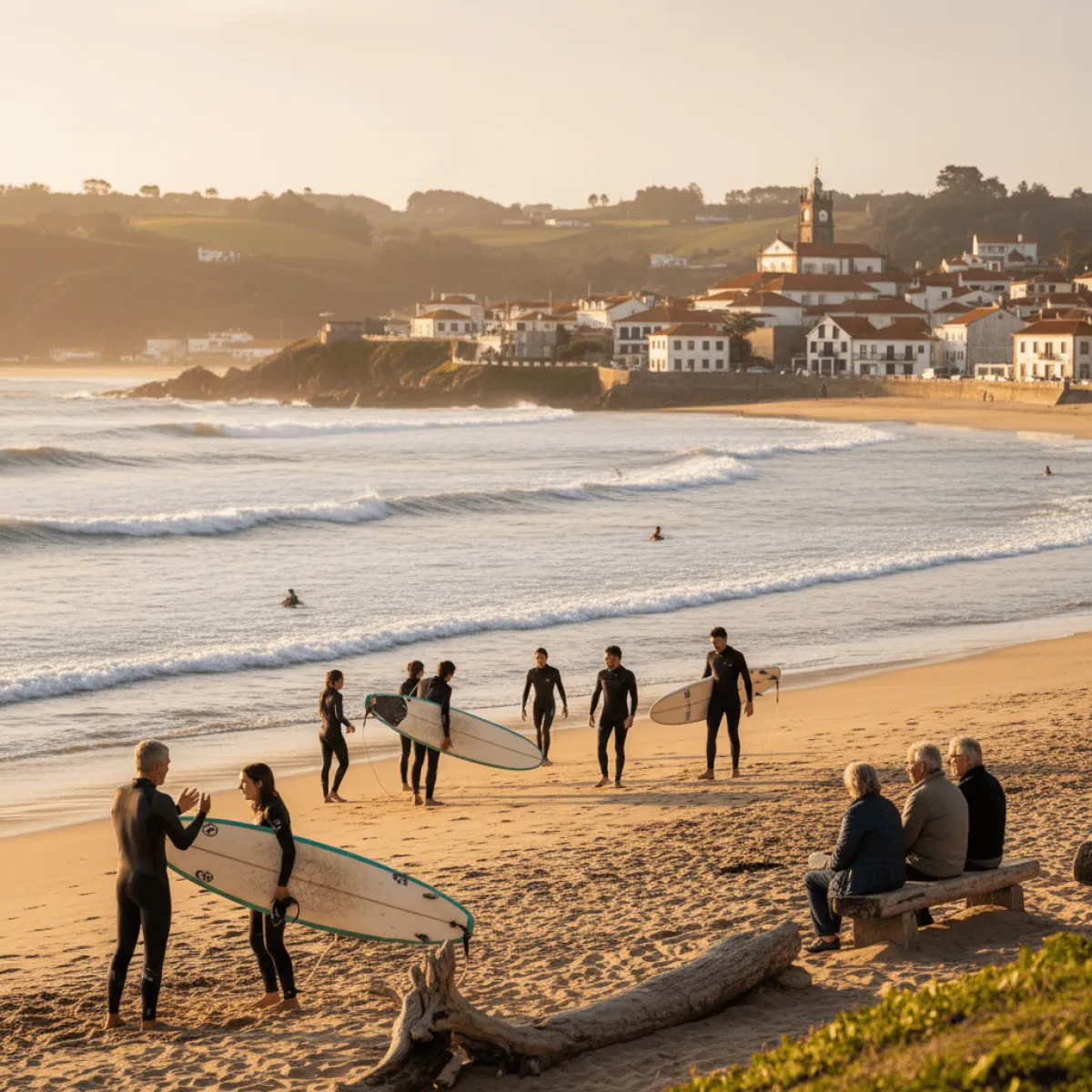
Moledo is the beach where Porto goes on weekends and half of Lisbon shows up in August. Sandy bottom, relatively forgiving waves on a mid tide, and a view of Ínsua that, after all these years, is still one of the best postcards on the Portuguese coast. It's also the most crowded beach in Caminha during high season, which means line-ups full of surfers, beginners getting pushed by instructors at lunchtime, and some frustration for visitors looking for space.
Tip: if you want to surf Moledo properly, go early. Seven in the morning, eight at the latest. Ideal tide is mid-tide rising, with light easterly wind. By around ten, the schools arrive and the beach turns into an aquatic playground. That's not bad for beginners, it's just the truth.
Vila Praia de Âncora: the workhorse
Just south, Vila Praia de Âncora is less photogenic than Moledo, but many local surfers prefer it. The waves tend to be more consistent on smaller swells, and there's less competition for the line-up. The promenade has decent terraces for waiting out a wind shift, and there are places where you can have lunch for ten or twelve euros without ceremony. Don't expect refinement, expect function.
The mouth of the Minho: for the curious, not for surfers
The river mouth is where you go not to surf but to watch. On big swell days you get a serious natural spectacle: waves breaking on the bar, the Ínsua lighthouse in the distance, sometimes dolphins fighting upstream against the current. It's not a swimming zone. It's not a surf zone. It's a respect zone. If you want to experience the Minho up close without entering freezing water, take the kayaking experience on the Minho estuary, which takes you through calm areas with views across to Galicia. It's the best way to grasp the geography of the place without getting wetter than necessary.
Learning to surf: how to choose a school without getting fleeced
The surf school market in Caminha has grown a lot in the last five years, and not all schools deliver the same standard. There are serious operations with instructors certified by the Portuguese Surfing Federation, and there are opportunists who grab a group of twelve, hand out foam boards, and send them into the water with a teenage helper. Knowing the difference is half the battle.
Practical criteria for choosing a school:
- Student-to-instructor ratio: never accept more than six to one. Four is ideal.
- Equipment: foam boards are the right standard for beginners. Wetsuits should be winter grade (4/3mm) between October and May, no matter what they try to talk you into.
- Lesson length: an hour and a half is the decent minimum. Forty-five minute lessons are an insult.
- Land briefing before entering the water: if the school takes you straight to the sea without covering safety, positioning, and reading currents, stay on dry land.
Average price for a private lesson in 2026: 35 to 50 euros. Group lesson: 25 to 35. Five-lesson packages usually drop closer to 100 euros. Above these numbers, you're paying for branding, not quality. Always check locally, since prices vary by season.
When to come, and when to stay home
The best month to start learning in Caminha is not August, it's June. In June the water hasn't yet warmed enough to bring the full tourist load, but it's no longer glacial, and waves are generally smaller and better organised. September is also excellent, perhaps the best month overall: water relatively warm by local standards, beaches calmer, and autumn swells arriving with manageable size for those with some experience.
August is the worst month for beginners for the obvious reasons: crowded beaches, overworked schools, tired instructors. If August is your only window, book your lesson for eight in the morning. The difference is absurd.
Winter: for surfers who already know what they're doing, December to February can deliver unforgettable days, with long swells from the North Atlantic. But it's cold, unstable, and demands quality kit. Not a learning destination.
Where to stay to wake up near the water
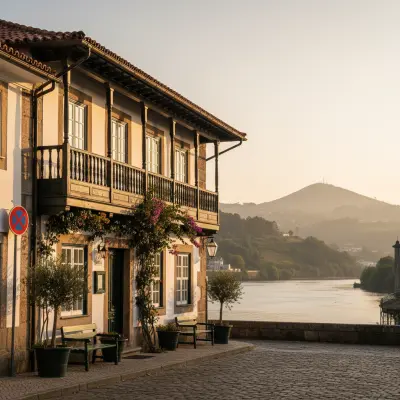
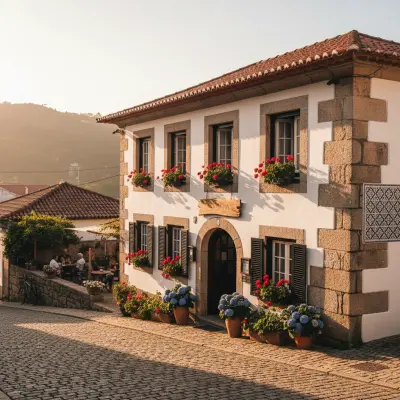
The town of Caminha has a small but characterful historic centre, and some of the best lodging options are right there, a few minutes on foot from the river and a short drive from the beaches. Litos AL Alojamento Local is a sensible choice if you want a base in the historic centre, with the bonus of being able to walk to dinner near the market or catch the ferry to Galicia without depending on a car. It's the kind of place that reminds you Caminha is a town first and a destination second.
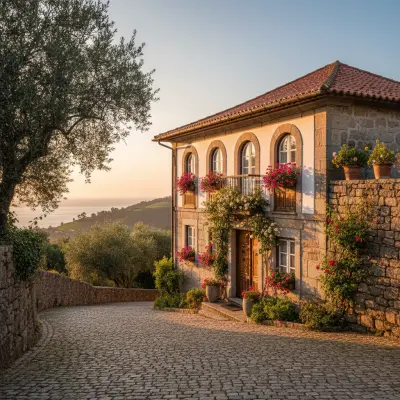
For couples or small groups looking for something a touch more polished, Donna Nega Alojamento Local has built a quiet following among travellers wanting the right balance of comfort and personality, without paying inflated branded-hotel prices. The hosts will give you specific tips on where to eat and which tide to catch, and that's worth as much as any Michelin star.
And for backpackers in search of social atmosphere and fair prices, Arca Nova Guest House & Hostel is the obvious meeting point. There's usually a board at the door, a shared kitchen, and that energy of people travelling without rushing. It's also where you'll hear the best stories about which beach works with which wind, told by regulars who come back every year.
Eating after surfing: logic and priorities
Coming out of the water hungry forty-five minutes in is normal. Cold water burns more calories than people expect, and Caminha has a local tradition that plays in your favour: seafood rice and lamprey in season. If you're here in spring (roughly until April), eat lamprey. It's not for everyone, it's viscous, dark, intense. But it's the most authentically local thing on offer.
Outside that window, stick with octopus, bacalhau à minhota, and weekend cabrito if you can book ahead at one of the inland restaurants. The places along the Caminha waterfront are honest without being dazzling. Confirm locally, please, because the good ones change hands and menus aren't always online.
Going further: the Caminha-Barcelos axis
Caminha doesn't exist in isolation. It's forty-five minutes by car from Barcelos, and any longer stay benefits from exploring that link. Barcelos is different territory, more inland, more tied to the famous fair and pottery tradition, but it's the kind of city where you can have a great unplanned lunch and walk into a tasca without a reservation. If you're travelling with kids and want to alternate beach days with quieter ones, it's worth looking at the honest Barcelos family guide, which lays out the practical points without nostalgia.
If you happen to be in the region in May, the Festa das Cruzes in Barcelos is one of the most beautiful festivals in the north and worth the drive. And if you're the type who measures a city by the quality of its coffee rather than the height of its monuments, this café-by-café order guide for Barcelos is a useful companion for a morning before heading back to Caminha for the afternoon session.
What no one tells you about surfing the Minho
Some details only come up in conversation, never on tourism websites. Three of them:
First: the north wind is your enemy. When the forecast shows nortada above fifteen knots, forget it, do something else. The waves get choppy, the water cools off in a couple of hours, and even the locals stay on land. Instead, walk through the Camarido pine forest, take the ferry across the river to Galicia, or just sit at a terrace with a view.
Second: the currents at the river mouth are real. I've personally pulled two careless swimmers from spots they shouldn't have entered, and both were good swimmers. The mouth of the Minho doesn't forgive distraction. If you're going to enter the water near Ínsua, go with someone who knows the area, or don't go at all.
Third: the best surf in Caminha is not in Caminha. It's in Afife, ten kilometres south, in Viana do Castelo. But that's another story, and the locals don't love it being said out loud. Consider yourself warned.
The honest summary
Caminha is one of the best places in Portugal to begin a relationship with the sea, provided you arrive with the right expectations. It is not Ericeira. It is not tropical. The water is cold, the wind is stubborn, and mass tourism hasn't yet swallowed the town whole, which is good but means some things still operate the old-fashioned way, with flexible hours and menus that move. You need patience and a willingness to ask.
What you get in return is rare: a real coastal town, a coast that still respects those who arrive, and the chance, in three days, to go from not being able to stand on a board to catching your first complete wave unaided. No photograph does that moment justice. But there is a café on the Caminha waterfront where you can sit and celebrate with a three-euro galão and a decent pastry. And that, in the end, is more than many tourist destinations manage to offer.