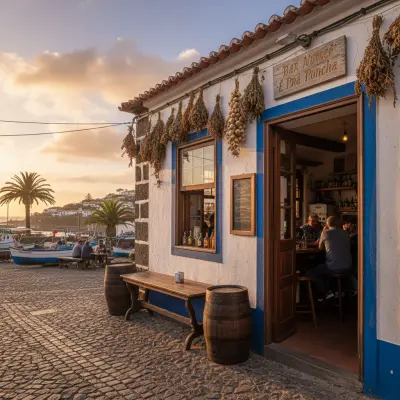
Câmara de Lobos: Pick Your Neighborhood, Pick Your Trip
In the centre, fishermen unload black scabbard at dawn and the streets fill with poncha by night. In Estreito, Tinta Negra vines set the pace. In Jardim da Serra, you wake up inside a cloud 580 metres above the sea. Each corner of Câmara de Lobos delivers a radically different holiday.
Most visitors to Madeira treat Câmara de Lobos as a pit stop. They swing by the harbour, snap a photo of the painted fishing boats, drink a poncha, and head back to Funchal. That's a mistake. The town Winston Churchill painted in 1950, setting up his easel at the Espírito Santo viewpoint, deserves more than a bus tour bookmark. It deserves nights. And where you sleep here fundamentally changes what kind of trip you'll have.
The municipality of Câmara de Lobos isn't just the photogenic harbour with the peeling xavelha boats. It climbs uphill into the vineyards of Estreito, passes through the eucalyptus-scented heights of Jardim da Serra near Cabo Girão, and drops into the most dramatic valley on the island at Curral das Freiras. Four zones, four completely different holidays. Let's break it down.
The Historic Centre: For People Who Want Noise and Boats
If you want to walk out the door and be immediately in the thick of things, Câmara de Lobos centre is the obvious pick. The cobblestone streets around the harbour are narrow, slightly tilted, and lined with bars that swing their doors open around five in the afternoon. In the morning, fishermen unload black scabbard fish from painted wooden boats. By night, the atmosphere shifts entirely.
The harbour itself is small, which works in its favour. You can cross it on foot in ten minutes, but the options are concentrated. There are taverns with espetada on bay laurel skewers and grilled scabbard fish at half the price you'd pay in Funchal for identical plates. O Polar on Rua Pico da Torre is a local reference for espetada and bolo do caco. Don't expect magazine decor. Expect honest food and portions that defy physics.
For poncha, the question isn't whether you'll drink it, but how many. Bar Number Two, É Prá Poncha is the kind of place where you walk in for one and leave after three, chatting with locals who'll insist the passion fruit version beats the classic lemon (they're right). Poncha was born here, in this village, invented by fishermen who needed something strong after nights at sea. Sugarcane rum, honey, lemon. Simple and devastating.
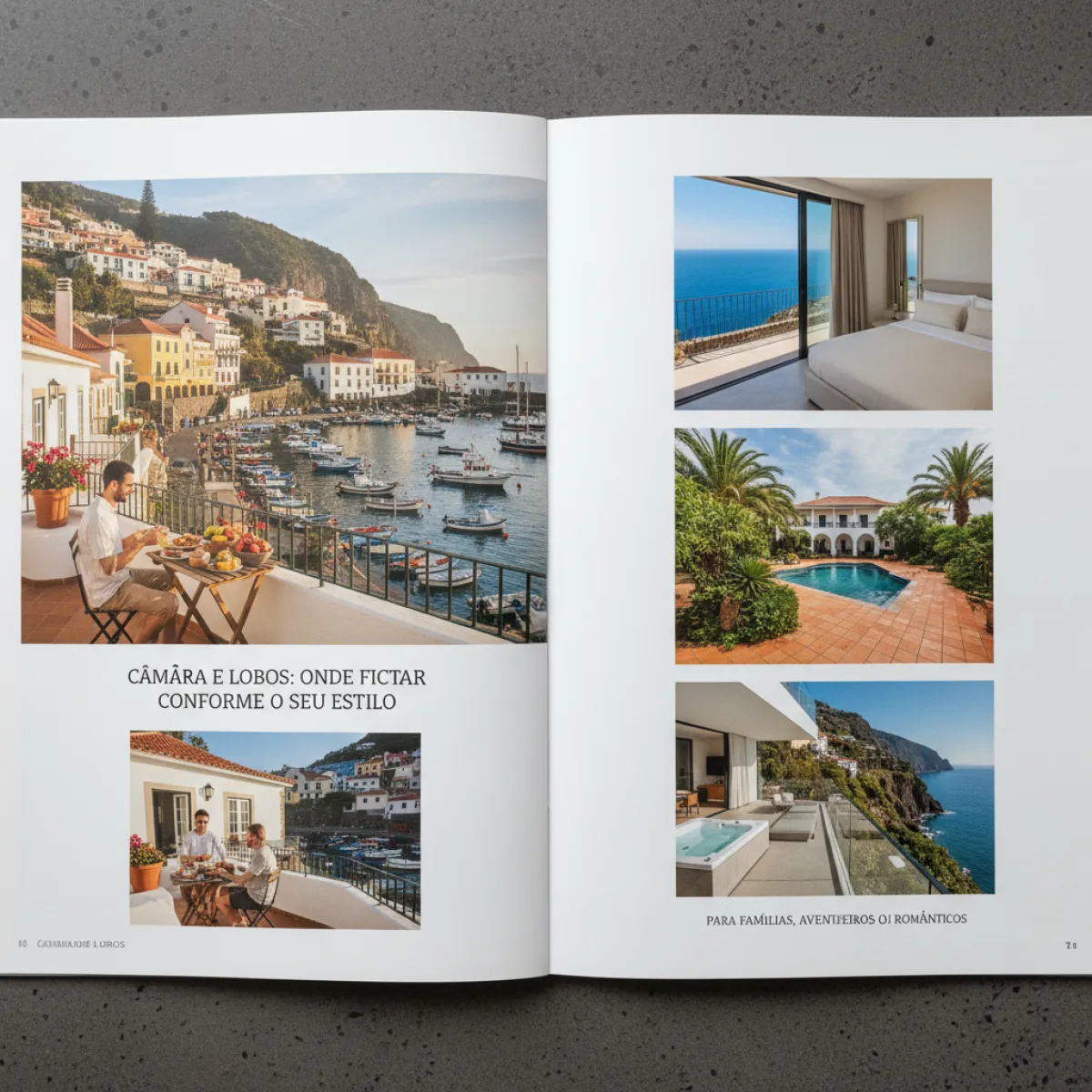
The practical side: the historic centre has growing numbers of vacation rentals, from studios with harbour views to apartments in the alleys behind the church. Expect to pay between 60 and 100 euros per night for a one-bedroom with a kitchen, depending on the season. The Pestana Churchill Bay, right by the harbour, is the most premium option, but independent apartments tend to offer better value.
The downside? Noise. On summer weekends, the streets around the harbour stay lively until late. If you're noise-sensitive, ask for accommodation on the upper streets, overlooking rooftops rather than bars.
Who the centre is for
- Couples who want to go out at night without needing a car
- Solo travellers looking to socialise in harbour bars
- Photographers (the 7am light on the harbour, with boats and mist, is unreal)
- Anyone on a short Madeira trip who wants easy access to Funchal (15 minutes by bus)
Estreito de Câmara de Lobos: Wine, Quiet, and Vine Rows
Drive ten minutes uphill from the centre and you enter another world. Estreito de Câmara de Lobos is Madeira's wine country, and it shows. Vine trellises line the narrow roads, stone houses have grapevines crawling over their gates, and the pace here is permanently set to siesta.
The parish is known primarily for Madeira wine production, particularly the Tinta Negra and Verdelho grape varieties. The Festa da Vindima (grape harvest festival) in September turns Estreito into a raucous celebration with old-school grape treading, live music, and snacks. If you're on Madeira in September, it's worth the detour.
Quinta do Estreito is the reference accommodation here, a former vineyard estate converted into a hotel with a pool and views over the terraced slopes. But the more interesting finds in Estreito are rural houses and vacation rentals that pop up quietly on Airbnb, many with gardens and barbecues. Count on 50 to 80 euros per night.
Dining in Estreito is more limited than in the centre, but there are local restaurants with espetada grilled over bay laurel wood and spit-roasted chicken that justify the climb. Adega da Quinta is a solid option for tasting regional wines without the tourist-cave atmosphere.
If you enjoy hiking, Estreito sits midway to several levada routes. The guide to Funchal's best levada walks in April is a good starting point for planning accessible routes from this area. And if you're tempted to explore more of the island, a slow day in Santana makes for a perfectly doable day trip.
Who Estreito is for
- Couples who want tranquility and don't mind driving
- Wine lovers and anyone curious about Madeira wine production
- September visitors who want to catch the grape harvest
- Families with a car who prefer space over urban charm
Jardim da Serra: Mountains, Fog, and the Cabo Girão
Jardim da Serra is for people who want to wake up inside a cloud. Literally. At 550 metres altitude, this parish is frequently blanketed in morning fog that burns off around ten, revealing an absurd ocean view and, on clear days, the Desertas Islands on the horizon.
The big draw of Jardim da Serra is proximity to Cabo Girão, Europe's second-highest sea cliff. The Skywalk, a glass platform suspended 580 metres above the sea, costs 2 euros and is one of those experiences that works more on vertigo than on views (though the views help). Arrive early, before ten, to dodge the tour groups.
Accommodation here splits between rural quintas and eco-lodges. The vibe is decidedly mountainous: cool nights even in summer, hydrangea-lined gardens, and the sound of crickets rather than waves. If you're looking for disconnection, this is it. If you're looking for fast Wi-Fi and nightlife, forget it.
The Jardim da Serra experience is essentially outdoor-focused. Hiking is the main event, with several trails descending to the fajã below Cabo Girão, where farmers grow bananas and grapes on terraces accessible only by cable car. For those who appreciate longer-distance trails, hiking the Rota Vicentina with spring blooms on the mainland is a complementary experience worth considering for another trip.
Accommodation prices hover around 45 to 75 euros per night. Local food covers the usual Madeiran staples, bolo do caco, espetada, but served in more rustic settings. Check locally for restaurant hours, as many close early.
Who Jardim da Serra is for
- Hikers and nature lovers
- Anyone who wants to fully escape beach tourism
- Landscape photographers (the foggy mornings are spectacular)
- Honeymooning couples who value isolation
Curral das Freiras: The Most Secluded Valley on Madeira
Let's be direct: Curral das Freiras is not for everyone. Getting there means descending a winding road with dozens of switchbacks into a volcanic crater, and the valley itself is so isolated that the nuns who gave it its name (Valley of the Nuns) fled here in the 16th century to escape pirates. If that doesn't tell you something about the remoteness level, nothing will.
But for those seeking geological drama and deep silence, it's extraordinary. Steep mountains surround the village on all sides, and the feeling of being at the bottom of a crater is real because you are, in fact, inside one. The Eira do Serrado viewpoint, on the crater's rim, offers the most iconic photograph in all of Madeira.
Accommodation is scarce. The Hotel Eira do Serrado, up at the viewpoint, is the best-known option, with a spa and views that justify the price. Down in the village, half a dozen vacation rentals offer a genuinely rural experience, chickens in the yard and chestnuts drying in autumn. The entire Câmara de Lobos municipality revolves around chestnuts in November during the Festa da Castanha in Curral das Freiras, an event that fills the village with chestnut liqueur, chestnut soup, and chestnut cake.
Dining options are limited but honest. Chestnut soup and local cherry liqueur are the specialities. If you go to Curral das Freiras and don't try the chestnut soup, you might as well not have driven down that road at all.
To extend your Madeira exploration from here, consider bringing home some traditional crafts from Santana, on the other side of the island but a natural complement to any itinerary that values tradition.
Who Curral das Freiras is for
- Travellers who already know Madeira and want something different
- Slow travellers who don't mind limited access
- Geology and dramatic landscape enthusiasts
- People who consider a village without traffic lights a luxury
The Practical Question: Car or No Car?
In central Câmara de Lobos, you can survive without a car. Buses to Funchal run regularly (Horários do Funchal lines 1, 2, 4), with journeys of 15 to 20 minutes. For any other area in this article, you need a car. Estreito, Jardim da Serra, and Curral das Freiras have sporadic public transport and no evening service. Car rental in Madeira starts at around 20 to 25 euros per day, and it's worth every cent if you're leaving Funchal.
Uber works in Madeira but with unreliable availability outside Funchal. Taxis exist, but agreeing on a price beforehand is good practice.
So, Which One?
If you have three nights on Madeira and want local flavour without logistical hassle, stay in central Câmara de Lobos. If you have a week and a car, split between the centre (for poncha nights) and Jardim da Serra or Estreito (for hiking mornings). If you want an experience you'll tell everyone about when you get home, spend at least one night in Curral das Freiras. The drive back up might be the challenge, especially after the chestnut liqueur.
All of Madeira is small, and Câmara de Lobos is strategically placed between Funchal and the island's west coast. Wherever you stay within the municipality, the best of the island is less than an hour away. The difference is what you find when you open your door in the morning: boats and poncha, vines and silence, clouds and vertigo, or mountains and chestnuts. Choose well.