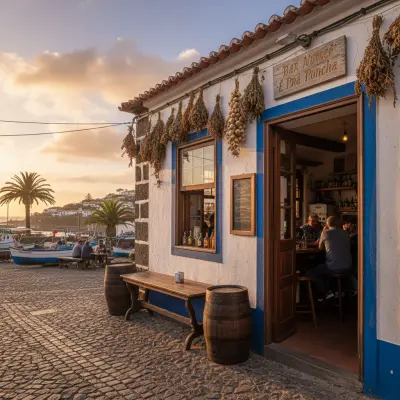
Câmara de Lobos: A Local Festival Calendar Worth Planning Around
From São Pedro to black scabbardfish, from Jardim da Serra's cherries to the Estreito grape harvest: Câmara de Lobos has one of Madeira's fullest festival calendars. Here's the month-by-month guide, with what to eat, when to go, and what not to miss.
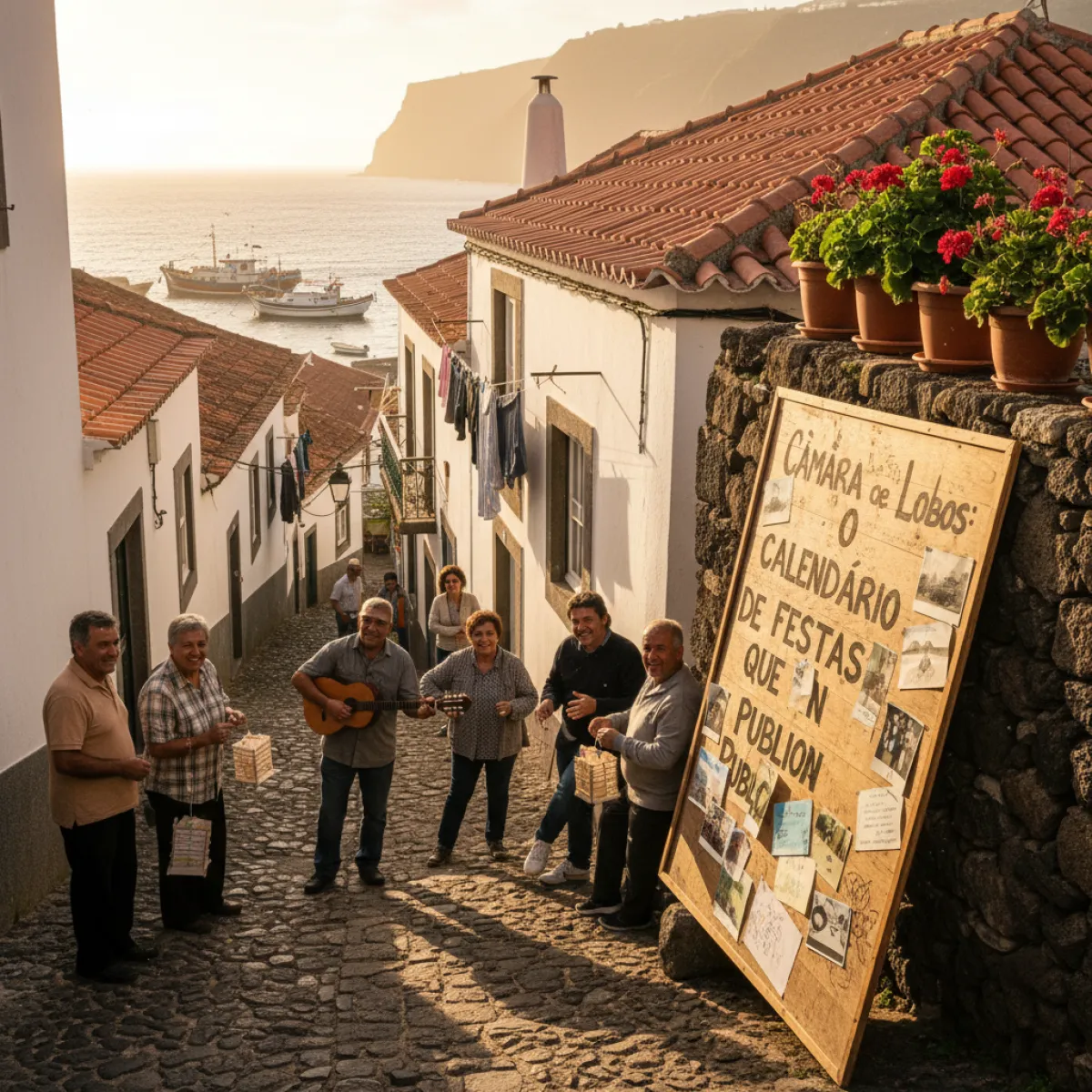
If your idea of Câmara de Lobos starts and ends with Churchill's painting spot and a few waterfront restaurants, you're missing the point. This compact fishing village punches well above its weight when it comes to local festivals. The problem is, most travel guides either ignore them entirely or mention them as footnotes. Here's what actually matters, month by month.
January: Cantar os Reis and the slow start
The year in Câmara de Lobos opens with Cantar os Reis, when groups of locals move through the streets and squares singing traditional songs with violas, braguinhas, and rajões. It's not a formal concert. It's neighbours knocking on doors after dark, singing the Kings. If you're on Madeira in early January, you'll likely hear rehearsals in any square in Estreito or the village itself. No ticket required. Just follow the sound.
February: Carnival, Câmara de Lobos style
The whole island takes Carnival seriously, but Câmara de Lobos doesn't settle for watching the Funchal parade. The village runs its own procession, usually the Sunday before Shrove Tuesday. Local groups spend months preparing floats and costumes, and the result feels rougher, more honest than the polished Funchal spectacle. The seafront fills up, bars open early, and the atmosphere reminds you this is still a fishing town at heart.
If you're visiting around this time, it's worth combining with levada walks near Funchal, which in late winter are relatively crowd-free and intensely green.
June and July: cherries at the top of the hill
This might be the most underrated festival in the municipality. The Festa da Cereja takes place in Jardim da Serra, a parish in the hills above Câmara de Lobos, and it celebrates the only cherry produced in Madeira. The tradition dates back to 1954 and the format stays faithful: an ethnographic procession, folk groups, cooking demonstrations, and of course, fresh cherries everywhere, in liqueur, in cake, in everything imaginable.
The exact date shifts depending on when the fruit ripens, generally between mid-June and early July. The best way to confirm is to check the Câmara de Lobos municipal agenda in the weeks before your trip. Jardim da Serra is about 15 minutes by car uphill from the village, and the drive alone is worth it for the views over Cabo Girão.
If you're into regional crafts and want to take something meaningful home, have a look at what's made in Santana, where traditional crafts are still the real thing. It's on the other side of the island, but pairs well with a trip focused on what Madeira actually produces.
What to eat at the Cherry Festival
Don't leave without trying the local ginjinha and cherry cake. There are always producer stalls, and the prices are village-fair level, not gourmet-market level. Expect 2 to 5 euros per portion at most stalls.
Late June: the Festas de São Pedro
This is the main event. São Pedro is the patron saint of fishermen, and in Câmara de Lobos that means everything. The festivities typically run from the last week of June into early July, with a street fair, popular marches, solemn Mass, procession, and a fireworks display over the bay that, on its own, is reason enough to show up.
The São Pedro Ethnographic Parade reconstructs the 19th-century procession and is one of the most authentic on the island. This isn't staged for visitors. It's a community showing itself to itself, with traditional dress, ox carts, and real fishing nets.
On arraial nights, the harbour area becomes unrecognisable. Bars fill up, street food stalls multiply, and the smell of espetada on laurel skewers mixes with sea salt. For a poncha before or after the festivities, Bar Number Two, aka É Prá Poncha, is a mandatory stop. Order the passion fruit poncha or the regional version made with sugarcane honey and lemon, and take your time.
Practical tip
If you're planning to watch the fireworks, arrive at least an hour early. The seafront fills up fast and parking in the village is limited. Consider leaving your car in Funchal and catching a bus (line 154, Horários do Funchal, check schedules locally).
August: the black scabbardfish takes centre stage
The Festa Gastronómica do Peixe-Espada Preto is the celebration that best captures what Câmara de Lobos is about. This deep-water fish, caught at night on lines that drop over a thousand metres, is the village's historic livelihood. And in August, usually during the second week, the historic centre transforms into an open-air food festival.
There's scabbardfish grilled, fried, breaded, and in the combination that sounds odd but works, with Madeiran banana. There are folk groups, regional bands, and plenty of poncha. The atmosphere is popular, the prices are fair, and it's one of the few food festivals on Madeira where the protagonist is genuinely the local product, not an excuse to set up a stage.
Entry is free. Meals at the stalls typically cost between 5 and 12 euros. Confirm exact dates on the municipal agenda, as they shift slightly each year.
September: the grape harvest in Estreito
Estreito de Câmara de Lobos is wine country, and in September, when the grapes are ready, the Festa das Vindimas takes over the parish. This event is part of the broader Madeira Wine Festival programme, but in Estreito it has a more human scale and a more genuine character than the Funchal events.
The highlight is the live harvest, followed by the grape pickers' parade and the traditional grape treading. If you've never seen grapes being pressed by foot in a stone lagar, this is where to see it. There are wine tastings, espetada, bolo de mel, and live music well into the night.
Estreito is about ten minutes by car above Câmara de Lobos village. Many visitors combine the festival with lunch at one of the local wine estates, though reservations are advisable at this time of year.
October to December: the quiet that isn't quiet
Municipal Day is October 4th, and while it's not a street party in the traditional sense, there's usually cultural programming and ceremonies. After that, the calendar slows down until Christmas, when all of Madeira lights up and Câmara de Lobos sets up its own nativity scene and decorations around the harbour.
New Year's Eve on Madeira is, of course, famous for the Funchal fireworks, but many locals prefer to watch from Câmara de Lobos, where the view across the Funchal bay is unobstructed and the crowds are thinner.
How to fit the festivals into a Madeira trip
If your dates are flexible, late June is the sweet spot for Câmara de Lobos. You'll catch the Festas de São Pedro, the weather is warm without being oppressive, and you can combine it with hiking. For trail lovers, the Rota Vicentina in spring is an option on the mainland, but on the island, the levadas in April and May are hard to beat.
If food is the priority, August (scabbardfish) and September (grape harvest) are the perfect pair. Two weeks on Madeira during that stretch, and you eat as well as almost anywhere in Europe for a fraction of the price.
For a full day away from Câmara de Lobos, Santana deserves a proper 24 hours. It's the other side of the island, with thatched-roof houses, laurel forest, and a completely different pace.
Practical information
- The Câmara de Lobos municipal agenda (agenda.cm-camaradelobos.pt) is the best source for confirmed dates.
- Street festivals are generally free. Food and drink at stalls: 3 to 12 euros.
- Parking in the village is difficult on festival nights. Use public transport or arrive early.
- Most festivals are outdoors. Bring a light jacket for evenings, even in summer.