Bragança: Granite Memories and the Frontier of Time
Explore the granite heart of Bragança, from its medieval Citadel to the enigmatic Domus Municipalis. A guide to Portugal's last frontier, where ancient history and contemporary art meet amidst the rugged beauty of the north.
The Austere Majesty of the Northeast
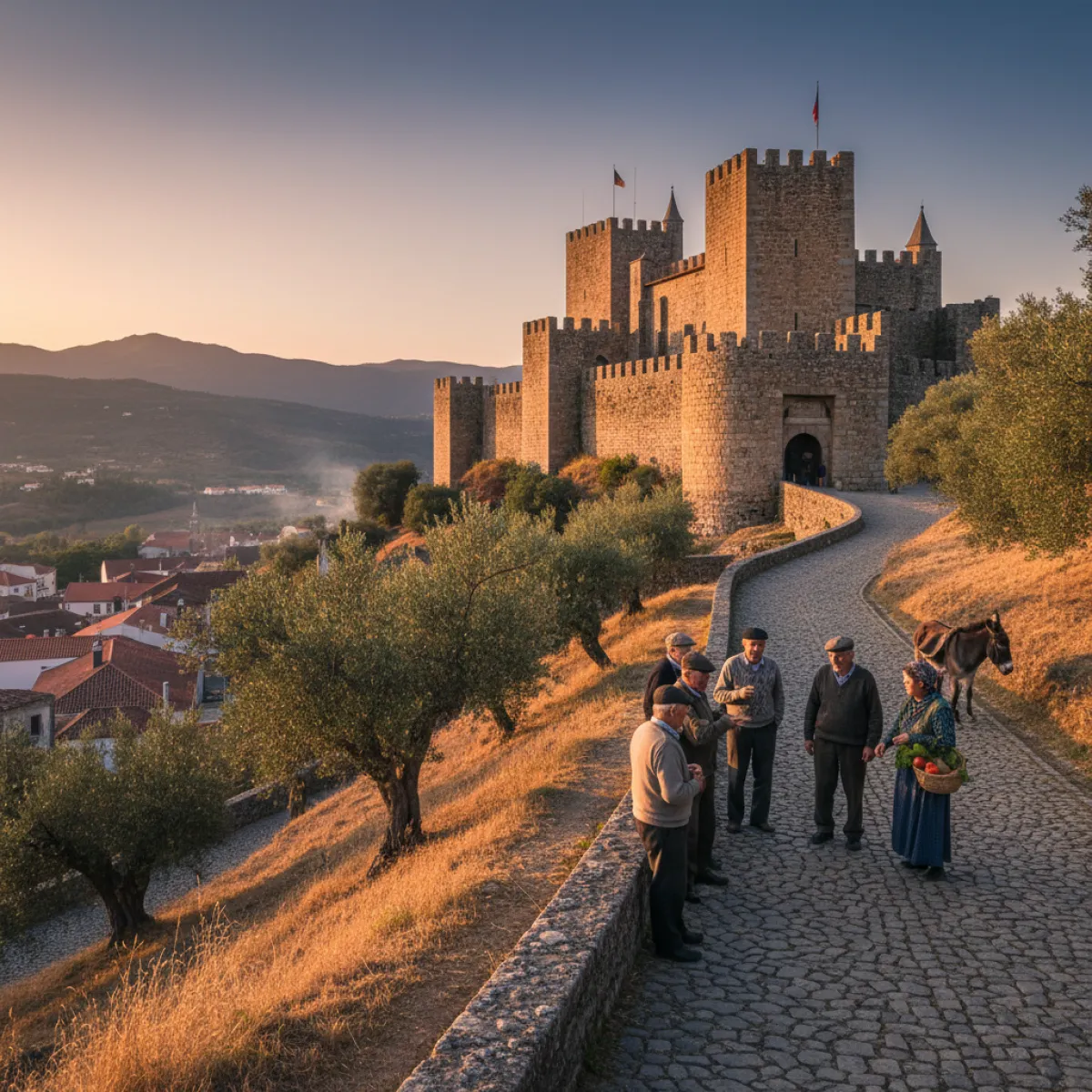
Bragança is not a place you visit on a whim. To reach this northeastern outpost of Portugal is to commit to a journey that strips away the coastal veneer of the country, revealing a rugged, granite core that feels disconnected from the 21st century. It is a city defined by its borders, physical, historical, and psychological. The drive from Porto is a transition from the lush Douro Valley to the high plateaus of Trás-os-Montes, where the horizon widens and the air sharpens. Here, the landscape is the architecture, and the architecture is the history.
The Citadel (Cidadela) is the logical and emotional starting point. Perched on a hill overlooking the modern city, this medieval enclosure remains remarkably alive. Unlike many European fortresses that have been turned into sterile museums, people still live within these walls, hanging laundry from balconies that have stood for centuries. The 12th-century castle, with its imposing Keep, serves as a vertical anchor to the city, but the real intrigue lies in the Domus Municipalis, a structure that continues to baffle architectural historians.
The Enigma of the Domus Municipalis
Standing adjacent to the Church of Santa Maria, the Domus Municipalis is the only Romanesque civil building in the Iberian Peninsula. Its pentagonal shape and continuous gallery of windows are unique, serving originally as both a cistern for water storage and a meeting hall for the town’s elders. To step inside is to enter a space of secular gravitas. The acoustics are sharp, the light filtered through narrow stone apertures, creating an atmosphere of quiet intensity. It is a testament to the early administrative independence of Bragança, a city that has always had to govern itself due to its isolation.
The experience of the city changes dramatically with the seasons. In winter, the granite absorbs the damp cold, and a profound stillness settles over the hills. This is the period best captured in The Silence of Montesinho: A Winter Retreat in the Last Frontier of Portugal. To visit then is to see Bragança without its masks, revealing the raw resilience that has allowed it to survive for nearly a millennium on the edge of the kingdom.
Curating the Past at Abade de Baçal
If the Citadel is the heart of Bragança, the Museu do Abade de Baçal is its intellect. Housed in the former Episcopal Palace, the museum is named after Father Francisco Manuel Alves, a man whose life’s work was the preservation of Trás-os-Montes’ soul. The collection is delightfully eclectic, ranging from prehistoric 'berrões' (granite zoomorphic statues) to 18th-century religious art. The museum’s courtyard, filled with Roman tombstones and medieval carvings, is perhaps the most evocative spot in the city. It is here that you realize the continuity of life in this region, the same stone used by Roman legionnaires was repurposed by medieval builders and, later, by local farmers.
This deep connection to Roman roots is a regional trait, though each city expresses it differently. For those interested in how the empire left its mark further west, a reading of The Roman Legions' Legacy: Exploring the Ancient Thermal Springs of Chaves provides a necessary counterpoint. While Chaves focused on the healing properties of water, Bragança focused on the defensive properties of the heights.
Gastronomy: A Dialogue with the Land
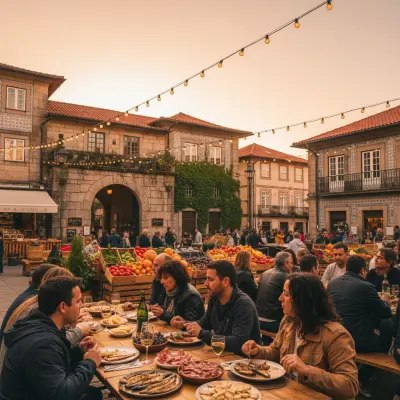
Dining in Bragança is an exercise in honesty. There is no room for culinary artifice when the ingredients are this potent. The local cuisine is built on pork, chestnuts, and game. For a lunch that bridges the gap between traditional grit and modern comfort, Mercado Club in the city center is a reliable choice, offering local flavors in a more polished setting. However, one cannot speak of regional food without mentioning the *alheira*.
While Bragança produces excellent smoked meats, the neighboring town of Mirandela is often cited as the capital of this specific sausage. To understand the cultural weight of what you are eating, consult Beyond the Alheira: Mirandela’s Culinary Resilience. In Bragança, however, the star is often the Posta Mirandesa, a thick, fire-grilled steak from local cattle that requires nothing more than a sprinkle of sea salt and a robust local red wine.
The Contemporary Edge
Despite its ancient bones, Bragança has embraced modernity with a sophistication that often surprises visitors. The Graça Morais Contemporary Art Center, designed by Pritzker Prize winner Eduardo Souto de Moura, is a masterclass in architectural intervention. The building integrates a modern concrete wing with an old manor house, housing the visceral, earth-toned works of Graça Morais, one of Portugal’s most significant living painters. Her work often deals with the myths and hardships of rural life, making it the perfect visual accompaniment to a tour of the region.
For those who feel the weight of history becoming too heavy, the surrounding nature offers a different kind of relief. The proximity to the Montesinho Natural Park allows for excursions that are as much about mental clarity as they are about physical activity. One might opt for Serenity in Trás-os-Montes: A Yoga Experience in the Heart of Montesinho to reconnect with the landscape in a more contemplative way. Alternatively, for those seeking a more visceral engagement with the terrain, the Sabor River Kayak Expedition: Navigating the Deep Waters of Trás-os-Montes provides a perspective of the region that is only available from the water.
Practicalities for the Discerning Traveler
- Logistics: You will need a car. The drive from Porto on the A4 is straightforward, but the real beauty lies in the secondary roads that snake through the mountains.
- Timing: Late October is spectacular for the chestnut harvest. Avoid mid-August unless you enjoy intense heat and crowded restaurants.
- Budget: Bragança offers exceptional value. A high-end meal with wine will rarely exceed €40 per person.
- The Sephardic Trail: Spend an hour walking the 'Rua dos Museus' to find the small markers of the city's Jewish history, a subtle but vital layer of the local identity.
Bragança is a city that rewards the patient. It does not offer the immediate, sun-drenched gratification of the south. Instead, it offers something more durable: a sense of belonging to a place that has refused to change simply to please the casual observer. It is a city of granite, and like granite, it stays with you long after you have left.