Belmonte: Where to Drink Coffee in Cabral's Hometown
On Rua Pedro Álvares Cabral, Belmonte's main street, two pastelarias compete for the town's attention. At the Monumental, a bifana with draught beer costs under five euros and serves as breakfast for half the population. At Hotspace, the cinnamon cake is the quiet star of an unpretentious display case.
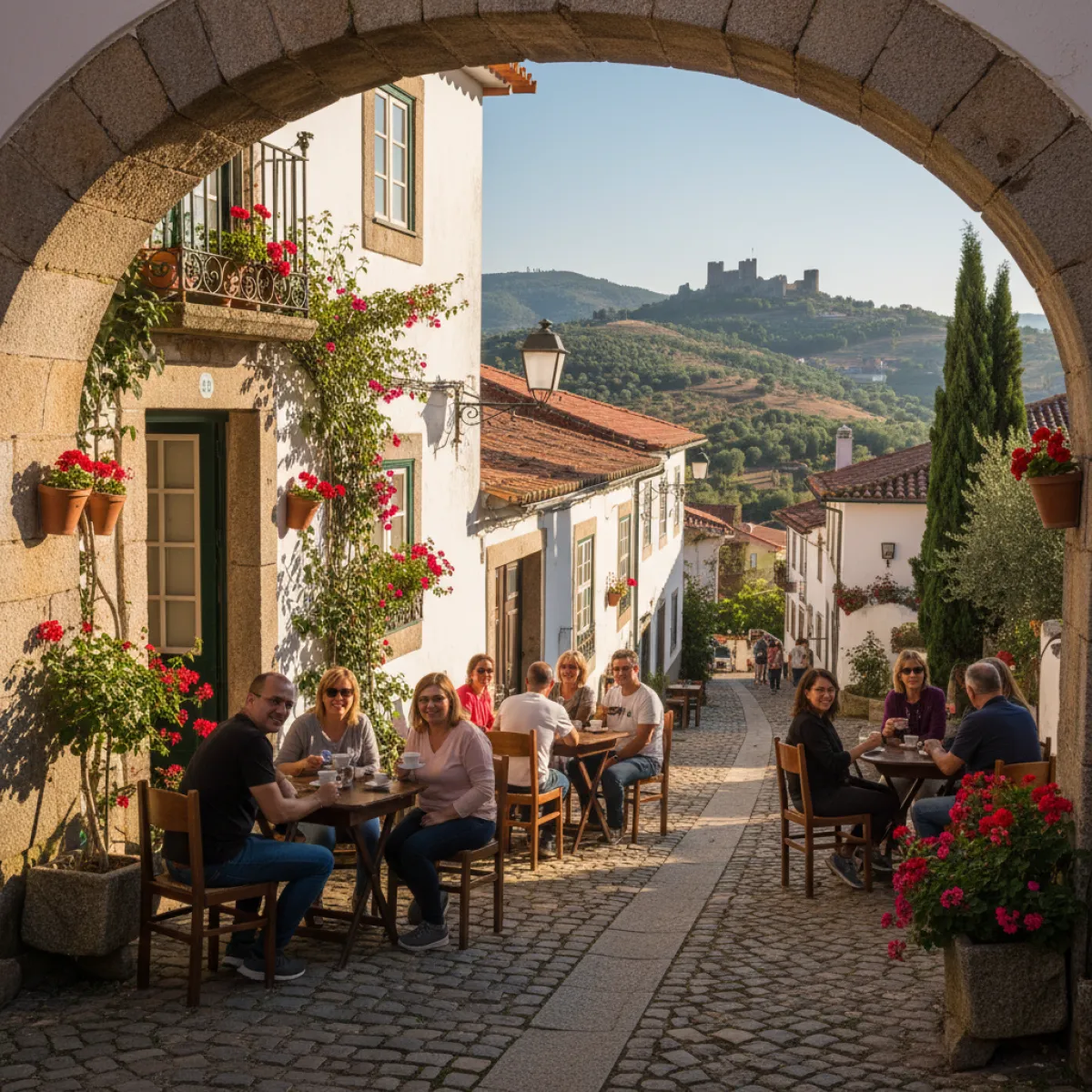
Belmonte has just over three thousand residents, a castle overlooking the Cova da Beira valley, and the distinction of being the birthplace of Pedro Álvares Cabral, the navigator who reached Brazil in 1500. It also has, like any self-respecting Portuguese town, a café culture that functions as the village's true social centre. Old men leaning on the counter at nine in the morning. Women stopping in after the market. The guy reading the entire newspaper, from football scores to horoscopes, before paying for his espresso. It's in places like these, not in the museums, that you understand how Belmonte actually works.
Don't expect a specialty coffee scene with latte art and single-origin Ethiopian beans. This is the Beira Interior, and coffee here is short, strong, cheap, and served with an efficiency that would embarrass any Lisbon barista. What changes from place to place is the atmosphere, the pastry on the side, and the quality of the conversation at the counter.
Pastelaria Monumental: headquarters
Pastelaria Monumental, at Rua Pedro Álvares Cabral 171, is probably the most frequented café in Belmonte. It's the classic Portuguese pastelaria: a display case packed with cakes, a television on in the corner, tables with plastic covers, and a counter where your coffee appears in under thirty seconds. Don't go for the décor. Go for the bifana.
The bifana at the Monumental has a reputation in town, and it's earned. The bread is simple, the pork is thin and properly seasoned with garlic and white wine, and the sauce drips just enough that you'll need an extra napkin. Order a bifana and a draught beer and you're sorted for under five euros. At lunch, the daily special runs about eight euros and usually includes soup and coffee. For what it is, the value is hard to beat anywhere near the serra.
The Monumental also does an honest caldo verde. It's not the best you'll ever eat, but at eleven in the morning on a cold November day in the Cova da Beira, with the wind coming down from the Estrela, it's exactly what the body wants.
Pastelaria Hotspace: the modern alternative
A little further up the same street, at number 239, Pastelaria Hotspace is the slightly more contemporary version of the Belmonte café experience. The space is cleaner, brighter, and draws a somewhat younger crowd. It's where Belmonte's teenagers go after school, which gives it a different energy from the Monumental.
Here, the strength is the pastries. The Beira Interior's sweet traditions don't have the fame of Pastéis de Belém or Aveiro's ovos moles, but they have their merits. Look for the bolo de canela, a local specialty: dense, fragrant, with that comforting flavour that only cinnamon and a generous amount of sugar can produce. If you're lucky enough to catch them on a day when they've made filhós, don't hesitate. Beira-style filhós, thin and crispy, dusted with sugar and cinnamon, are one of the great minor pleasures of Portuguese pastry-making.
Order a galão if you need volume, or a meia de leite if you want something between a straight espresso and the milky galão. And don't be embarrassed to ask for a torrada mista, a toasted ham and cheese sandwich. Sometimes the best meal in Portugal is the simplest one.
The castle café and surroundings
If you're visiting the Castle of Belmonte, which you should, because the view from up there across the Cova da Beira plain is among the best in the region, you'll find Restaurante Casa do Castelo on Largo de Santiago. It's not technically a café, but it has an outdoor terrace and serves coffee, and the location makes up for anything. Sit outside, order an espresso, and look at the landscape Cabral saw before deciding there was more world to discover.
Casa do Castelo is better known for its daily specials, with regional food at accessible prices. If it's lunchtime and you're hungry, it's worth stopping for roast kid goat or a lamb stew, two classics of Beira cuisine done competently here. But if you just want the coffee and the view, nobody will judge you.
What to order (and what to skip)
General rules for cafés in Belmonte, and in the Beira Interior region generally:
- The bica (espresso) is always a safe bet. Coffee in Portugal is consistently good, even in the most modest establishments.
- The galão at breakfast is a ritual. Large, milky, served in a tall glass. Pair it with buttered toast.
- Bifanas (pork sandwiches) and pregos (steak sandwiches) are almost always better than the more elaborate dishes at this type of establishment.
- Skip the industrial croissants that come pre-packaged. Instead, ask what was baked that day. Homemade pastry, when available, is always superior.
- If you see Serra da Estrela cheese in the display case, buy some. Not to eat there, but to take with you. Real Serra da Estrela cheese, the DOP version with the washed rind and creamy interior, is one of the great cheeses of the Iberian Peninsula. You won't find artisanal DOP at a Belmonte pastelaria, but you might get lucky with a decent regional version.
The rhythm of coffee in Belmonte
Coffee in Belmonte, as in many interior towns, has two peaks: morning, between eight and ten, when the town wakes up and everyone stops by the pastelaria before work; and late afternoon, between four and six, when the café functions as a collective living room. If you want to see Belmonte as it really is, avoid lunchtime (when cafés are half-empty or serving meals) and show up during these windows.
On weekends, the rhythm shifts. The morning coffee stretches out, families appear, and the terrace tables fill when the weather allows it. Rua Pedro Álvares Cabral, the town's main artery, takes on a quiet but genuine life that contrasts with the near-total silence of the side streets.
Beyond the coffee: what to do in Belmonte
Belmonte deserves more than a quick coffee stop. The story of Belmonte's Sephardic community is one of Portugal's most extraordinary: a Jewish community that kept its faith secret for five centuries, surviving the Inquisition in a remote Beira village. The Jewish Museum of Belmonte tells that story with dignity and precision, and it's worth your time.
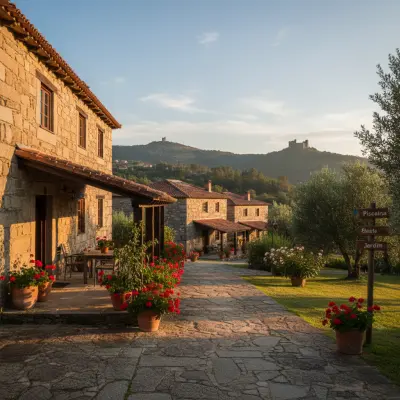
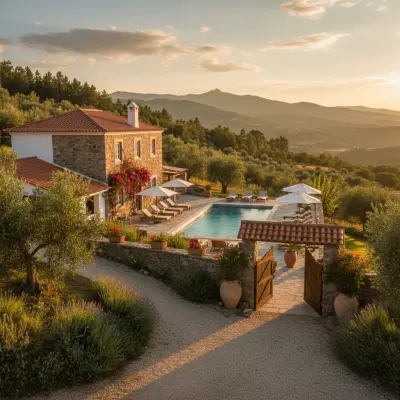
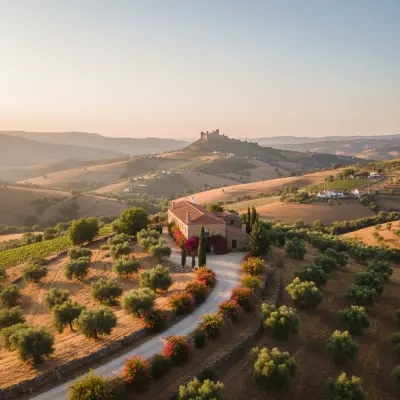
The castle, the Ecomuseu do Zêzere, and the Torre de Centum Cellas, an enigmatic Roman structure on the outskirts, round out a full day of exploration. And if you stay more than a day, Belmonte has accommodation with character. Quinta do Rio is a riverside option for those wanting total peace. For something more rustic and embedded in the landscape, Kazas do Serado offers genuine rural tourism without the artificiality of many places that use the word "rural" as a marketing exercise. And TheVagar Countryhouse is another solid choice for comfort without losing the connection to the land.
Belmonte is also strategically positioned for exploring Serra da Estrela. Manteigas and its snow wells trail are less than an hour away. And in the opposite direction, Fundão and the cherry blossoms of the Gardunha hills are a spring spectacle that justifies the trip on its own.
The verdict
Belmonte is not a gourmet coffee destination. It doesn't have independent roasters, flat whites, or baristas with tattoos and denim aprons. What it has are honest pastelarias where coffee costs a euro, the bifana is made to order, and the person next to you at the counter probably knows your family history better than you do. In an age when half the cafés in the world are trying to look like an Instagram feed, that's worth more than any latte art.
Go to the Monumental for the bifana. Go to Hotspace for the bolo de canela. Sit on the terrace at Casa do Castelo for the view. And put your phone away for five minutes. Belmonte deserves that much respect.