Belmonte in April: Spring Wildflowers in Serra da Estrela
In April, the landscape between Belmonte and the Gardunha range transforms: yellow broom, fleeting rockrose, and the Fundão cherry orchards in full bloom. A route to watch spring unfold in the Serra da Estrela, far from the crowds.
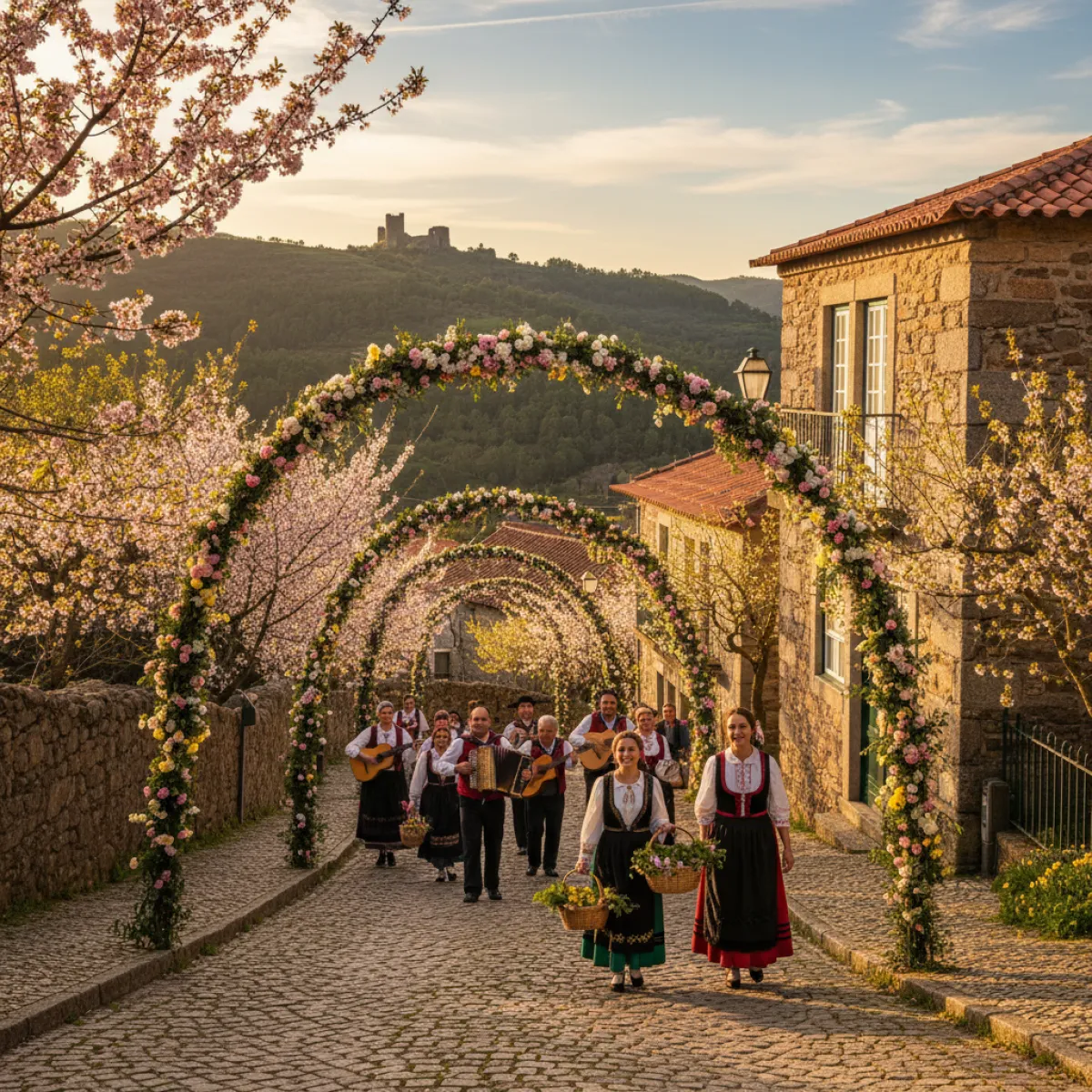
There's a week in April, it might be the second, it might be the third, depending on how winter treated the mountains, when the landscape around Belmonte changes almost overnight. Fields that spent months brown and dormant turn a fierce yellow, spotted with purple and white. Broom erupts across the slopes of the Gardunha range, rockrose opens its sticky, ephemeral petals, and the cherry orchards in the Zêzere valley explode into a white cloud that lasts barely ten days. If you want to watch spring happen in real time, this is where you come.
Why Belmonte and Not the Alentejo?
When people think of spring wildflowers in Portugal, they usually think of the Alentejo, rolling plains covered in red poppies, blue lupins stretching to the horizon. And yes, the Alentejo in April is beautiful. But it's also flat, hot, and predictable. The Serra da Estrela and the valleys surrounding it offer something different: altitude, microclimates, and a botanical diversity that ranges from Mediterranean scrub on the lower slopes to endemic species on the granite summits. Belmonte, tucked between the Gardunha range and the Serra da Estrela, sits right in the middle of all this.
The truth is, the area between Belmonte, Fundão, and Covilhã is one of the most underrated spots in Portugal for anyone who loves nature in April. The cherry blossoms near Fundão have gained some fame, deservedly so. But there's far more to see on the back roads, the dirt tracks climbing the Gardunha, and the trails connecting villages where nobody's taking selfies.
The Flower Route: Where to Start
Start in Belmonte early. At eight in the morning, the town is still quiet, the castle silhouetted against the sky, the stone streets damp with dew. You don't need much time here first thing; the goal is to be on the road before nine.
The Gardunha Range: Broom, Rockrose, and Heather
The Serra da Gardunha, south of Belmonte, is your first destination. The road climbing from Caria or Fundão takes you through chestnut and oak woods that, in April, are bursting into new leaf, a green so pale it looks fluorescent. But it's in the clearings and on the exposed slopes that spring really hits: yellow broom dominates everything, so thick in places that the air smells of honey and coconut. Among the broom, rockrose (Cistus ladanifer) opens its white flowers with purple blotches, petals so thin they look like tissue paper. They last a day. Tomorrow there'll be new ones.
If you want to explore this area properly, our guide to the cherry blossoms in Fundão covers the best trails and roads through the Gardunha in detail. The cherry bloom is more concentrated, usually between late March and mid-April, and it's worth checking the state of the flowers before you go. The Fundão municipality usually posts updates.
The Zêzere Valley: Cherry Orchards
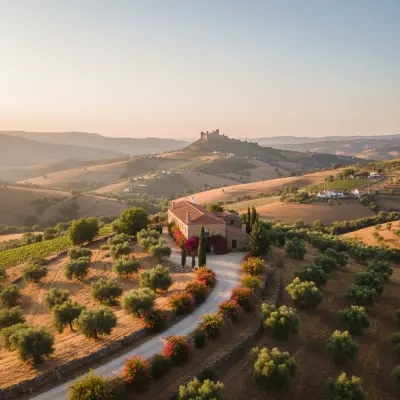
Coming down from the Gardunha toward the valley, between Fundão and Covilhã, cherry orchards line the slopes in orderly rows. This is where the main bloom happens, hundreds of hectares of cherry trees that, for one or two weeks, turn the valley into something you'd only expect to see in Japan (without the tourists, without the prices, without the queues). The best viewpoint is the road between Alcongosta and Alcaide: pull over, get out, stand there for five minutes. That's all you need.
If you decide to explore further toward Covilhã, there's plenty more. Our one-day road trip from Covilhã to the Schist Villages pairs well with a day of flowers and nature.
The Slopes Above Belmonte: Wild Flora
Back around Belmonte, the slopes heading north toward the Serra da Estrela have a different kind of flora. Here, the altitude brings French lavender (Lavandula stoechas), which in April is at its peak, entire fields of deep purple, the buzz of bees everywhere. It's less dramatic than the cherry blossoms but more aromatic. The trails heading from Quinta do Rio toward the serra are good for this: wide paths, gentle inclines, views over the valley and the Gardunha in the distance.
If you have more days and want to head higher into the Serra da Estrela itself, our Manteigas snow wells trail guide is a solid reference. In April, the upper serra may still have snow on the highest points, the contrast between snow above and flowers below is something else.
When to Go: The Window Is Short
There's no getting around it: spring flowers wait for no one. Broom and rockrose are more generous, they bloom from mid-March through May, peaking in April. French lavender holds well too. But the cherry blossoms are ruthless: one week of strong sun or a heavy rain and it's over. The second and third weeks of April are generally the best bet to see everything at once, but check locally, the timing shifts year to year.
The best time of day is morning, between 8am and 11am. The light is softer, the air still cool, and if there's dew on the petals, you'll get photographs that look like paintings. By noon, the Beira Interior sun in April is already strong, bring sunscreen and water.
Where to Stay in Belmonte
Belmonte is small, but it has accommodation options that make sense for anyone wanting to wake up early and be near the trails.
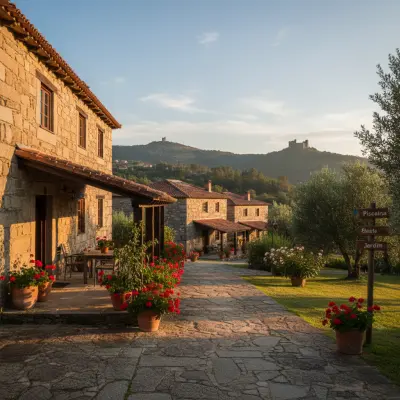
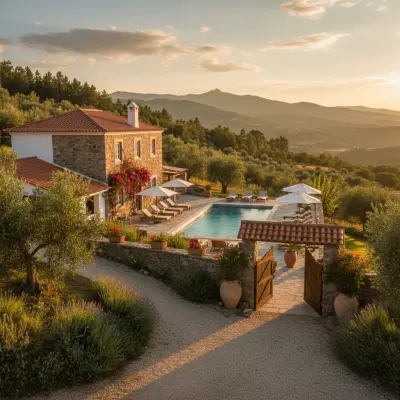
Kazas do Serado is rural tourism done right: a restored farmstead on the outskirts of town, with the silence and space the serra demands. Good for couples or anyone wanting a proper disconnect. TheVagar Countryhouse follows a similar line, the name says it all, it's for people who aren't in a rush. And Quinta do Rio, closer to the valley, is a solid base if you want to combine hikes with visits to the cherry orchards.
Book ahead if you're coming in mid-April. Cherry blossom season draws increasing numbers, and the best options fill up fast.
What to Do Beyond the Flowers
A day of flowers is enough if you're passing through. But Belmonte deserves more. The castle is an obvious visit, quick, free, with a view that justifies the climb. More interesting, if you like history, is the town's Jewish heritage. Belmonte was one of the last places on the Iberian Peninsula where a crypto-Jewish community remained active for centuries, and that story is extraordinary. The Jewish Museum of Belmonte is small but dense. And if you want to go deeper, the private tour of Belmonte's Sephardic community is the kind of experience that transforms a trip.
For food, look for fresh Serra cheese (April is good season), cured meats, and the roast kid goat that's ubiquitous in the region. Belmonte doesn't have a sophisticated food scene, these are simple restaurants, generous portions, fair prices. Expect around €10-15 for a full meal with wine.
Getting There
Belmonte is about 3.5 hours from Lisbon via the A23, and 3 hours from Porto via the A25. There's no public transport that makes sense for this itinerary, you need a car. The secondary roads through the Gardunha and the valleys are in good condition but narrow; take it easy, especially if there are farm tractors around (in April, there will be).
Plan two or three days: one for flowers and trails, another for Belmonte and the Jewish heritage, and a third to head up into the serra or down to the Schist Villages. That's enough time to understand why this area is, for those who know, one of the best spring surprises in Portugal.