Belmonte Beyond the Castle: What Nobody Tells You
Most visitors spend half an hour in Belmonte: castle, Cabral plaque, coffee. But below the walls lies Europe's last crypto-Jewish community, a Roman tower nobody can explain, and five museums for eight euros that almost nobody knows about.
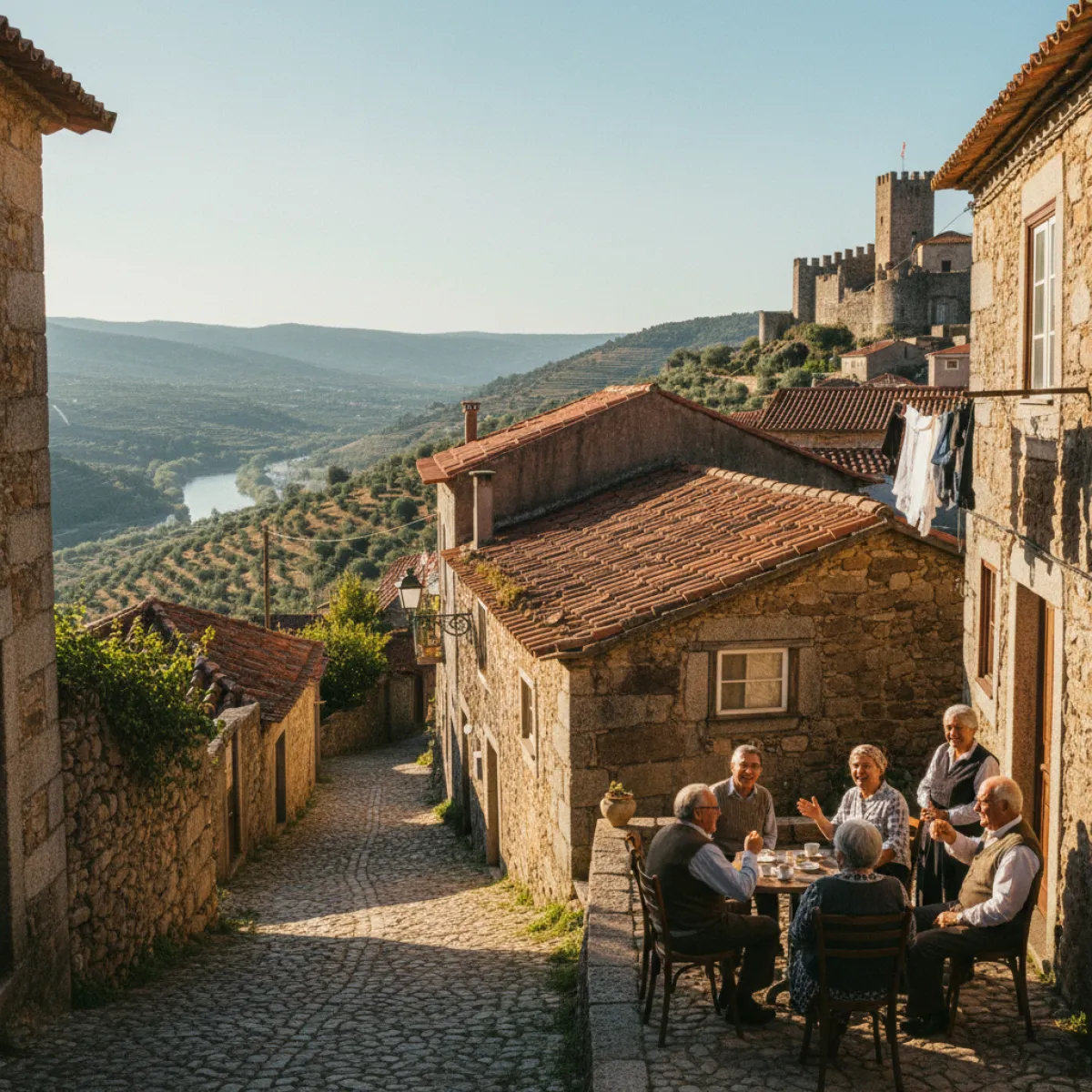
Most people drive into Belmonte, snap a photo of the castle, read the plaque about Pedro Álvares Cabral, and get back in the car. Thirty minutes, maybe forty-five if they stop for a coffee. They leave thinking they've seen the place. They haven't seen anything.
Belmonte is one of those towns where the interesting part isn't at the top of the hill where everyone goes. It's in the narrow streets below the castle, in the museums almost nobody visits on a weekday, and in a Roman tower lost among olive trees a few kilometres from the centre. Give it at least two days and Belmonte turns out to be one of the densest stops in Portugal's Beira Interior, with layer upon layer of real history, not tourist-board packaging.
The Jewish Quarter: The Real Reason to Come to Belmonte
I'll be direct: if you come to Belmonte and don't go down to the Jewish quarter, you've wasted the trip. Belmonte's crypto-Jewish community is unique in Europe. When King Manuel I decreed the forced conversion of Jews in 1496, most Portuguese Jews either converted publicly or fled. In Belmonte, a group did something different: they continued practising Judaism in secret, behind closed doors, for nearly 500 years. Entire generations passed rituals from mother to daughter, lighting candles on Friday evenings with the windows covered.
The community was only officially recognised in the 1990s. Today, the Bet Eliahu synagogue, inaugurated in 1996, serves as the community's centre. It's not a historical reconstruction for tourists. It's an active place of worship. If you're lucky enough to find it open, enter with respect.
The Jewish Museum of Belmonte, open since 2005, is small but extraordinarily well done. It documents the history of Jews in Portugal from the Middle Ages to the discovery of the Belmonte community in the twentieth century, displaying ritual objects that were used in secret for centuries. It's closed on Mondays. For those who want to go deeper, a private tour of the Sephardic community is worth every cent: having someone who knows the local history explain the context changes the experience completely.
Five Museums for Eight Euros (and a Castle for Two More)
Belmonte has an absurd density of museums for a town this size: the Jewish Museum, the Museum of Discoveries, the Ecomuseum of Zêzere, the Olive Oil Museum, and the Castle itself. Individual tickets range from €4 to €10. But there's a combined ticket for all five museums at €8, or €10 with the castle included. It's a bargain, and almost nobody asks for it because almost nobody knows it exists.
The Museum of Discoveries is the most obvious: dedicated to Pedro Álvares Cabral and Portugal's maritime expansion, it's well put together and good for families. But the ones that surprised me were the other two. The Olive Oil Museum, opened in 2005, shows olive oil production techniques in the region and the economic importance of the olive tree in the Beira Interior. It's not a big museum, but it tells the story of what the land here actually produces.
The Ecomuseum of Zêzere is the most unexpected. Dedicated to the river and the relationship between landscape and the communities that live in it, it gives context to everything you see around you. It's the kind of museum that makes the walk you take afterwards mean something different.
Centum Cellas: The Tower Nobody Can Explain
About five kilometres from Belmonte's centre, on a slope between olive trees and farmland, stands a three-storey granite structure that has confused archaeologists for centuries. The Tower of Centum Cellas is a Roman building from the 1st century AD, probably part of a villa rustica connected to the tin trade. Probably. Because the truth is nobody knows for certain what it was.
Excavations in the 1960s and 1990s suggest it was the noble section of a villa belonging to one Lucius Caecilius. But the shape is odd for a villa, and local legends range from prison to temple. What matters is that it's one of the best-preserved Roman buildings in Portugal and almost nobody goes there. There's no ticket office, no café, nothing. Just the tower, the fields, and quiet. You get there by car along the N18 towards Guarda. There's a signposted turn-off, but it's easy to miss.
Where to Eat Without Falling Into the Tourist Trap
Belmonte isn't a gastronomic destination in the starred-restaurant sense. It's a gastronomic destination in the sense that the food here is honest, generous, and made with local produce. The rule is simple: look for where the workers eat lunch. Taberna Fio de Azeite, in the centre, is a good example. Forget elaborate menus. You eat what's on, portions are huge, and the price is fair. It's the kind of place where you sit next to builders and truck drivers and eat better than in many restaurants with linen tablecloths.
For a more polished meal, the restaurant at Convento de Belmonte occupies the former Monastery of Nossa Senhora da Esperança and works traditional Beira cuisine with some refinement. It's not cheap, but the quality justifies it if you want a special evening.
As for local products, don't leave without trying queijo da Serra. Not the industrial kind you find in any supermarket. The artisanal version, creamy, eaten with a spoon. And if you come in autumn, it's chestnut season. The Serra da Estrela in October and November smells of roasted chestnuts at every corner.
Where to Stay: Properly Rural
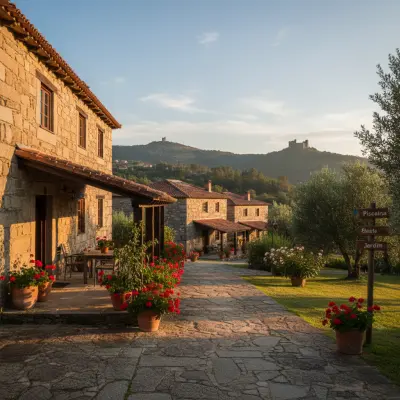
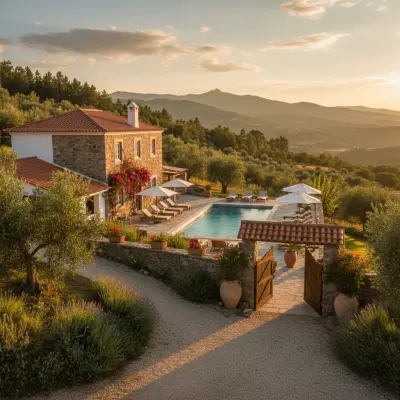
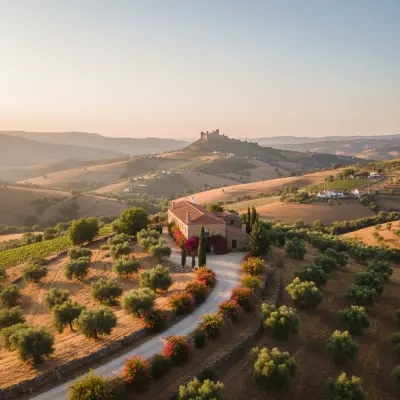
Belmonte doesn't need a chain hotel. It needs a place where you wake up to birdsong and the smell of wood smoke. Kazas do Serado is rural tourism done right: restored stone houses, integrated into the landscape, without the artificiality of so many places that call themselves rural but look like an IKEA catalogue.
If you want something with more personality, TheVagar Countryhouse delivers exactly what its name promises: an invitation to slow down. For those who want proximity to the river, Quinta do Rio is the obvious choice. Book ahead in summer months, because these places have few rooms and fill up fast.
What to Do Nearby: Serra da Estrela and the Beira Interior
Belmonte works as a base for exploring one of Portugal's least-visited areas. Covilhã is twenty minutes by car, and from there you can take a road trip through the Schist Villages, one of the best days you can have in the region. If you come in spring, Fundão is twenty minutes in the opposite direction, and the cherry blossoms on the Serra da Gardunha are a spectacle that lasts only a few weeks. Don't postpone it.
To the north, Manteigas and the glacial valley of the Zêzere are essential territory. The Snow Wells trail takes you into landscape that doesn't look like Portugal. Granite, heather, and open sky. Bring layers, even in summer. The Serra da Estrela above 1,500 metres doesn't forgive.
How to Get There and How Long to Stay
Belmonte is in the Castelo Branco district, about three hours from Lisbon via the A23 and two and a half hours from Porto via the A25. There's no practical public transport. You need a car, full stop.
One day is enough for the castle and museums. But if you want to see Centum Cellas, explore the Jewish quarter properly, eat well, and use Belmonte as a base for the Serra da Estrela, stay at least two nights. Three if you can. The Beira Interior rewards those who aren't in a hurry.
And that's precisely the point. Belmonte isn't for people who collect destinations. It's for people who stop, look, and want to understand what they're seeing. Five hundred years of history hidden inside people's homes. Two thousand years of a tower nobody can explain. A town you can walk in a morning but takes days to understand. That's the other side of Belmonte. The side most people miss.