Batalha: The Geometry of Stone and the Spirit of Independence
Explore the deep traditions of Batalha, where carved limestone meets the vitality of local festivals and the living memory of Aljubarrota. An editorial guide to this historic town’s identity beyond its monumental monastery.
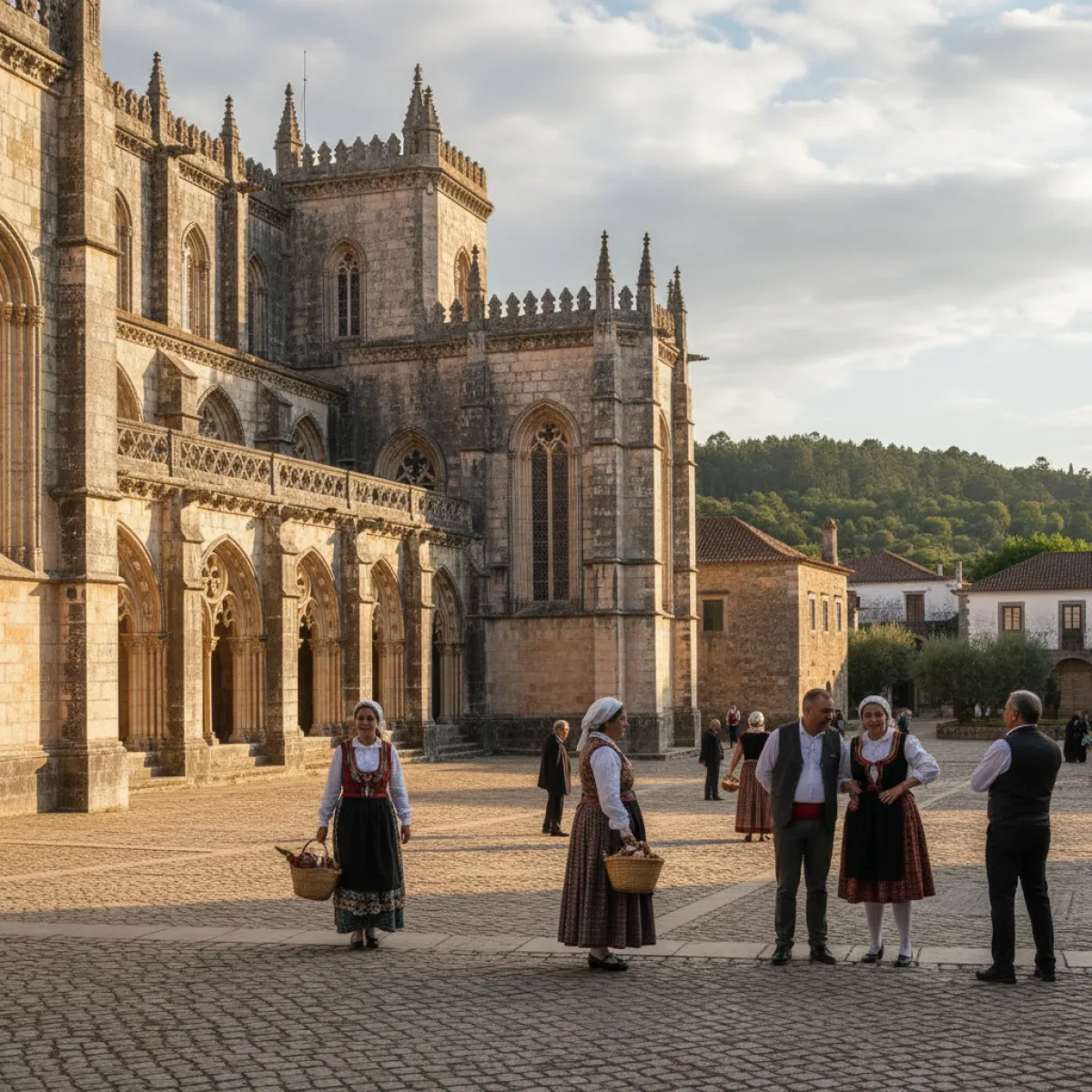
The Gravity of White Limestone
Arriving in Batalha is, invariably, an exercise in scale. The Monastery of Santa Maria da Vitória dominates the landscape with an authority that few monuments in Europe can replicate. It isn't just the size; it’s the sheer density of detail. However, for the traveler seeking the actual pulse of this Portuguese town, the monastery is merely the prologue. The true Batalha reveals itself when the shadows of the gargoyles lengthen across the plaza and the sound of drums begins to echo through the narrow streets, signaling that tradition here isn’t something preserved in formaldehyde, but a loud, living force.
The local identity is intrinsically linked to the foundation of the nation. Every stone of golden limestone seems to whisper the name of King João I and the promise made to the Virgin Mary before the Battle of Aljubarrota. But beyond the radiant Gothic and the intricate Manueline style, there is a community that has learned to live in the shadow of this giant, molding a culture of hospitality, robust gastronomy, and festivals that celebrate, above all, freedom. For those planning an extensive journey, this enclave is a mandatory stop on the Portugal Itinerary: A Week in the Heart of the Country, serving as the perfect spiritual and architectural counterpoint to the rush of Lisbon or the mysticism of Fátima.
August: The Month of Victory
If there is a moment to feel the soul of Batalha, it is mid-August. The Festas da Vila, culminating on August 14th, transform the town into a stage for historical celebration. This isn’t a generic medieval fair for tourists; it’s a visceral commemoration of Portuguese identity. The Historical Cortege is the highlight, where the population dresses in period attire, not out of theatrical obligation, but out of a genuine pride in the victory of 1385. The scent of grilled sardines and roasted meat mingles with the perfume of the surrounding pine forests, creating an atmosphere that is simultaneously solemn and deeply joyful.
During these days, street food takes on a vital importance. It is imperative to seek out the stalls serving Morcela de Arroz (Rice Blood Sausage), a regional specialty that defies traditional charcuterie conventions. Unlike the heavier versions found elsewhere, Batalha’s morcela, often served with turnip greens or simply on rustic bread, possesses an herbaceous lightness that surprises the palate. It is subsistence cooking elevated to art, reflecting a time when nothing was wasted and creativity was the only tool available in the kitchen.
The Field of São Jorge and the Modernity of the Past
A few kilometers from the town center, the Battle of Aljubarrota Interpretation Centre (CIBA) offers a lesson in how modern museology can honor the past. Located on the exact site where the Portuguese army faced the Castilians, the CIBA avoids the clichés of dusty war museums. Through a sophisticated multimedia narrative, visitors are transported back to the afternoon of August 14, 1385. It is a necessary experience to understand why the monastery was built and why the locals treat this history with such familiarity. For those traveling in a more contemplative manner, integrating Batalha into a route between the country's great river basins, the guide The Measured Pace: A Seven-Day Passage from Lisbon to Porto via the Ria provides the ideal context to place this site on a map of serenity and geographical discovery.
The Art of Stone and the Palate
The culture of Batalha is also a culture of artisans. The sound of the chisel against limestone can still be heard in peripheral workshops, where master stonemasons continue the tradition of Afonso Domingues and Huguet. This intimate relationship with the raw material extends to the table. Besides the rice morcela, the Cozido à Portuguesa (Portuguese stew) made in these parts gains specific notes due to the quality of the local sausages. For dessert, the Cavacas de Batalha are non-negotiable. Dry, covered with a thin layer of sugar, and possessing a texture that demands a short espresso or a glass of fortified wine to accompany them, they are the sweet symbol of the town.
Batalha is often seen as a quick two-hour stop. This is a lapse in judgment. To absorb the local rhythm, one should visit the municipal market early in the morning, observe the traditional commerce that still resists in the side streets, and lose track of time in the Unfinished Chapels, where the absence of a roof allows the sky to become part of the architecture. This notion of time and accumulated knowledge establishes an interesting bridge with other Portuguese centers of learning, as explored in Coimbra: The Grammar of Time in Portugal’s Intellectual Capital, where stone also serves as a support for the country’s intellectual memory.
Practical Guide: What to Know Before You Go
When to Go
May and June offer the best thermal balance for exploring the surroundings on foot. However, August is mandatory for those seeking the full cultural experience of traditional festivals. If you prefer introspection, winter brings a mist that gives the monastery an almost mystical aura, though the cold is felt intensely inside the stone walls.
Where to Eat and What to Order
- O Burro Velho: Order the Morcela de Arroz as a starter and the Bacalhau com Todos (Cod with everything). It is honest, technical cooking.
- Vintage Restaurant: A more contemporary approach to local ingredients, with an excellent wine list from the Lisbon and Tejo regions.
- Pastelaria Alcôa: Although originally from Alcobaça, its presence in Batalha allows you to taste the best of the region's conventual sweets. The Cornucópias are a must.
Budget
Batalha remains surprisingly affordable. A high-quality lunch in a traditional restaurant will cost between €20 and €35 per person. Entrance fees for monuments and museums are moderate (€6 to €10), and combined tickets are available if you plan to visit Alcobaça and Tomar on the same trip.
Local Etiquette
Despite being a top-tier tourist destination, Batalha maintains a polite, rural etiquette. A "bom dia" (good morning) when entering a small shop is expected. In the monastery, remember that while it is a national monument, significant areas are still spaces of worship and silence. Respect the pace of the locals, especially during the heat of the day when the town seems to retreat into a well-deserved rest.
