Batalha: The Geometry of a Vow and the Silence of Stone
Explore Batalha, where the Monastery of Santa Maria da Vitória stands as a limestone testament to Portuguese independence. An editorial guide to Gothic architecture, the Unfinished Chapels, and the history that shaped a nation.
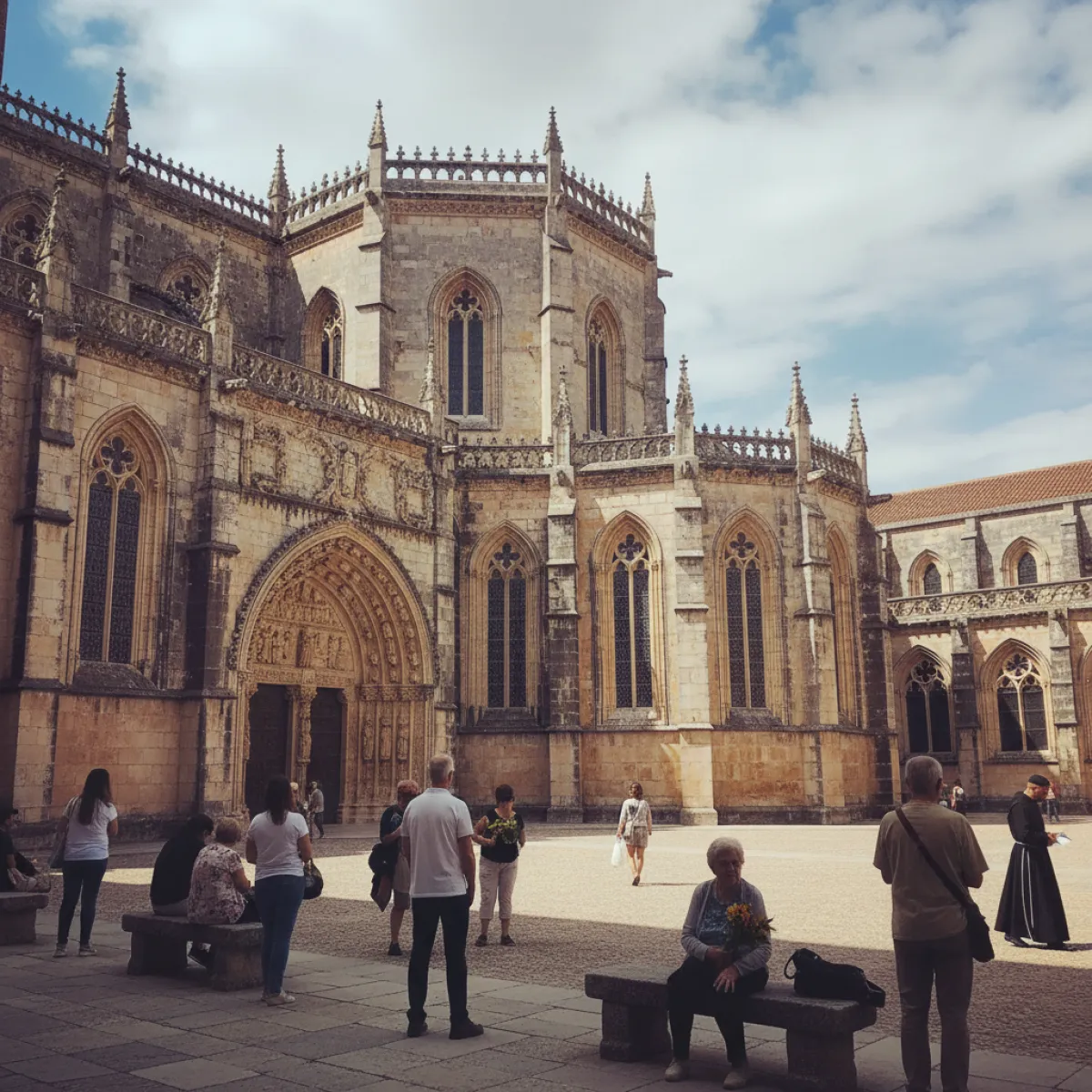
The Stone Record of a Nation’s Survival
In the landscape of central Portugal, there is a point where architecture ceases to be mere shelter and becomes a profound statement of defiance. Batalha is not a destination for the casual observer seeking superficial charm; it is a place for those who wish to understand the physical manifestation of a vow. The Monastery of Saint Mary of the Victory, known simply as Batalha, stands as a colossal limestone monument to the Battle of Aljubarrota in 1385, a decisive victory that secured Portuguese independence from Castilian claims.
For those traversing the country, perhaps following a Portugal Itinerary: A Week in the Heart of the Country, the monastery appears with an almost startling abruptness. Its scale is intimidating, a masterclass in Flamboyant Gothic that eventually paved the way for the uniquely Portuguese Manueline style. It is best approached with an appreciation for the detail that only centuries of patient craftsmanship can produce.
The Architecture of Independence
The construction of Batalha spanned seven reigns and two centuries, absorbing the influences of various masters. The most intriguing, perhaps, is Master Huguet, who introduced the English Perpendicular Gothic style, a nod to the alliance between Portugal and England solidified by the Treaty of Windsor. This influence is visible in the soaring verticality of the nave and the intricate stonework of the Founder's Chapel.
As you move through the space, the connection to other intellectual and spiritual centers becomes clear. Much like the academic weight felt in Coimbra: The Grammar of Time in Portugal’s Intellectual Capital, Batalha represents a peak of medieval engineering and royal ambition. It is a place where every arch and gargoyle serves a narrative of survival and divine gratitude.
The Unfinished Chapels: Masterpiece of the Incomplete
While the main church is a triumph of finished form, the true emotional core of Batalha lies in the *Capelas Imperfeitas* (The Unfinished Chapels). Commissioned by King Duarte as a royal mausoleum, they remain roofless, exposing the intricate Manueline carvings to the elements. This juxtaposition of delicate stone lace against the open sky creates an atmosphere that is both haunting and sublime.
The portal here is arguably the most impressive piece of stone carving in Europe. It is a dense forest of symbols, ropes, thistles, and vines, that prefigures the maritime expansion that would soon define the Portuguese empire. This sense of being caught between worlds, the old medieval order and the new maritime age, is a theme explored in The Measured Pace: A Seven-Day Passage from Lisbon to Porto via the Ria, where Batalha serves as a critical stop for those moving between the Tagus and the Douro.
Practicalities for the Modern Visitor
Batalha is best visited early in the morning, ideally when the doors open at 9:00 AM. This is the only way to experience the Royal Cloister in relative silence, before the arrival of the mid-day crowds. The interplay of light and shadow through the Manueline screens in the cloister is a spectacle that requires time and a quiet mind.
For lunch, avoid the generic cafes directly facing the monastery. Instead, walk a few minutes to 'O Casarão'. The cuisine here is rooted in the region’s traditions; the cod with cornbread (bacalhau com broa) is a reliable choice. Expect to spend approximately €30 per person for a full meal with wine. If you have a sweet tooth, the local pastry shops offer *Brisas do Lis*, a rich combination of egg yolks, sugar, and almonds that provides a necessary caloric boost after a morning of architectural exploration.
Beyond the Monastery Walls
Don't limit your visit to the monastery itself. The village of Aljubarrota, a five-minute drive away, is home to the CIBA (Aljubarrota Battle Interpretation Centre). It is one of Europe’s most modern military museums, utilizing forensic archaeology to explain the mechanics of the 1385 battle. It provides the essential context that makes the monastery's existence so much more meaningful.
- Timing: Allow at least 4 hours for both the monastery and the interpretation center.
- Budget: €10 for the monastery entry; €30-€40 for a high-quality lunch and snacks.
- Logistics: Parking is ample but can be tricky on weekends. Look for the designated lots slightly south of the main square.
Batalha is not just a relic; it is a living document of a moment when a nation decided its own fate. To stand in the shadow of its limestone walls is to feel the weight of that decision, carved into every stone and left open to the sky.
