Atlantic Immersion: The Volcanic Architecture of the Porto Moniz Pools
Discover the unique fusion of volcanic geology and human intervention at the Porto Moniz Natural Pools. An editorial guide on experiencing Madeira's wild north through basalt architecture, local gastronomy, and the untamed Atlantic rhythm.
The Edge of the Atlantic
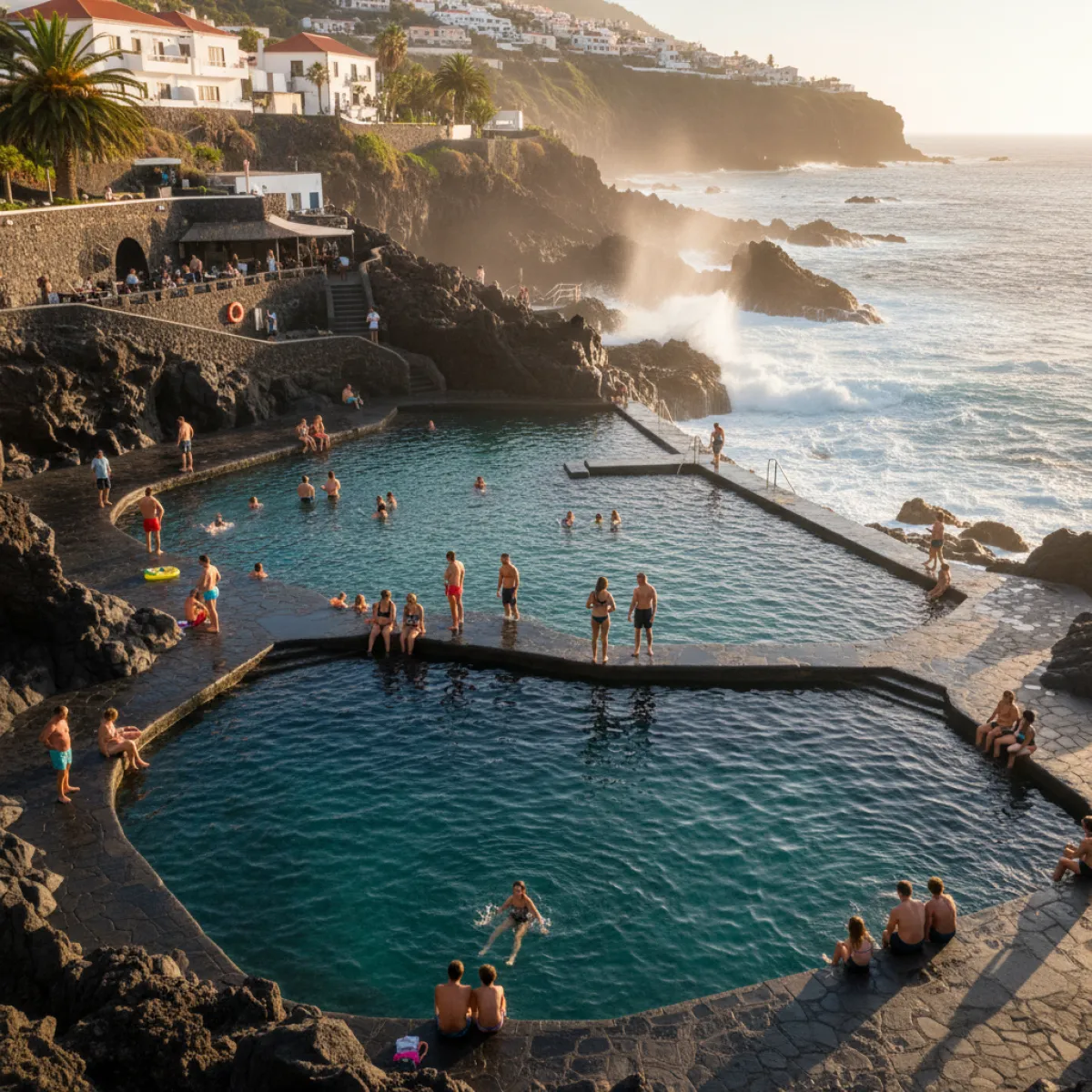
Arriving in Porto Moniz feels like reaching both the geographical and sensory limit of Madeira Island. In the far northwest, where basalt cliffs dive unhesitatingly into an ocean that rarely knows calm, the village stands as a bastion of resilience. What draws the discerning traveler, accustomed to the measured rhythms of Funchal or the picturesque aura of Câmara de Lobos: The Fishing Port That Seduced Churchill, is not just the isolation, but the way human hands have negotiated with volcanic fury to create the Porto Moniz Natural Pools.
These pools are not merely swimming spots; they are an exercise in organic architecture. Formed by eruptions that cooled upon contact with the sea thousands of years ago, the lava cavities were subtly adapted to allow for the controlled entry of tides. The result is a saltwater labyrinth where the temperature fluctuates between bracing freshness and the warmth retained by the black stone under the summer sun. Here, the distinction between nature’s work and engineering intervention is as fluid as the waves crashing against the outer walls.
The Geometry of Basalt
The human intervention in the pools, largely carried out in the 1970s, followed a logic of topographical respect. Rather than imposing themselves on the landscape, the concrete walkways and solariums mold themselves to the basalt protrusions. This approach somewhat anticipates the aesthetic rigor found elsewhere on the coast, as we explore in The New Northern Brutalism: Contemporary Art and Design in São Vicente. In Porto Moniz, luxury does not reside in imported materials but in absolute proximity to the primordial elements.
The visual contrast is absolute. On one side, the deep, untamed blue of the Atlantic; on the other, the static turquoise of the pools, filtered and purified by the rock. For the photographer or the contemplative observer, the irregular black lines of volcanic rock act as a brutalist frame for the human body. It is a space that demands respect; one does not enter these waters with the same levity as a hotel pool. There is a mineral density in the air, a scent of iodine and saltpeter that penetrates the pores and redefines the notion of well-being.
Tidal Rhythms and the Traveler’s Budget
To fully enjoy Porto Moniz, strategy is essential. Entry to the Natural Pools (the main ones with lifeguards and changing rooms) costs approximately 3 euros per adult, a symbolic value given the maintenance required for a space constantly battered by the sea. It is advisable to arrive early, around 09:30, before tour buses alter the local acoustics. Late afternoon, after 17:00, offers a golden light that turns the basalt into glowing charcoal, providing a silence interrupted only by the rhythmic roar of the ocean.
In terms of budgeting, set aside 40 to 60 euros for a noteworthy lunch at one of the restaurants overlooking the pools. Cachalote is an obvious choice for its location, but also look for small taverns in the inner streets for a more authentic experience. Focus on local produce: grilled limpets (lapas) with garlic butter and parsley, or black scabbard fish (espada) with banana, a combination that sounds improbable but defines Madeiran gastronomy.
The Northern Journey
The journey to Porto Moniz is an integral part of the experience. Coming from Funchal, the drive along the north coast reveals a less domesticated Madeira. It is a route that demands frequent stops, especially for those traveling with time. For families, the balance between adventure and safety is crucial, a point we detail when analyzing São Vicente: A Family Expedition to Madeira’s Untamed Northern Coast. The transition between the lush valley of São Vicente and the rugged cliffs leading to Porto Moniz is one of Europe’s most impressive geological spectacles.
Along the old ER101 road, now largely replaced by modern tunnels but still accessible in small sections for the bold, one senses the island's verticality. Waterfalls drop directly onto the asphalt, and the green of the laurel forest seems to want to reclaim its space over the sea. This historical isolation allowed Porto Moniz to maintain its own identity, a calm that survives even during the months of highest tourist influx.
What to Order and How to Act
Do not leave Porto Moniz without trying the local Verdelho wine. The cooler, more humid northern climate gives these wines a vibrant acidity that cuts through the richness of Bolo do Caco generously spread with garlic butter. In restaurants, avoid pre-formatted tourist menus. Ask for the fish of the day; often snapper or sea bream, caught right there in the deep waters of the north coast, are the best options.
For those seeking a rawer experience, the Cachalote Pools (adjacent to the natural ones) are free and remain in their wildest state. There are no lifeguards here, just the rock and the sea. It is the preferred spot for locals and those who enjoy the adrenaline of a wave jumping the basalt barrier to refresh the pool water with a cooling violence.
A Final Reflection on Time
Porto Moniz invites a suspension of time. It is not a check-list destination but a place of permanence. Observing how the water carves the rock, hour after hour, is a lesson in geological patience. In a world increasingly dictated by digital ephemerality, this encounter with basalt and the Atlantic serves as a necessary reminder of our scale against the elements. It is an architecture of survival and celebration, where the volcano and the ocean, once enemies, now coexist in perfect harmony for the delight of our senses.
