Arraiolos Market Crawl: Buy, Taste, and Skip
An empada de Arraiolos costs a couple of euros and ranks among the best things you'll eat in the Alentejo. Between handmade rugs at €250 per square metre and fresh pastéis de toucinho, this small town has a food and craft crawl that deserves more than a quick stop.
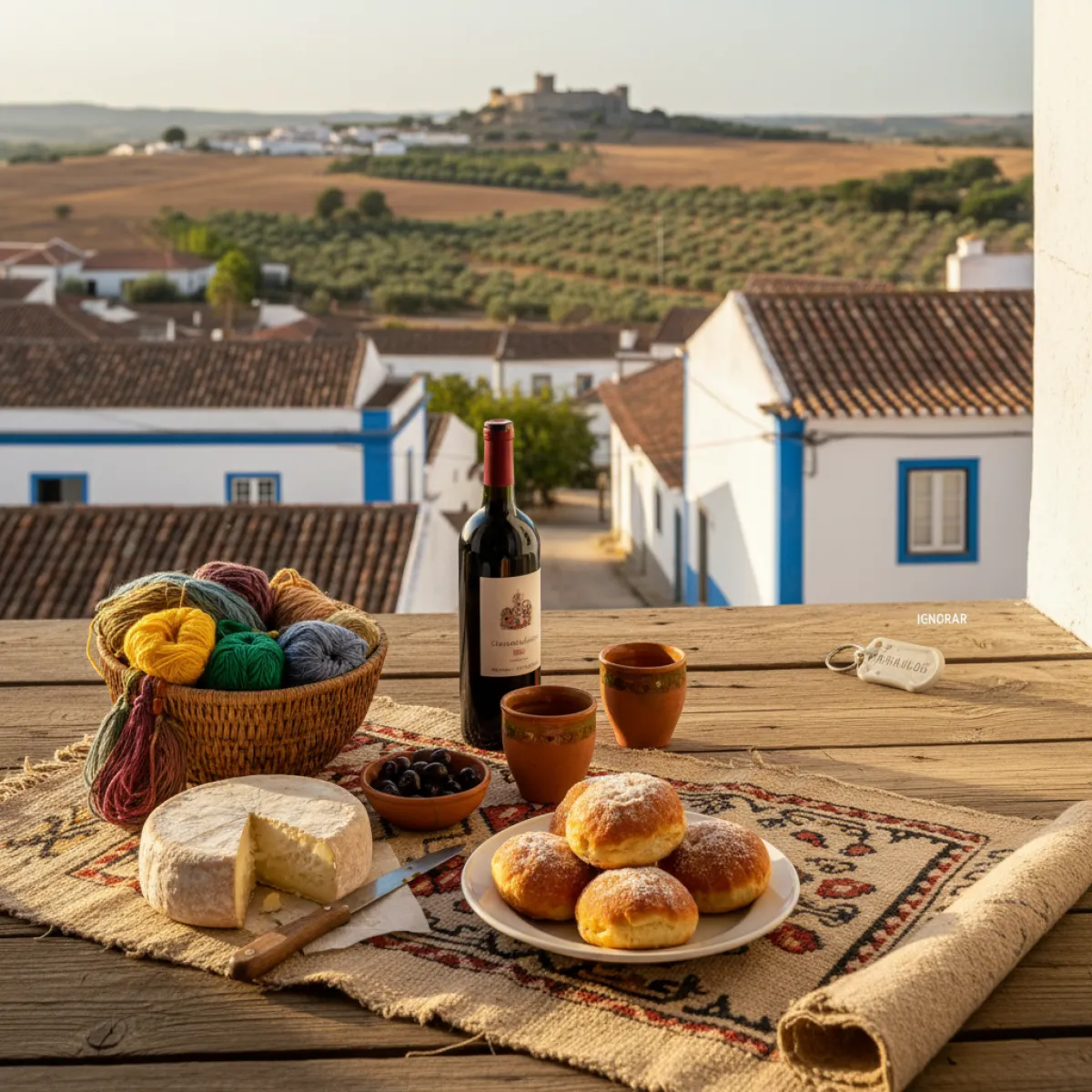
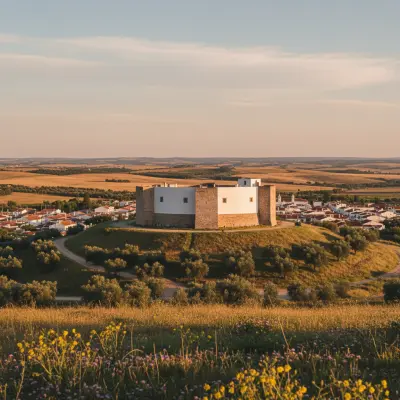
Arraiolos has about three thousand residents, a circular castle, and a reputation built on hand-embroidered rugs that predates most European countries. Most visitors drive in, snap a photo of Castelo de Arraiolos, buy a pastry at a café on Praça da República, and leave. That's a mistake, because the best of this town requires time, conversation, and an empty stomach.
This is a walking guide to Arraiolos's food and craft scene, stall by stall, shop by shop, with honest opinions about what's worth your money and what's a tourist trap in disguise.
First stop: the empada, Arraiolos's signature
You cannot talk about Arraiolos without talking about the empada. These are individual savory pies with flaky golden pastry and fillings that range from shredded chicken to duck, cured meats, and more recent vegetarian versions. The empada de Arraiolos is a serious local product with its own designation, and recipes pass between families like inheritance.
República da Empada on Praça do Município is the most dedicated spot. They offer several fillings and bake fresh daily. Order the chicken, which is the classic, and if you're curious, try the duck. They're generous, warm, and cheap. The test is the pastry itself: if it's crisp with visible layers, it's done right. If it tastes like cardboard, move on.
You'll find empadas in nearly every café in town. Some are excellent, others are yesterday's reheats. The rule is simple: if the café is full of locals, the empadas are fresh. If only tourists are sitting there, be suspicious.
The sweets: pastéis de toucinho and what else to try
The pastel de toucinho is the sweet of Arraiolos. It follows the Portuguese convent tradition: lots of egg yolks, sugar, and in this case, pork lard. The result is dense, moist, and intensely sweet. It's not for everyone. But if you like conventual pastry, this is one of the finest examples in the Alentejo.
Pastelaria O Toucinho on Largo 25 de Abril takes its name seriously. It's the go-to for the original version. Pastelaria Espiga D'Ouro on Rua Lima e Brito also makes them well and usually has a good variety of regional sweets.
What to skip: the plastic-wrapped versions that show up in souvenir shops. They lose their texture, go dry, and don't represent the real thing. Always buy fresh, always eat the same day.
Other sweets worth your time
Nógados, a fried dough made with flour, eggs, and olive oil, are less famous but worth trying. Cavacas, light and airy cakes also made with olive oil, pair well with a mid-morning coffee. They're not as dramatic as the pastel de toucinho, but they're honest.
The municipal market and the feira
The Mercado Municipal de Arraiolos sits on Rua das Acácias. It's not big, it's not Instagram-ready, and that's exactly why it works. It's a neighborhood market where people sell fruit, vegetables, fresh cheese, herbs, and local charcuterie.
What to buy: fresh or cured sheep's cheese (ask to taste before buying, any decent vendor will let you), local honey, and if it's the right season, Alentejo tomatoes that actually taste like tomatoes. The local cured meats, especially paio and linguiça, travel well and make good souvenirs for your kitchen.
What to skip: industrially packaged products you could buy at any supermarket. They're there, but they're not the reason for the visit.
For the monthly feira, check locally with the town hall for dates. Periodic fairs across the Alentejo are good places to find cork crafts, ceramics, and farm products at fair prices.
The rugs: what you need to know before buying
Arraiolos has been synonymous with hand-embroidered rugs since at least the sixteenth century. These are wool pieces stitched onto jute or cotton canvas, with patterns ranging from geometric to floral, and each one takes months to complete. An authentic Arraiolos rug is not cheap: expect around €250 per square metre. A 2x3 metre rug can cost €1,500 or more. This is an investment, not a souvenir.
Several shops in town sell rugs. Before buying, check that it's handmade (some shops still have artisans working in plain view) and ask about provenance. Rugs made locally by village artisans carry a different value than those mass-produced elsewhere.
If you want to understand the craft properly, the masterclass in Arraiolos rug weaving is worth your time. It's not just watching someone stitch: it's understanding the technique, the colour choices, the months each piece demands. For something hands-on, the workshop with local artisans lets you get your hands in the wool and appreciate exactly why these rugs cost what they cost.
What to skip: machine-made "Arraiolos-style" rugs that sometimes appear in souvenir shops for a fraction of the price. They're not the same thing. If the price looks too good, it's because it's not an Arraiolos rug.
Where to eat between purchases
After a morning working the counters and shops, you need to sit down. Lunch in Arraiolos follows the Alentejo logic: generous portions, meat as the protagonist, and bread in everything.
Tasquinha da Vila is home cooking done properly. Secretos and plumas of Iberian black pork with migas alentejanas are the right call. Everything is made to order, which means it can take a while. Don't rush. In Arraiolos, rushing is a character flaw.
O Alpendre in Bairro Serpa Pinto does excellent grilled lamb chops and traditional stews. It's Alentejo comfort food without pretension. On Praça da República, República do Petisco works well for small plates: cheeses, cured meats, and sharing-sized meat dishes.
What to order at any of them: migas with pork, lamb stew (ensopado de borrego), or açorda alentejana. What to skip: international dishes or "modern reinterpretations" that creep onto some menus. You came to Arraiolos, eat like you're in Arraiolos.
Cork, ceramics, and the rest
Beyond the rugs, Arraiolos produces cork and ceramic crafts. Alentejo cork is among the best in the world, and you'll find wallets, hats, coasters, and decorative objects at prices far below Lisbon retail. A cork wallet runs between €15 and €40 depending on size and finish.
Local ceramics are simpler than the famous Bordalo Pinheiro or Coimbra styles, but they have character. Functional pieces: bowls, jugs, things meant to be used daily. That's the point: these are kitchen pieces, not display cabinet items.
What to skip: fridge magnets, generic keychains, and anything with "Portugal" printed in large letters. Arraiolos deserves better than that in your suitcase.
Wine: what to take home
The Alentejo is one of Portugal's best wine regions, and Arraiolos sits right in it. Look for wines from Herdade da Ravasqueira, the local reference. Alentejo reds are full-bodied, fruit-forward, and pair perfectly with the region's hearty food.
You'll find local wines in cafés, grocery shops, and some specialized stores. A decent bottle costs between €5 and €15. Take two or three: one for your hotel room, the rest for home.
The practical route
Arraiolos is walkable in a few hours. Start at Praça do Município with an empada and a coffee. Head down to the municipal market. Loop back through the centre, browse the rug shops, try the pastéis de toucinho. Have lunch at one of the restaurants mentioned above. In the afternoon, climb up to the castle for the view across the Alentejo plain.
If you have more time in the Alentejo and want to explore another town with personality, Portalegre is a strong option. Our guide to Portalegre without the tourist traps covers the essentials, and the Portalegre food guide helps you eat where locals actually eat.
Arraiolos doesn't need a full day, but it needs more than a quick stop. Give it a morning, give it a lunch, and let the town do its work slowly. That's how the Alentejo operates.