A Perfect Circle in the Alentejo Plains
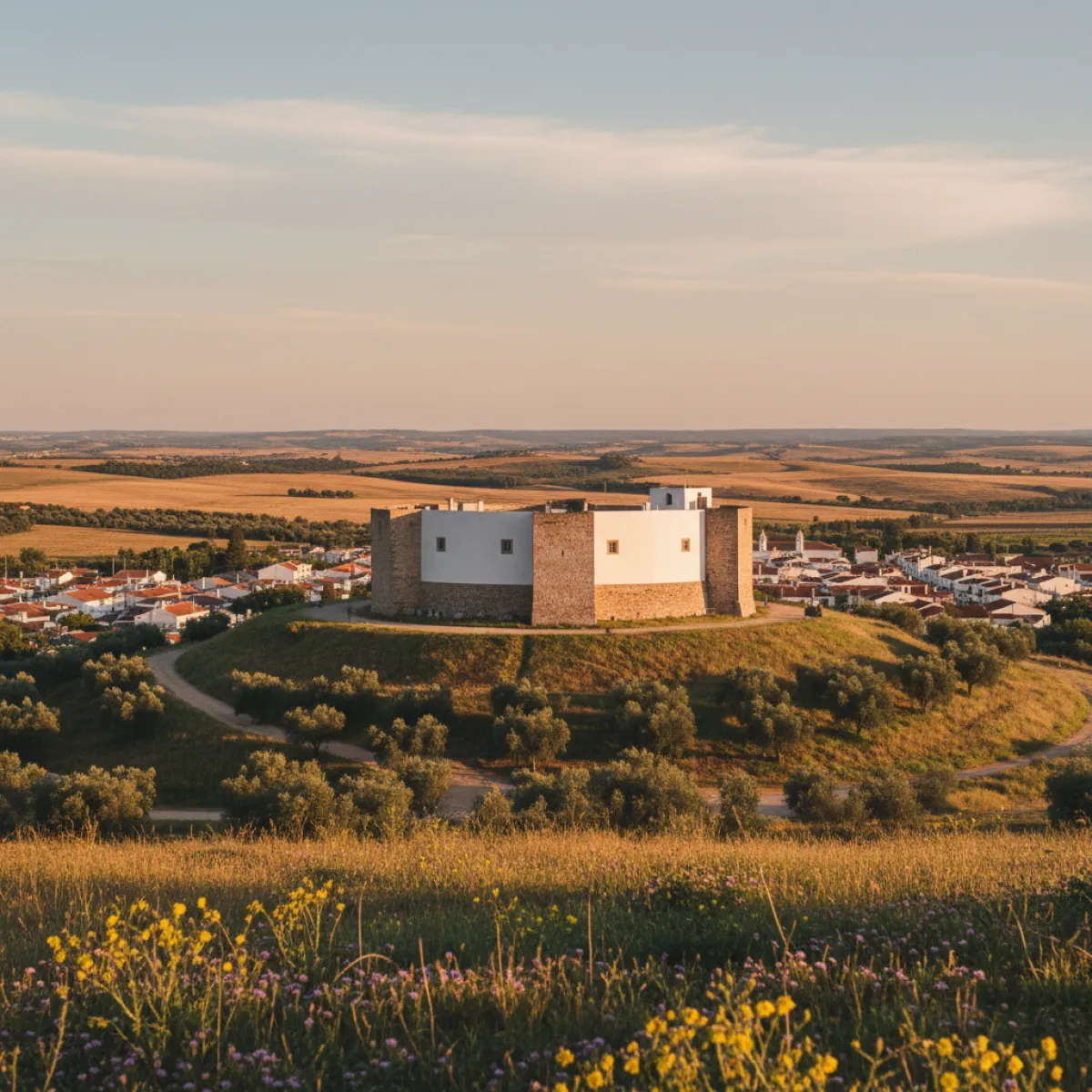
Most castles in Portugal follow a familiar script: rectangular walls, square towers, a keep in the middle. Castelo de Arraiolos tears up that script entirely. Built on the orders of King Dinis at the start of the 14th century, its walls form an almost perfect circle, making it one of the rarest castle designs anywhere in the world. It's been classified as a National Monument since 1910, and yet most visitors to the Alentejo drive right past Arraiolos without stopping. Their loss.
What makes it special
The circular plan isn't a gimmick or an accident. Standing inside the walls on Monte de São Pedro, the geometry becomes obvious, every point of the perimeter is roughly equidistant from the centre, giving defenders a 360-degree field of vision across the Alentejo plain. Militarily elegant. Architecturally striking. And when you stand at the top and look out, you understand exactly why they built it here: the views stretch for dozens of kilometres in every direction, across cork oak groves, wheat fields, and the kind of flat, open landscape that defines inland Alentejo.
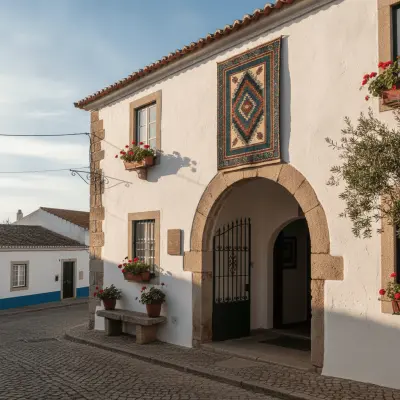
Below the castle, the town of Arraiolos sits white and compact, its terracotta roofs and blue-trimmed facades telling the story of a place that's been quietly going about its business for centuries. This is the town that gave its name to the famous Arraiolos carpets, hand-embroidered wool rugs with geometric patterns that have been made here since at least the 17th century, and are still produced today in workshops you can visit.
Inside the walls
Within the castle perimeter, you'll find the Church of Nossa Senhora da Assunção, lined with 17th-century azulejo tiles. It's not a grand church by Portuguese standards, but the tiles are worth a careful look, the blues have that deep, slightly uneven quality you only get from hand-painted work. The castle grounds themselves are partially ruined but well-maintained enough to walk around safely, and there are information panels explaining the history.
Getting there and practical details
The castle is at Monte de São Pedro, 7040-000 Arraiolos. From Évora, it's about a 20-minute drive on the N370, a pleasant road that cuts through classic Alentejo scenery. There's informal parking near the base of the hill. From there, it's a 10-minute walk up a cobbled path to the entrance. Wear proper shoes: the cobbles are uneven and can be slippery, especially after rain.
Admission is cheap, in the € range. For exact opening hours, check directly before your visit as they can vary by season. There are no facilities at the top: no café, no gift shop, no audio guide. Just the castle, the church, and the view. Bring water, especially in summer.
Practical tips that actually matter
- Visit early morning or late afternoon. In summer, the climb at midday is brutal, there's no shade on the path and the stone walls radiate heat.
- The access is not suitable for those with mobility difficulties. The path is steep and the surface uneven throughout.
- Budget at least 45 minutes for the castle itself, but plan to spend time in the town as well.
- Photography is best in the golden hour, the circular walls and the plains below look extraordinary in warm, low light.
Making a day of it
Arraiolos deserves more than a quick stop. After the castle, walk through the town's streets and look for the carpet workshops where embroiderers still work by hand. A genuine Arraiolos carpet is a serious investment, but watching the craft up close is free and fascinating. For lunch, find a local tasca and eat whatever's on, Alentejo bread soup (açorda), migas, or slow-roasted lamb are all strong bets in this part of the country.
If you're building a broader itinerary through inland Portugal, the central Alentejo connects well with the historic villages of central Portugal, particularly rewarding in spring when the wildflowers are out and the heat hasn't set in yet.
The honest take
Castelo de Arraiolos won't overwhelm you with spectacle. There are no costumed guides, no medieval banquets, no VR experiences. What it offers is rarer: a genuinely unusual piece of military architecture, a panoramic view that makes you reconsider the entire Alentejo landscape, and the quiet satisfaction of visiting a place that hasn't been optimised for Instagram. The circular walls alone justify the detour, but it's the combination of castle, carpets, and unhurried small-town Alentejo life that makes Arraiolos worth a proper visit.
Go. But go with time. The Alentejo doesn't work if you're in a rush.