
Visit
€
Castelo de Arraiolos
Arraiolos
Housed in the former Hospital do Espírito Santo on the main square of Arraiolos, this centre teaches you to tell a genuine carpet from a machine-made imitation for 2 to 4 euros. Go before the shops: a trained eye is worth real money.
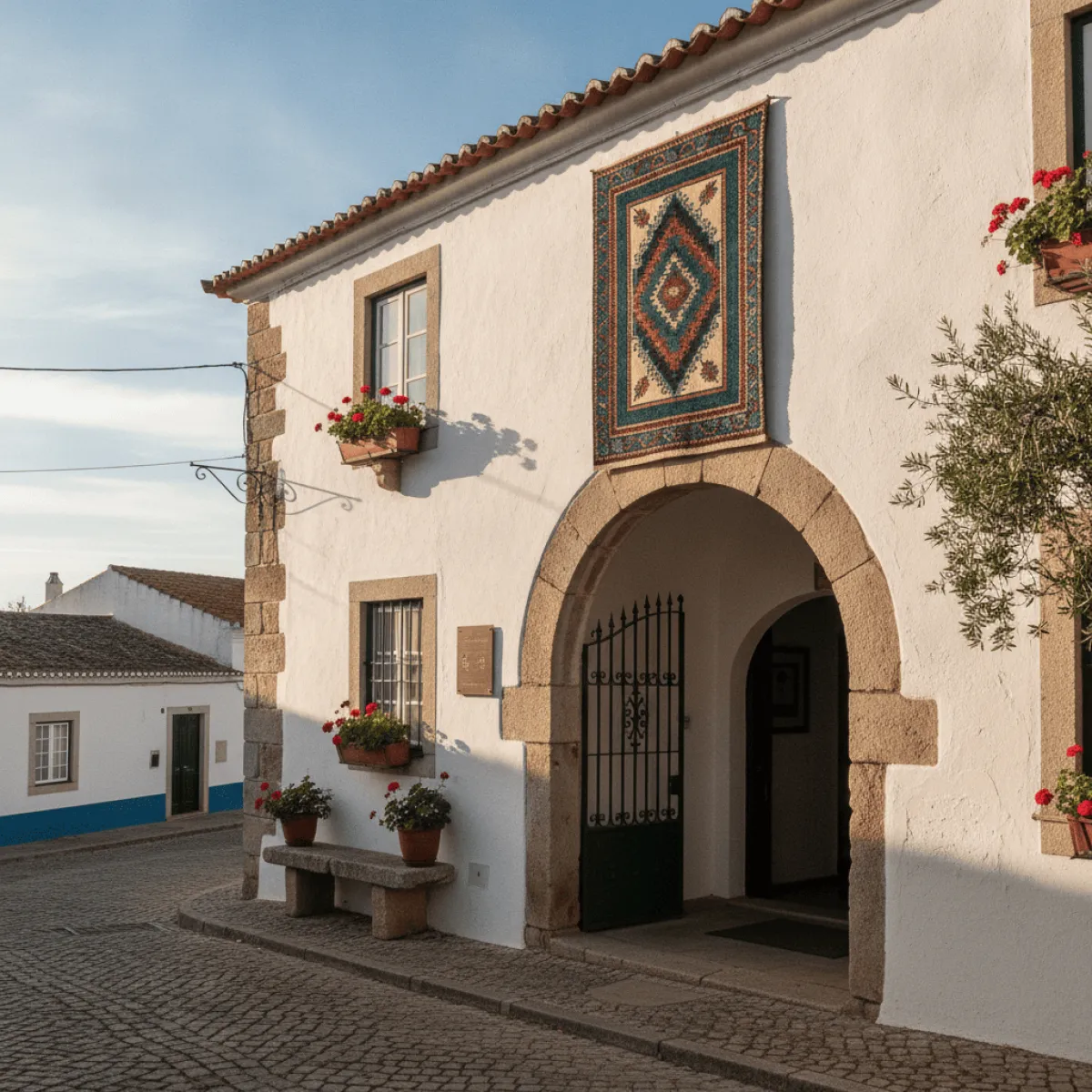
Here is the question almost everyone asks within ten minutes of arriving in Arraiolos: what actually makes an Arraiolos carpet different from any other embroidered rug? The honest answer is that without context, most of us have no clue. That is precisely why the Centro Interpretativo do Tapete de Arraiolos exists, and why it should be your first stop in town, before the shops, before the castle, before anything else. Go here first and the rest of Arraiolos clicks into place.
The centre occupies the old Hospital do Espírito Santo at Praça do Município, n.º 19, which means you will not need a map: it sits on the main square, the centre of gravity of this small Alentejo town. The building alone is worth the walk in, and putting the carpet museum here was a smart call. Instead of a modern pavilion on the edge of town, you get historic pieces displayed inside a building with centuries of its own history.
Inside, the exhibition walks you through the story of these wool-embroidered carpets, a tradition going back several centuries that put this town on maps far beyond Portugal. You see how the patterns evolved, how the techniques work, and how the artisanal production process goes from raw wool to finished carpet. And here is the part that actually matters: once you understand the Arraiolos stitch, that distinctive oblique embroidery, you can tell a genuine handmade carpet from a machine-made imitation. That is practical knowledge worth real money if you are thinking of buying one, and the prices of authentic pieces justify thirty minutes of homework first.
Guided visits cost between 2 and 4 euros, which in 2026 is close to symbolic. Compare that with what any attraction in Lisbon charges and appreciate the bargain. Audio guides are available in Portuguese, English, French and Spanish, so nobody gets left out. My advice is unambiguous: take the guided visit rather than drifting through the rooms on your own. The difference between looking at an old carpet and understanding why that specific pattern tells a story of Oriental influence filtered through Alentejo taste is enormous, and the guide is what bridges that gap.
Budget 45 minutes to an hour. This is not a sprawling museum, and that is a good thing: it is focused, well organised, and you leave with a concrete idea in your head rather than the mental fog of encyclopedic museums. If it hooks you and you want to go deeper, our guide on the geometry of Arraiolos carpet artistry breaks down the patterns and technique in proper detail.
Opening hours are not consistently published online, so my advice is simple: call ahead, especially if you are planning a Monday visit or arriving around lunchtime, when many municipal facilities in the Alentejo close. A two-minute phone call saves a wasted trip. Individual visitors generally do not need to book, but groups should contact the centre in advance. Carry some cash just in case, though at these prices it is hardly a stretch.
Arraiolos is about 20 minutes by car from Évora on the N4, and roughly an hour and a half from Lisbon. Driving is frankly the only sensible option: public transport to the town exists but is sparse and awkward for a day trip. Park anywhere near the historic centre, which is compact and entirely walkable, and the square is two minutes from wherever you leave the car.
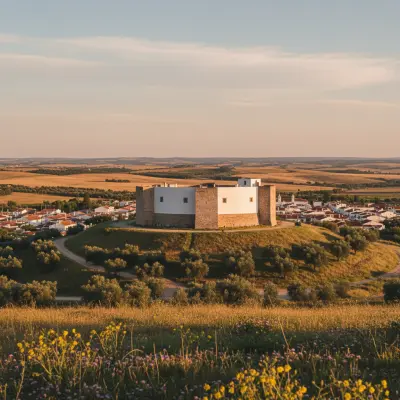
Because the centre sits on the main square, it is the obvious starting point for a day in town. My road-tested itinerary: start here in the morning, while your brain is still fresh enough to absorb history and technique. Then climb to Arraiolos Castle, that rare circular-walled fortress on the hilltop, with a view over the plain that justifies the climb on its own. For lunch, head to República da Empada in town, which sorts out your hunger with proper Alentejo dignity. In the afternoon, browse the carpet shops with your newly trained eye. You will notice yourself looking at the pieces differently, and asking the embroiderers questions you would not have known how to formulate before.
If you want to stretch this into two days, and Arraiolos at a slow pace deserves it, Casa do Castelo is the natural choice for the night. And for everything the town offers beyond its textile tradition, our guide to Arraiolos beyond the rug stitches together the castle, the convent and the marble villages into a route that works well from here.
Yes, and I say that without hesitation. Portugal is full of interpretive centres that interpret very little and bore you a great deal, rooms of text panels nobody reads and display cases with half a dozen objects. This is not one of them. It has a real collection, a subject with substance, and a price that leaves no excuses. The Arraiolos carpet is one of the few Portuguese craft traditions still kept alive by hands that actually embroider, not by tourist-brochure nostalgia, and this centre treats the subject with the rigour it deserves.
One caveat: do not expect multimedia spectacle or interactive installations to occupy small children for hours. This is a serious museum about a serious craft. Kids from around eight or nine, interestingly, tend to get hooked on the embroidery technique section. Younger than that, judge for yourself.
A final calendar note: if your visit lands in summer 2026, check the dates for the Ethno Portugal concert at Arraiolos Castle. Music in the castle, carpets on the square, empadas on your plate. There are worse days.