A Complete Guide to Guimarães: Walking the Streets That Built a Nation
Guimarães does not need introductions, it needs time. A practical and opinionated guide to the city where Portugal began, from the medieval castle to contemporary art spaces, with restaurants, hotels, and real budgets.
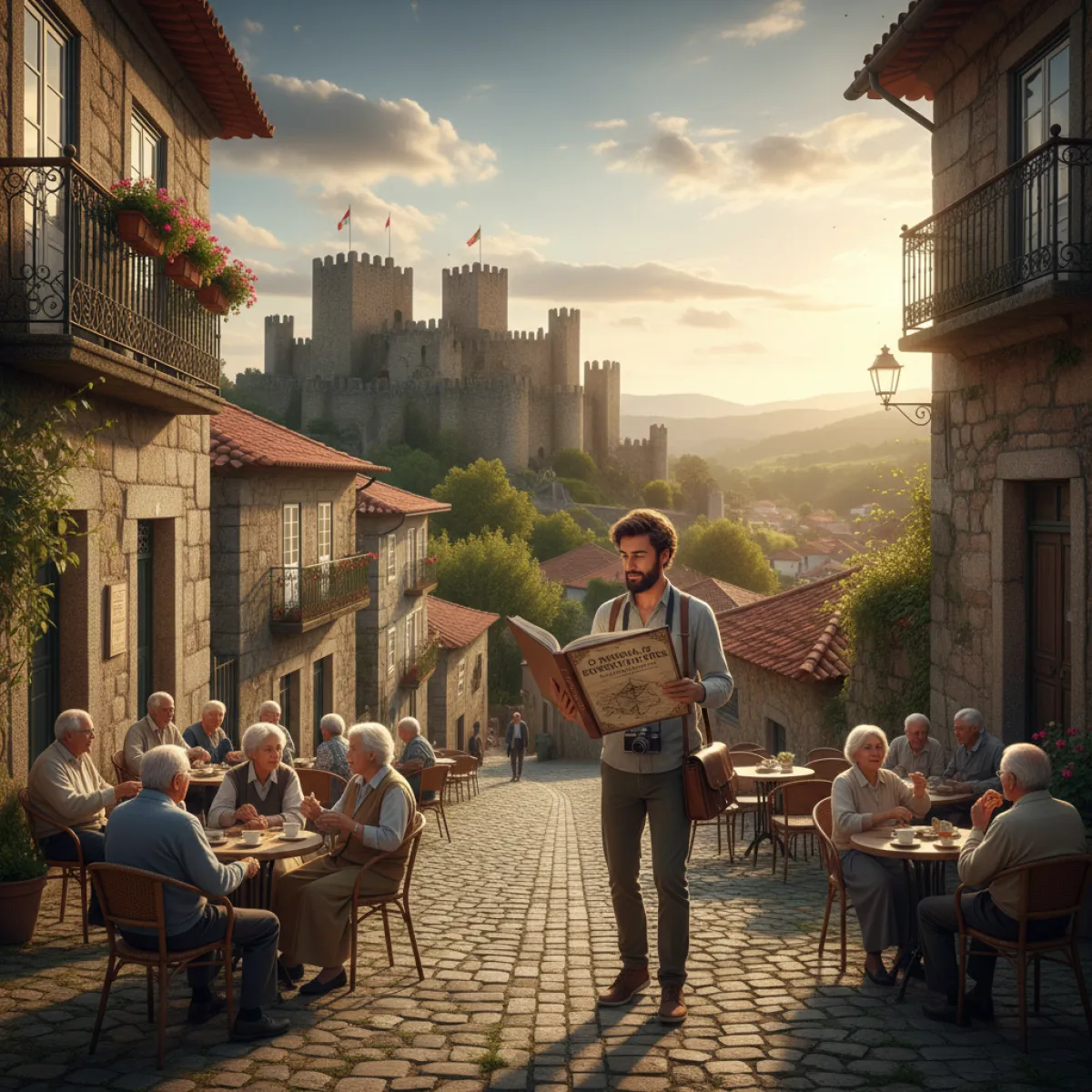
There is a phrase carved into the old town wall near the castle in Guimarães that reads, roughly translated, "Portugal was born here." It is not a boast. It is a statement of historical record, delivered with the same matter-of-fact confidence that characterizes the city itself, a place that knows exactly what it is and feels no compulsion to explain itself to anyone.
I spent three days in Guimarães in early autumn, when the slanting afternoon light turns the granite of the medieval centre into something between gold and silver-grey, and the university students have returned to fill the streets before the summer tourists have fully dispersed. It is the ideal window. But the truth is that Guimarães works in any season, it possesses that rare quality of being a city whose appeal is not contingent on weather.
Understanding the City Before You Arrive
The first thing to grasp is scale. Guimarães is not large. The historic centre, a UNESCO World Heritage Site since 2001, can be crossed on foot in under an hour if efficiency is your goal. But efficiency should not be your goal. This is a city that rewards slowness, the willingness to linger in a doorway, to follow a side street because it curves in an interesting direction, to accept the shopkeeper's invitation to look around even when you have no intention of buying.
Our comprehensive guide to Guimarães covers the essentials in depth. What I am offering here is something different: the emotional map of the city, the practical coordinates that elevate a competent visit into an experience worth carrying home.
Getting there is straightforward. Trains from Porto take just over an hour and cost under four euros. If you drive, park in the underground garage near the Centro Cultural Vila Flor and forget about the car until you leave. Guimarães was built for feet, not tyres.
The Castle and the Palace: Starting at the Beginning
Everyone begins with the Castle of Guimarães and the Palace of the Dukes of Bragança, and everyone is right to do so. Not out of historical obligation, but because the hill on which both stand offers a perspective that mentally organizes the city below. From up there, the urban logic becomes clear: the compact medieval core, the orderly nineteenth-century expansion, and beyond that, the contemporary Guimarães that hosted the European Capital of Culture in 2012 and never lost the habit of reinventing itself.
The castle, admission €2, free on Sunday mornings, is a robust tenth-century structure that has survived everything, including the temptation of excessive restoration. Climb the keep tower. The wind at the top is almost always stronger than you expect, but the view compensates for any disruption to personal grooming.
The Palace of the Dukes, immediately adjacent, is a different story, quite literally. Built in the fifteenth century by the future Duke of Bragança, it was heavily restored during the Estado Novo dictatorship to serve as a presidential residence in the north. The result is architecturally controversial but visually commanding. The Pastrana tapestries, copies of the originals held in Madrid, deserve unhurried attention. Admission is €5 and worth every cent.
The Historic Centre: A Masterclass in Medieval Urbanism
Walk down Rua de Santa Maria, which connects the castle hill to the heart of the old town. It is one of the oldest streets in Guimarães, possibly in Portugal, and each building tells a different story. Notice the wrought-iron balconies, the carved coats of arms above doorways, the sash windows that still operate as they did two centuries ago.
The street opens onto Largo da Oliveira, the central square of the old town, dominated by the Church of Nossa Senhora da Oliveira and the Padrão do Salado, a fourteenth-century Gothic monument commemorating victory at the Battle of Salado. The square is handsome at any hour, but in the late afternoon, when the café tables fill and the sun catches the church façade at an angle, it achieves an almost cinematic quality.
From here, Praça de Santiago is only steps away, more enclosed, more intimate, with an atmosphere that momentarily suggests a Spanish or French city before you remember that you are standing in the birthplace of Portugal itself. This is where several of the historic centre's best restaurants cluster, and where you should dine at least once.
Where to Eat in the Historic Centre
Histórico by Papaboa, on Rua de Val de Donas, is the most consistently rewarding choice for a meal that honours Minho tradition without being imprisoned by it. The bacalhau à moda de Guimarães, different from Braga's version, and woe to anyone who confuses the two, is exemplary: generous flakes of salt cod, smashed potatoes, and a sauce of olive oil, garlic, and parsley that needs nothing else. Budget €20-25 per person with wine.
For something more casual, Cantina on Rua de Santa Maria serves petiscos that justify a detour: veal pica-pau, salt cod fritters, and a selection of Serra cheeses that varies depending on what the producer delivered that week. Lunch here with a draught beer runs under €15, one of the best value propositions in town.
Coffee, and Guimarães takes coffee seriously, should be drunk at Mumadona, near the public garden, where espresso is pulled with the precision of a Swiss watchmaker. Do not ask for milk. Trust the coffee.
Beyond the Walls: Contemporary Guimarães
The legacy of 2012 as European Capital of Culture is visible everywhere, but concentrates in two poles: the Platform of Arts and Creativity and the Centro Cultural Vila Flor.
The Platform of Arts, housed in a former municipal market, is one of the most interesting buildings in Portugal, an architectural intervention by Pitagoras Arquitectos that respected the original structure while transforming it into something entirely new. Temporary exhibitions rotate frequently and tend to be bolder and more interesting than what you will find in larger museums in Lisbon or Porto. Admission is free.
The Centro Cultural Vila Flor, set in a baroque palace with gardens that merit a visit in their own right, is the nerve centre of the city's cultural programming. Check the calendar before you go, the jazz concerts in the main hall benefit from acoustics that rival any venue in the country.
Penha Mountain and the Cable Car
The Penha cable car, €5 return, is one of those experiences that locals dismiss as touristy and that tourists do well not to skip. The seven-minute ascent to the top of Penha mountain offers views over the city and the Minho landscape that explain, better than any book, why this corner of northern Portugal looks and feels the way it does. At the summit, the gardens surrounding the Sanctuary of Penha are ideal for an hour of walking. Bring a jacket, the altitude makes itself felt, even in summer.
For the more adventurous, the descent can be made on foot along a trail that winds down the hillside, passing granite rock formations that look as if they were placed there by a sculptor with a sense of humour. It takes about 45 minutes and ranks among the best short walks in northern Portugal.
The Factories and the Industrial Identity
Guimarães has a relationship with the textile and cutlery industries that shaped the city as profoundly as its medieval history. The Couros district, the old tannery quarter along the Rio de Couros, has been rehabilitated in recent years and is now one of the most interesting neighbourhoods to explore. Former factories now house ateliers, design studios, and co-working spaces that attract a generation of creatives who chose Guimarães over Porto, and who defend that choice with persuasive arguments.
Stop by CAAA, the Centre for Art and Architectural Affairs, installed in a former tannery. The programming is eclectic and frequently surprising. The surrounding area has cafés and bars that stay open late and give Guimarães a nightlife that, without being exuberant, has genuine character.
Practical Information
When to Go
September and October are ideal: mild temperatures, beautiful light, fewer crowds. June works well for those who want to coincide with the Festas Gualterianas, the city's largest celebration, featuring processions, a battle of flowers, and bullfighting, events that divide opinion but are undeniably part of the local identity. Winter is cold and damp, but the city has a particular charm in the rain, and accommodation prices drop considerably.
Where to Stay
Hotel da Oliveira, on Largo da Oliveira, is the obvious choice for anyone wanting to be in the heart of things, rooms from €90 per night. Pousada Mosteiro de Guimarães, set in the former Convent of Santa Marinha da Costa, is one of Portugal's finest pousadas: worth the €120-150 per night for the architecture, the gardens, and the views. For tighter budgets, Santa Luzia Art Hotel offers clean, well-designed rooms from €55.
Daily Budget
Guimarães is significantly more affordable than Lisbon or Porto. A comfortable day, including monument admissions, lunch and dinner at quality restaurants, and a coffee or two, costs between €60 and €80 per person, excluding accommodation. Municipal museums offer free admission on Sunday mornings.
Combining with Other Cities
Guimarães pairs naturally with Braga, which sits just 25 minutes away by train and deserves at least a full day. The two cities maintain a friendly rivalry and a perfect complementarity: if Guimarães is the foundational history of Portugal, Braga is its religious and baroque dimension. Together, they tell the complete story of the north.
For those based in Porto, Guimarães is one of the best day trips available, but I would argue it deserves at least one night. There is something about Guimarães at dusk, when the streets of the historic centre empty of visitors and fill with the murmur of locals heading home, that cannot be captured in a hurried visit.
What to Bring Home
Vimaranense cutlery, handcrafted knives and scissors from a tradition that stretches back centuries. The Cutelarias Belo factory shop, in the industrial zone, sells pieces at factory prices that would make any Scandinavian design store weep. A handcrafted kitchen knife runs between €15 and €40 and lasts a lifetime.
Linen and embroidered tablecloths, less photogenic than the cutlery but equally representative of a craft tradition that is quietly disappearing. The shops in the historic centre sell authentic pieces at fair prices, but you need to distinguish handmade from industrial. As a rule: if it looks perfect, it is probably machine-made.
Guimarães does not need to be sold. It needs only to be visited with the attention it deserves, with time, with curiosity, and with the willingness to let a city of 160,000 inhabitants teach you something about identity, resilience, and the art of ageing well. After all, if it was good enough to found a nation, it probably has something worth saying.
