Vertical Pinhão: A Guide to the Douro’s Best Terraces and Vantage Points
Discover Pinhão’s most exclusive terraces and cinematic views. A curated guide to the heart of the Douro Valley, balancing fine Port wines with the dramatic geometry of the vineyards.
The Topography of Privilege in the Heart of the Douro
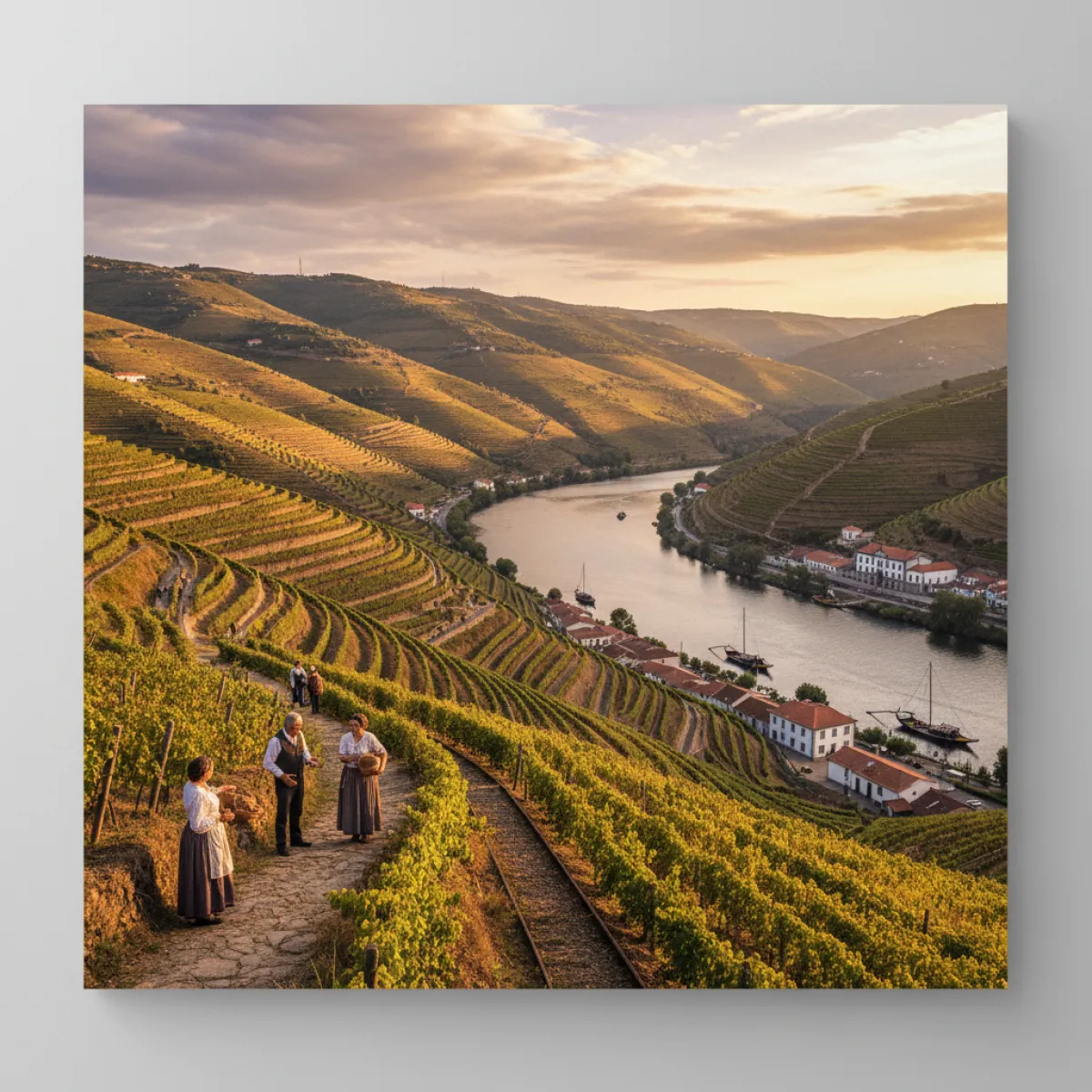
Pinhão is not a town you walk; it is a town you climb. It is a lesson in social and viticultural stratigraphy, wedged into the tight bend where the Pinhão River surrenders to the Douro. This schist amphitheater demands that you look upward to grasp its magnitude. Here, altitude defines property value and the quality of light. The terraces and rooftop bars punctuating the slopes are not mere observation points; they are stages where the landscape, molded by centuries of human toil, reveals itself in its rawest, most geometric form.
Watching the pendular movement of boats from these elevated balconies, one realizes that the river remains the lifeblood of this region. For those seeking a deeper immersion into the riverine heritage visible from above, the Rabelo Boat Workshop: Learning Ancient Navigation on the Douro offers a technical counterpoint to aesthetic contemplation, revealing how these iconic vessels once mastered the currents that now shimmer under the afternoon sun.
The Terrace at The Vintage House: Edwardian Restraint
If you are looking for an experience that avoids the noise of mass tourism, the terrace at The Vintage House Hotel is the mandatory starting point. Situated almost at water level but elevated enough to offer a superb perspective of the Iron Bridge designed by Gustave Eiffel, this space exudes a classic restraint. Do not expect electronic music or neon-lit cocktails; here, the order of the day is a crisp White Port & Tonic, served with precision and accompanied by roasted Douro almonds.
The atmosphere is one of discreet luxury, where the crunch of gravel underfoot and the murmur of the river replace any artificial soundtrack. It is the ideal spot to observe the gloaming, when the shadows of the vines begin to etch black lines over the deep green of the river. Expect to budget around €15 to €20 per drink—a fair price for the exclusivity and impeccable service that recalls the golden age of the Port wine trade.
LBV House Hotel: The Wide-Angle Perspective
For those who prefer modernity and a view that encompasses the entire Pinhão basin, the bar at the LBV House Hotel is unrivaled. Located on one of the town’s higher contours, its terrace extends like the prow of a ship over the valley. The hotel’s minimalist architecture ensures that the focus remains entirely on the landscape. From here, the Douro looks like a silk ribbon stretched between mountains that defy gravity.
This is the place to order a 20-year-old Tawny Port and let time slip away. The visual amplitude allows one to trace the route many travelers take toward the interior, exploring what we describe in The Inland Coast: River Escapes and the Luxury of Stillness in Lamego, a journey that complements the verticality of Pinhão with the monumental serenity of neighboring towns.
Quinta do Bomfim: Where Heritage Meets the Table
A short walk from the railway station—whose tiles tell the story of the harvest—leads to Quinta do Bomfim. The Symington family’s terrace is perhaps the most authentic spot for those wishing to pair a view with technical tasting. The space is airy, with a wooden structure that blends seamlessly into the surrounding vineyards. It is not just a bar; it is an extension of the lodge.
Reservations for late afternoon are highly recommended. Order a board of regional cheeses and compare the different terroirs through a flight of estate wines. There is a palpable sense of being at the center of a productive ecosystem, where every visible terrace contributes to the liquid in your glass. It is a didactic and sensory experience that justifies the investment of time.
Casal de Loivos: The Definitive Vantage Point
While not technically a rooftop bar, the Miradouro de Casal de Loivos, located just a few minutes’ drive (or a vigorous hike for the fit) above Pinhão, offers what the BBC once called one of the six best views in the world. There is no sophisticated table service here, but the experience of bringing your own bottle and two glasses to this vantage point is incomparable.
From here, the river carves a perfect 'S' shape, and the quintas look like architectural models scattered across the slope. It is a place of absolute silence, broken only by the wind. This stillness and the geometry of the stone echo the experience of other regional high points, as detailed in our guide to Lamego in Winter: The Geometry of Comfort and the Silence of Granite, where the hardness of the material is transformed into visual poetry.
Practical Advice for the Discerning Traveler
- When to Go: Late September offers the spectacle of the harvest, but temperatures can be punishing. May and June provide electric greens and ideal weather for outdoor lounging.
- How to Arrive: The train from Porto (São Bento Station) is the most scenic option. The journey takes about 2 hours and 20 minutes, and the arrival in Pinhão is an event in itself.
- What to Wear: The Douro demands a practical 'casual chic.' Wide-brimmed hats and comfortable footwear for the steep inclines are essential. At night, the temperature can drop sharply, even in summer.
The Pinhão experience often concludes with the realization that the soundscape is as vital as the visual one. As the sun vanishes behind the hills and the lights of the quintas begin to dot the darkness, the identity of this land reveals itself. To understand the depth of this connection between soil and culture, it is worth exploring The Resonance of Granite: Fado and the Sonic Identity of Lamego, which, while focused on the neighboring city, shares the same melancholic and resilient soul that defines the entire Alto Douro.
Visiting Pinhão’s terraces is, ultimately, an exercise in patience. Time is required for the eye to adjust to the monumental scale and for the palate to decipher the complexity of the wines. In Pinhão, luxury lies not in ostentation, but in the ability to sit above the world and watch history flow slowly by below.