Chaves Day Trips: Roman Baths, Border Trails, and Mirandela
Chaves is more than just the start of the N2; it is the gateway to the Galician border and the profound silence of Montesinho. From 73-degree thermal springs to improbable seafood feasts in the mountains, discover how to use this northern outpost as your base.
The Northern Outpost: Why Chaves is the Ultimate Base
If you arrive in Chaves at Kilometer Zero of the legendary N2 highway, don't rush to head south. Many travelers make the mistake of treating this city as a mere ceremonial starting point—they snap a photo with the stone marker and peel out of town. They are missing the point. Chaves is a stronghold, not just in the literal sense of its medieval walls, but in the way it preserves a version of Portugal that the coast has long forgotten. Here, time has a different weight, and geography dictates the rules. Sitting on the banks of the Tâmega River, you realize the city doesn't end at the border; it spills over into Spanish Galicia, reaches toward the mountains of Bragança, and descends into the Tua Valley. It is the perfect logistical hub for exploring what I call the "Deep North."
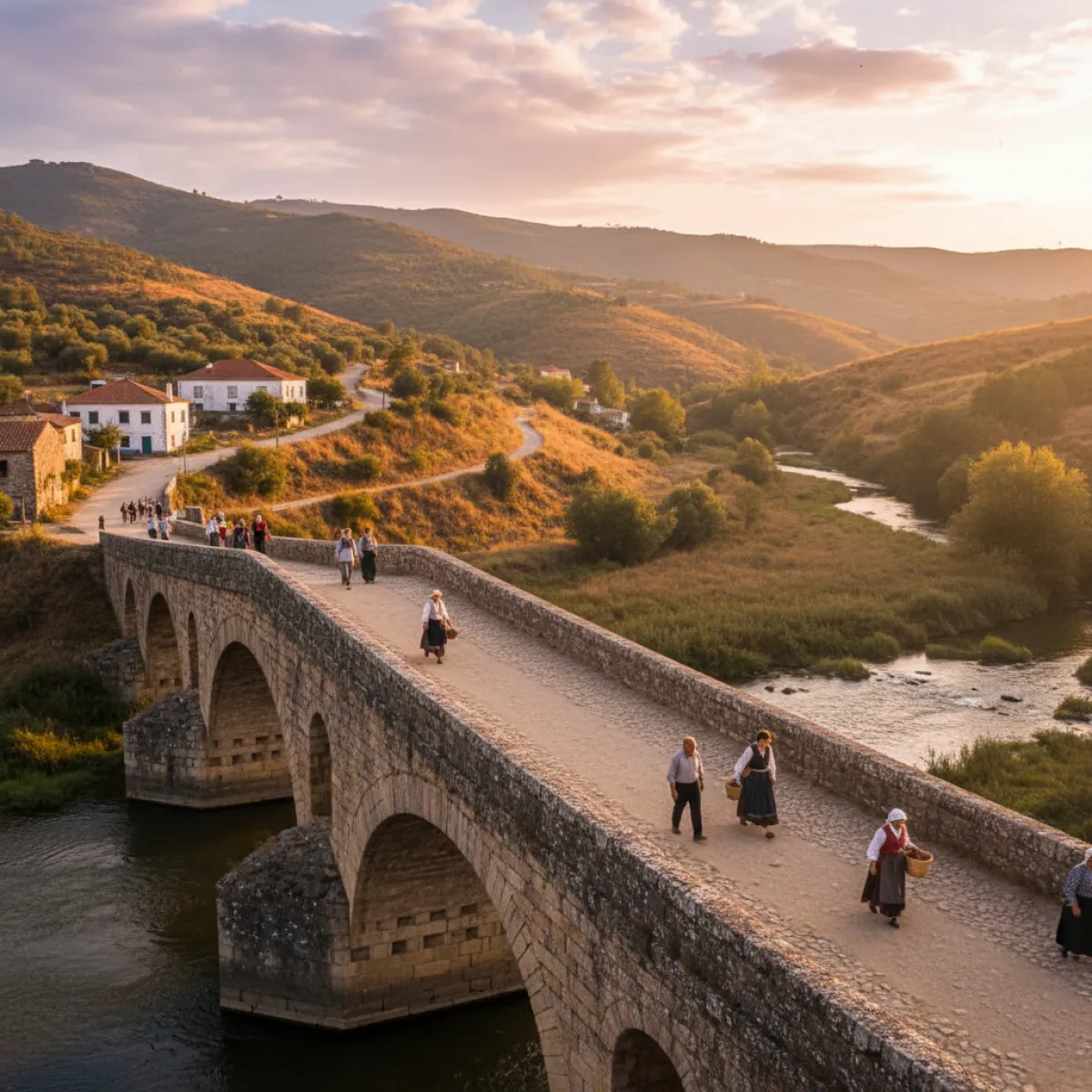
The first thing you must do is walk across the Trajan Bridge. Forget modern engineering; this Roman structure with its eighteen arches (at least the ones visible above ground) has withstood the Tâmega for two millennia. It is a physical reminder that the Roman legions weren't just passing through—they were here for the water. And it is in that water that the city’s first great secret lies. Right next to the bridge, the Chaves thermal springs spit out a mineralized liquid at 73 degrees Celsius (163°F). That’s not a typo. It is water that leaves the earth nearly boiling, with a sulfurous scent that, to a local, smells like home, and to a tourist, smells like a promised cure. To understand how this heat shaped the city, I recommend reading The Roman Legions' Legacy: Exploring the Ancient Thermal Springs of Chaves. Go ahead, take a sip from the fountain—if your kidneys allow it—and feel the weight of imperial history.
Border Run: Cycling to Spain
One of the best ways to burn off the calories from a couple of *pastéis de Chaves* (get them at Pastelaria Maria on Rua de Santo António; they are the only ones that matter) is to head for the border. The border here isn't just a line on a map; it’s a grey zone where Portuguese and Galician cultures blur. The best way to explore it is through the experience Cycling the Border: A Journey on the Ecovia do Tâmega with Tamega E-bike. The path follows the old bed of the Corgo railway line, snaking alongside the Tâmega River.
The route is flat, which is a blessing in this mountainous region. The *ecovia* takes you through cornfields and vineyards until you reach Vila Verde da Raia. Keep going until you hit Verín, already on Spanish soil. The ride takes about ninety minutes at a leisurely pace. In Verín, the goal is the Castillo de Monterrei. Don’t just look at it from below; climb the hill. The view over the Monterrei valley is proof that borders are political inventions—the landscape is one and the same. If it’s a Sunday, the castle is usually open and free, but check locally as Galician opening hours can be creatively interpreted.
The Silence of Montesinho: A Retreat to the Last Frontier
About an hour’s drive from Chaves, following the A4 toward Bragança, you enter the Montesinho Natural Park. If you’re looking for cocktail bars and high-speed Wi-Fi, this isn't your place. Montesinho is about the absence of sound. In the schist and granite villages like Rio de Onor or Gimonde, the only sound you hear is the water rushing in the creeks or the tap of a shepherd’s crook on the cobblestones. It is a journey that requires respect and a full tank of gas, as gas stations are rare in the deep park.
The best way to approach this region is with the guide The Silence of Montesinho: A Winter Retreat in the Last Frontier of Portugal. Even if it’s not winter, the spirit remains. Head to Gimonde and order the Posta Mirandesa at Restaurante Abel. Do not ask for it well-done; Mirandese beef should be served with a rosy center and coarse salt. The average cost for lunch here is around 25 euros per person, but consider it an investment in your emotional well-being.
Mirandela: Culinary Resilience on a Plate
Another essential trip from Chaves is the drive down to Mirandela. It takes about 45 minutes via the A24 and A4. Mirandela is famous for its bridge over the Tua River and, of course, the *Alheira*. But don’t be fooled by the industrial imitations sold in supermarkets in Porto or Lisbon. The real *Alheira de Mirandela* has a rough texture and a flavor where smoke and garlic dominate without being aggressive.
The history of this sausage is a lesson in survival, created by Jews to pretend they were eating pork and thus escape the Inquisition. To understand the depth of this gastronomy, read Beyond the Alheira: Mirandela’s Culinary Resilience. After reading, head to the Municipal Market. Buy a dozen artisanal *alheiras* (look for the PGI seal) and take the opportunity to taste the regional cheeses. If you have time, the Parque do Império by the river is the perfect spot for a digestive stroll before heading back to Chaves.
The Mountain Paradox: Seafood in the Highlands?
It seems like a contradiction. We are 150 kilometers from the coast, surrounded by rugged mountains, yet Chaves is famous for its seafood feasts (*mariscadas*). Why? The answer lies in the old trade routes connecting the ports of Galicia to the interior of Portugal. Trucks used to arrive here loaded with fresh shellfish before heading further south. What was once a luxury of passage became a local tradition. You cannot leave Chaves without participating in The Seafood Feast Ritual in Chaves: A Coastal Celebration in the Heart of the Mountains.
The restaurant O Príncipe is an institution. Prepare for a table overflowing with spider crab, barnacles, and coastal shrimp. The atmosphere is loud, frantic, and absolutely authentic. It isn't cheap—expect to pay 40 to 60 euros per person if you want the full spread—but it is an experience that defines the Transmontano spirit: here, hospitality is measured by the sheer volume of food on the table.
Practical Survival Tips for Trás-os-Montes
- Car is King: While the *ecovia* is great for the border zone, to reach Montesinho or Mirandela you need a vehicle. Public transport in the region is sparse and designed for school schedules, not tourists.
- The Climate: Locals say Chaves has "nine months of winter and three months of hell." In summer, temperatures easily top 35°C (95°F). In winter, the Tâmega fog settles into your bones. Dress in layers.
- Timing: Local shops strictly close between 1:00 PM and 3:00 PM. Use that time for a long, slow lunch, just like the locals do.
Chaves is a place for those who appreciate substance. There are no facades painted just for Instagram. There is stone, there is scalding water, and there are people who speak loudly and eat well. Use the city as your anchor, and let the border roads show you that Northern Portugal is much larger than it appears on the map.