Câmara de Lobos: Where to Eat Grilled Sardines Right
Câmara de Lobos runs on scabbard fish and poncha, but from June to September grilled sardines earn their place. Where to find them fresh, how to eat them right, and why you should never drive after the poncha.
Let me be honest with you upfront, because that is how I like to do things: Câmara de Lobos is not, at first glance, a sardine town. It is a black scabbard fish town, home to that deep-sea creature with the enormous eyes and the nightmare mouth that the fishermen haul up from far offshore. It is where Winston Churchill sat and painted the harbour in 1950. And it is, above all, the unofficial capital of poncha. But arrive here between June and September, with charcoal smoke drifting up from the alleys near the port, and you will realise that grilled sardines have their place here too. It is worth knowing where to look for them.
Why sardines make sense here (and when)
Sardines are a seasonal fish. This is not a footnote, it is the golden rule. Between May and October the sardine is fat, full, with skin that crackles over the coals and flesh that falls away in flakes. Outside that window, forget it: you will be served a thin, frozen sardine, and you deserve better. The peak is June, when it lines up with the Santos Populares festivals and the whole of Madeira fills with street parties and grill smoke that is practically part of the landscape.
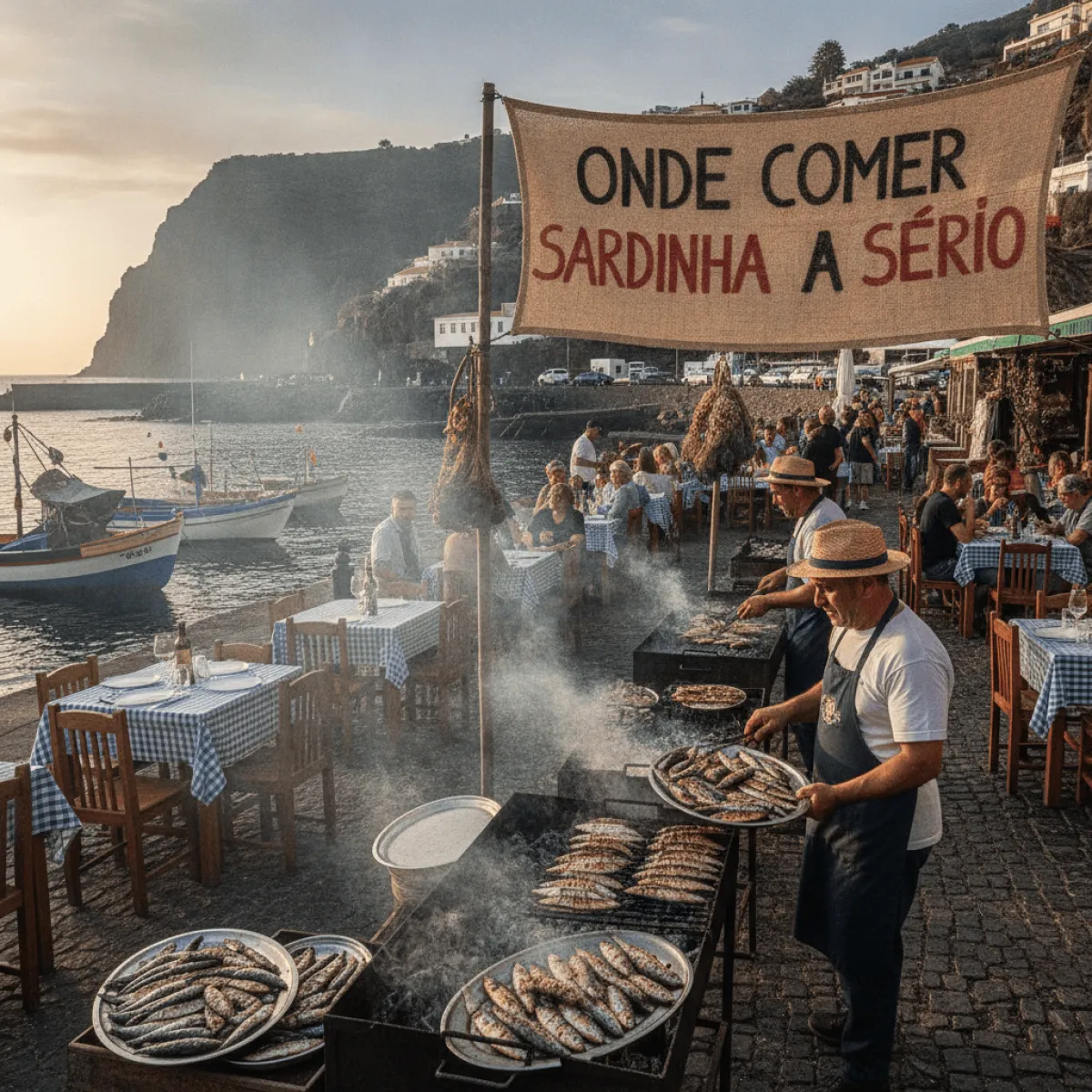
In Câmara de Lobos, grilled sardines show up at the summer arraiais, on the terraces beside the small fishing port, and in the doorways of houses grilling out on the street. Do not expect a dozen famous sardine houses with queues around the block, the way Lisbon's Bairro Alto does it. Here it is quieter, more neighbourhood than spectacle. And that is exactly what makes it good.
How to eat a sardine properly
Rule number one: with your hands. A sardine eaten with a knife and fork is a sad, pointless thing. Rule number two: over bread. Madeiran corn bread, bolo do caco spread with garlic butter, or simply a rustic slice that soaks up the dripping fat. The sardine is grilled with coarse salt and nothing else. It needs no sauce, no excess of lemon. A good June sardine asks only for charcoal, salt and your attention.
The classic sides: boiled potatoes in their skins, a simple tomato salad with onion and oregano, and a glass of house wine. A typical plate of grilled sardines on an honest terrace runs between 8 and 12 euros, depending on how many arrive and the time of year. Check locally, because summer prices climb with demand.
The poncha ritual, before or after
You do not eat sardines in Câmara de Lobos without talking about poncha, it would be close to a cultural offence. Traditional poncha is sugarcane spirit, bee honey, lemon juice and nothing more. You beat it with a wooden stick called a caralhinho until it is smooth. It is sweet, it is treacherous, and it goes down far too easily.
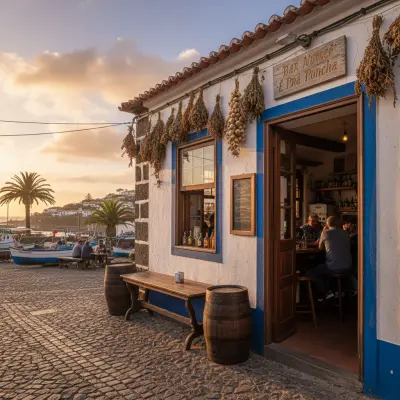
The local temple is Bar Number Two, known to everyone as É Prá Poncha, a tiny tasca by the port where the fishermen stop before and after work. It is not pretty, it has no Instagram terrace, and that is precisely why it is the best. Order the regional lemon poncha first, then try the passion fruit or tangerine. A glass runs around 2.50 to 3.50 euros. Drink it with respect: it looks harmless and it is not.
If you want to understand poncha properly, with context and a local explaining the difference between the real thing and the tourist version, the walking tour and poncha tasting led by a resident is genuinely worth it. It is the best way to grasp why this village drinks what it drinks.
Where to hunt for the sardine
The port and the alleys around it
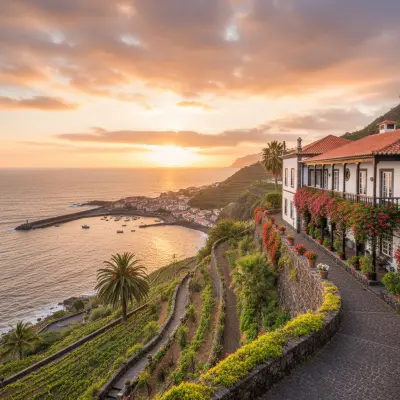
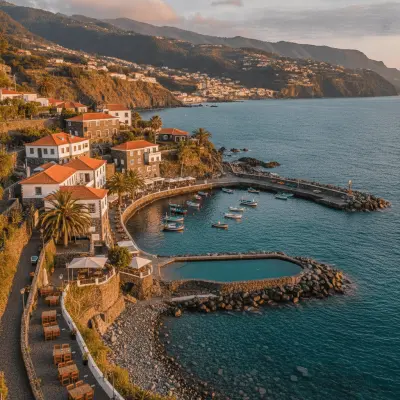
The heart of it all is the harbour, that arc of coloured houses and boats hauled up on the sand that Churchill made famous. This is where, in summer, the grills come out onto the street. Walk slowly through the lanes behind the seafront in the late afternoon, follow the smoke, and sit where you see Madeirans eating rather than tourists holding cameras. That is the only navigation rule you need. The sea-facing terraces have the better view, but often the most honest sardine is one street back, away from the postcard.
If sardines are out of season or you cannot find them fresh, do not force it. Order grilled black scabbard fish with banana, the island's signature plate. It sounds strange and it works beautifully: the delicate white fish against the sweetness of fried banana. It is what the fishermen here bring in, and it is what makes sense to eat.
Fajã dos Padres: the detour worth the journey
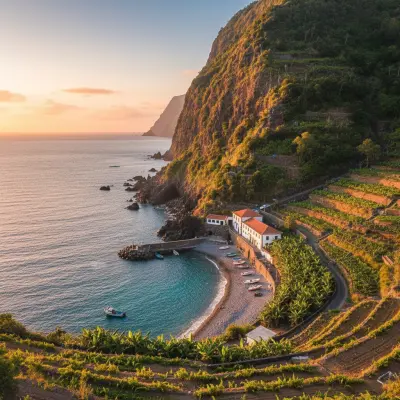
For a fish meal with a setting you will not forget, take the cable car down to Fajã dos Padres, a strip of fertile land wedged at the foot of a towering cliff, reachable only by lift or boat. Do not come expecting a festival sardine grill, but rather fresh fish and produce grown right there, with the Atlantic literally at your feet. The cable car costs around 10 euros return (check locally). It is the kind of place where you eat slowly and finally understand why nobody here is ever in a hurry.
Where to stay so you don't have to drive after the poncha
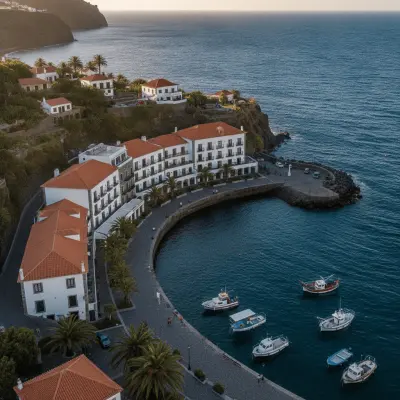
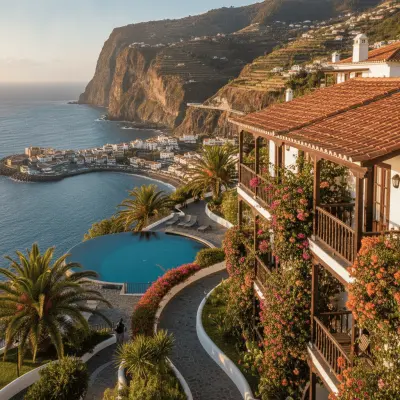
I speak from experience: sardines, wine and poncha do not mix with a mountain road at night. If you are going to do this properly, sleep in the village. The Pestana Churchill Bay sits right below the spot where the old statesman painted, looking straight out over the fishing port. It is the obvious choice for anyone who wants to step out of their room and be in the middle of the action in five minutes.
A little lower down, pressed up against the fishermen's world, the Pestana Fisherman Village leans into exactly that closeness to the sea and the boats. For those who prefer height and a big view, the Village Cabo Girão makes the most of its nearness to the second-highest sea cliff in Europe. And if you want something greener and quieter, away from the bustle of the quay, Quinta da Saraiva is the right retreat.
Getting there and getting around
Câmara de Lobos is about a 10-minute drive west of Funchal, or a few euros away by bus on the Rodoeste line. It is perfectly possible to come for the afternoon and evening without a car: catch the bus on Funchal's seafront avenue, eat your sardine, drink your poncha and take a taxi back (a fare runs roughly 15 to 20 euros). If you drive, park in the upper town and walk down, because the lanes by the port are narrow and seafront parking is a battle in high summer.
A word on timing: grilled sardines are mostly a late-afternoon and evening affair, when the grills are lit. Lunch in the village leans more towards scabbard fish and fish stew. If you are here purely for the sardine, arrive around 7.30pm, when the sun starts dropping over the harbour and the charcoal smoke mixes with the salt of the sea.
Make it a bigger trip
Câmara de Lobos gains a lot as a stop within a wider Madeiran itinerary rather than an isolated destination. In the morning, before the heat, get onto a levada. The Funchal levadas are the ideal starting point for the island's essential walks, and they are a short hop away. If you come in June, the sardine peak lines up with the best time for tuna and festival nights: our guide to Funchal in June, between tuna, levadas and festivals fits like a glove with a sardine night in Câmara de Lobos.
Want to stretch to two or three days? Head north and give a full day to Santana, a slow day done right with its famous thatched houses. And if Madeira gives you an appetite to walk other Portuguese landscapes, keep the idea of hiking the Rota Vicentina in spring, among blooms and coastal air for a future trip to the mainland.
What to take from this story
Câmara de Lobos does not live on sardines the way Lisbon does. But when the sardine appears, between June and September, it appears the right way: fresh, salted, grilled on the street, eaten with your hands over bread and washed down with poncha. Do not chase the most famous house. Chase the smoke, chase the table full of Madeirans, sit down and order. And if the sardine happens not to be at its best, do not sulk: order scabbard fish with banana, a lemon poncha, and thank the village for teaching you to eat whatever the sea gives at each time of year. That is the real lesson of this fishing town. The sardine is the excuse. The ritual is what stays.