Fajã dos Padres
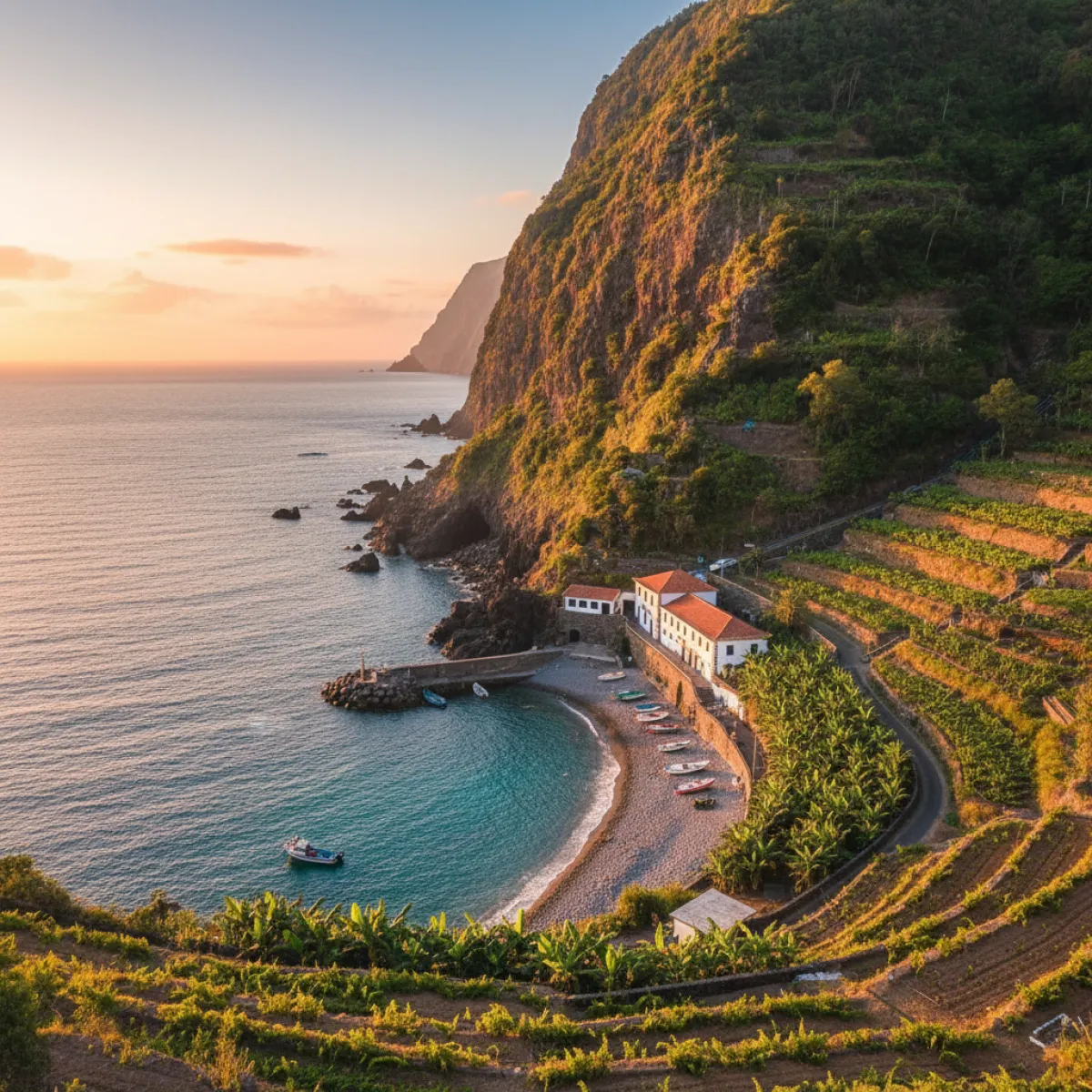
Fajã dos Padres sits at the bottom of a 300-metre cliff in Câmara de Lobos. The only way down is a cable car or a 10-seat boat. What you find below: 9 stone cottages, a private pebble beach, malmsey vines planted by Jesuits in the 15th century, and a restaurant serving fish pulled from the water that morning.
A place you can only reach by cable car, and that's the whole point
Fajã dos Padres is not somewhere you stumble upon. There is no road down. You drive to the parish of Quinta Grande in Câmara de Lobos, park for free at the top of the cliff, and step into a cable car that drops 300 metres of sheer rock face in about two and a half minutes. It costs €10 per person (return), free for children under 11. When the door opens at the bottom, every tour bus, every viewpoint queue, every souvenir shop on the island is literally 300 metres above your head.
What this place actually is
A fajã, in Madeira, is a platform of land at the base of a cliff, formed by ancient landslides. This particular one has been farmed since the 15th century, when Jesuit priests settled here and planted malmsey wine grapes. For over 150 years, the padres (hence the name, "Fajã of the Fathers") produced wine, fruit, and vegetables on this strip of land sheltered by a basalt wall. It once housed 50 residents. Today it operates as an agritourism property: 9 converted stone cottages with sea views, a restaurant serving Madeiran cooking, an organic farm growing bananas, mangoes, avocados, passion fruit, figs, and araçás, plus a private pebble beach with loungers and a concrete pier.
The official address is Rua Padres António Dinis Henriques nº 1, 9300-261 Quinta Grande, Câmara de Lobos, but nobody arrives by road. You arrive by air, via the cable car, or by sea on the "Malvasia," a 10-seat boat service running from Funchal and Câmara de Lobos.
The descent and what you find below
The cable car is modern and safe, but if you have serious vertigo, fair warning. You descend facing the open Atlantic, with the cliff face of Cabo Girão (the second-highest sea cliff in Europe) sliding past the glass. At the bottom there are no roads, just walking paths and small golf carts that haul luggage. The whole place can be walked end to end in 20 minutes. But the pace here is not about covering ground.
The beach is dark pebble, with showers and a small pier you can dive or snorkel from. The water is clear and, thanks to the microclimate created by the cliff shelter, consistently warmer than the rest of the south coast.
The restaurant
The restaurant sits right by the beach, with outdoor tables facing the pier. The kitchen is straightforwardly Madeiran: fresh fish, seafood, vegetables from the on-site organic garden. On a sunny day (and it is almost always sunny down here), eating grilled fish with your feet practically in the water is the kind of thing that makes the cable car ride worth it. Prices are moderate for what this is (€€), which is genuinely surprising given the setting and the captive audience. Service is laid back. Do not expect fine dining. Expect honest food in an absurdly beautiful spot.
Fair warning: reviews are mixed. Some visitors call it the best meal of their Madeira trip. Others find the cooking inconsistent. My advice: stick with the fresh catch of the day, which is hard to get wrong. The place is open daily from 10:00 to 18:00, so this is a lunch destination, not a dinner one. Call ahead to confirm restaurant availability (+351 291 944 538), especially during peak season.
Sleeping on the cliff
The 9 historic stone houses have been converted into sea-view accommodation. These were once farmers' homes, now updated with modern comfort but still carrying the rough character of the original buildings. Sleeping here means waking to the sound of the ocean with no visible neighbours, just banana plants and rock face. Book directly through their website (fajadospadres.com) and well in advance: 9 units and high summer demand is the kind of maths that does not work in your favour.
If you want alternatives in the Câmara de Lobos area, Quinta da Saraiva is a solid choice, though a completely different experience.
Practical tips
- Parking at the top of the cliff is free. Drive or taxi to Quinta Grande and follow signs for the Fajã dos Padres cable car.
- Wear comfortable shoes. The paths below are dirt and pebble, not pavement.
- The last cable car goes up at 18:00. Do not miss it, unless you are staying overnight.
- Bring sunscreen and a swimsuit. The microclimate here is warmer and sunnier than the rest of the island.
- If the cable car is shut due to high winds (rare), the boat is the backup option.
How to fit it into your trip
Fajã dos Padres works best as a half-day programme. Go down in the morning, walk through the organic gardens, have lunch at the restaurant, lie on the beach until mid-afternoon, and ride back up. If you are following our 24 hours in Câmara de Lobos guide, this makes an ideal second day. After you climb back to the top, you can always finish the afternoon in Câmara de Lobos proper with a poncha at Bar Number Two.
Fajã dos Padres does not try to impress with luxury or design. It impresses because it is a piece of land that has been farmed for 500 years, wedged between a cliff and the Atlantic, where malmsey wine is still produced and fish is still pulled from the water the same morning you eat it. And the only way down is a cable car or a 10-seat boat. There are places in Madeira with better restaurants. There are places with better beaches. But there is nowhere else that puts all of this together in a setting like this.
