Arcos de Valdevez: The Local Festival Calendar Explained
Arcos de Valdevez runs on three real dates: the flower carpets of Nossa Senhora do Castelo, nine days celebrating Nossa Senhora da Lapa, and the big romaria up at Peneda, where accordions play until seven in the morning. None of it was built for tourists.
Nobody in Arcos de Valdevez is going to tell you there's a festival every week, because there isn't. Good. What exists instead is a calendar with three dates that actually matter, each with a completely different character, and the rest of the year is river, mountain, and the ordinary rhythm of a town in Alto Minho. If you came looking for a generic "top ten unmissable events" list, close this tab. If you want to know when to show up, what you'll actually find, and where to eat and sleep while it's happening, keep reading.
June: the flower carpets of Nossa Senhora do Castelo
The first date worth marking is the Romaria de Nossa Senhora do Castelo, a procession that climbs Monte do Castelo around the start of June. It isn't the biggest religious festival in the region, but it's arguably the most beautiful to see up close: the streets along the procession route get covered in carpets made of flowers and colored sawdust, laid overnight on their knees by groups of neighbors using stencils and buckets of petals. It's the kind of tradition that survives not because of tourists but despite them: nobody is decorating the street for a photo, they're doing it because that's what the family has always done.
If you happen to be in Arcos for this, get there early on the morning of the procession, before the carpets get walked on. That window lasts a few hours at most. After that it's just crushed flowers on the ground, still pretty, but not the same thing.
August: nine days of Nossa Senhora da Lapa
If you can only pick one time of year to come, make it this one. The Festas em Honra de Nossa Senhora da Lapa, organized by the Associação Folia, take over the town center from August 2nd to 10th, nine straight days mixing faith, music, and the kind of gathering that only happens when half the county comes home at once. The lineup of names changes year to year, but the structure repeats: popular street parades to open things up, a folklore festival called "Terras de Valdevez", nights of improvised sung duels known as cantares ao desafio, an Emigrant Day that matters as much as any concert because it's when the diaspora comes back, an international folklore festival called "O Mundo a Dançar" that brings in dance groups from outside Portugal, an agricultural competition that's a reminder this is still farming country, an ethnographic procession, and the Festa do Rio, with decorated boats floating down the Vez. It all closes with a fireworks show timed to music on the final night.
Worth knowing: part of the program happens at Ínsua do Vez, inside the Ecoparque do Vez, right on the riverbank, where the mood is calmer than the main square during the bigger concerts. If you'd rather watch people dance than listen to a headline act, that's where to go.
Where to stay during the festival
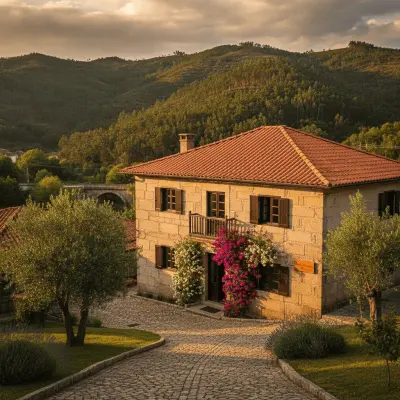
August in Arcos fills up fast, and the town doesn't have a huge number of places to sleep. Pousadinha da Juventude is the obvious call if you don't want to spend a fortune and don't mind sharing space: simple rooms, a location you can walk into town from, and the kind of atmosphere where you end up talking to other people who also came for the festival. Book ahead, that specific week sells out.
Late August into September: the big one, the Romaria da Peneda
This is a different scale entirely. The Romaria de Nossa Senhora da Peneda runs from August 31st to September 8th at the sanctuary in Peneda, in the parish of Gavieira, already inside the Peneda-Gerês National Park, about 50 kilometers from central Arcos de Valdevez via the Mezio road. It's considered the largest and most striking romaria in all of Alto Minho, and that's not an exaggeration: thousands of pilgrims climb up, many on foot from nearby villages, and Galician devotion mixes with Portuguese because the border up there is just an imaginary line running through the hills.
The sanctuary itself is worth the climb even outside the festival: the monumental staircase, built in 1854 by master craftsman Francisco Luís Barreiros, runs about 300 meters with twenty chapels depicting scenes from the life of Christ, flanked by statues representing Faith, Hope, Charity, and Glory. But during the romaria the place takes on another dimension entirely: on the night of September 6th into the 7th, people of every age dance to accordion music by the sanctuary until seven in the morning, no breaks. There are no carousels or fair-food stalls dressing up the experience, and it's exactly that absence of commercial spectacle that makes it feel real. It's a festival that has stayed close to identical for two hundred years, and you can feel it.
If you'd rather tackle the climb up to Peneda as a guided walk instead of going it alone, it's worth looking at the guided viewpoint hikes in Arcos de Valdevez, which give you context on the terrain you're crossing, something easy to miss when you're solo and in a hurry.
Eating and drinking after the procession
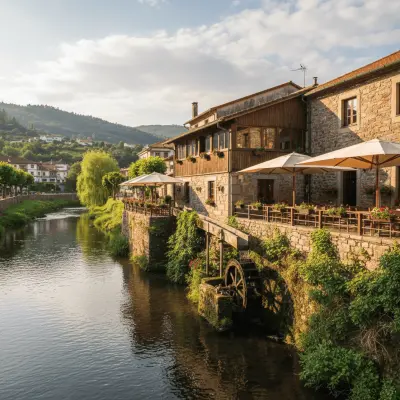
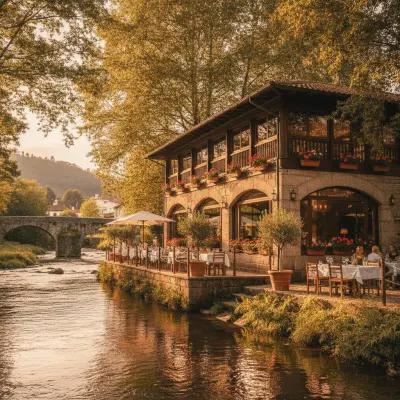
After a full day of festival, or a climb up to Peneda, the town has two go-to addresses that solve both halves of the problem. For food, Flume Restaurante & Bar right on the Vez river is the right call when you want to sit with water in view after being on your feet all day: straightforward Portuguese cooking, relaxed setting, and the location makes all the difference on a hot August night. For the after part, especially once the music in the square has stopped and you're not ready to call it a night, Retro Bar Galerias is where the town keeps going. It's not fancy, and it shouldn't be: neighborhood bar, cold beer, good conversation.
The rest of Minho's festival circuit
If your trip overlaps with one of these dates and you've still got days to spare, Arcos de Valdevez isn't isolated on this calendar. All of Minho runs on romarias and fairs between May and September, and some neighbors are worth the detour. In May, Barcelos runs its own version of the genre with the Festa das Cruzes, one of the oldest in the country and a different tone entirely from Peneda: more urban, more market fair, less pilgrimage. And while you're in Barcelos, skip the hotel breakfast: where Barcelos actually eats breakfast before the market is a solid way to understand the town before it fills up with visitors.
For anyone who'd rather trade romaria for wine, Melgaço is under an hour by car and runs on its own rhythm, tied more to the alvarinho harvest than to processions. Worth checking the Melgaço weekend guide built around one grape and thermal water if you want to stretch the trip an extra day or two after the Arcos festivities wind down.
Getting there and what to pack
Arcos de Valdevez sits about 40 kilometers from Braga, a drive of just over half an hour, and roughly 47 kilometers from Viana do Castelo. There's no direct train link, but Rede Expressos runs regular buses from Braga, with the trip taking around an hour and fifteen minutes. If climbing up to Peneda is part of the plan, a car stops being optional: it's the only practical way to get there, and on romaria days traffic on the Mezio road can slow to a crawl, so build in extra time.
One practical note on clothing: even in August, at night up at Peneda, at roughly a thousand meters, the mountain wind cuts through. Bring a sweater. Nobody warns you about this until you're already shivering at three in the morning watching people dance to accordions.
- Romaria de Nossa Senhora do Castelo: early June, flower carpets, central Arcos de Valdevez
- Festas de Nossa Senhora da Lapa: August 2nd to 10th, nine days of programming in the town center and at Ecoparque do Vez
- Romaria de Nossa Senhora da Peneda: August 31st to September 8th, Peneda sanctuary, Gavieira parish, inside Peneda-Gerês National Park
None of these dates were designed with tourists in mind, and that's exactly why they're worth planning around. Show up with time to spare, wear shoes you can actually walk in, and let the local calendar, not some generic itinerary, set the pace of the visit.