Amarante After Dark: Wine and Petiscos for Food Lovers
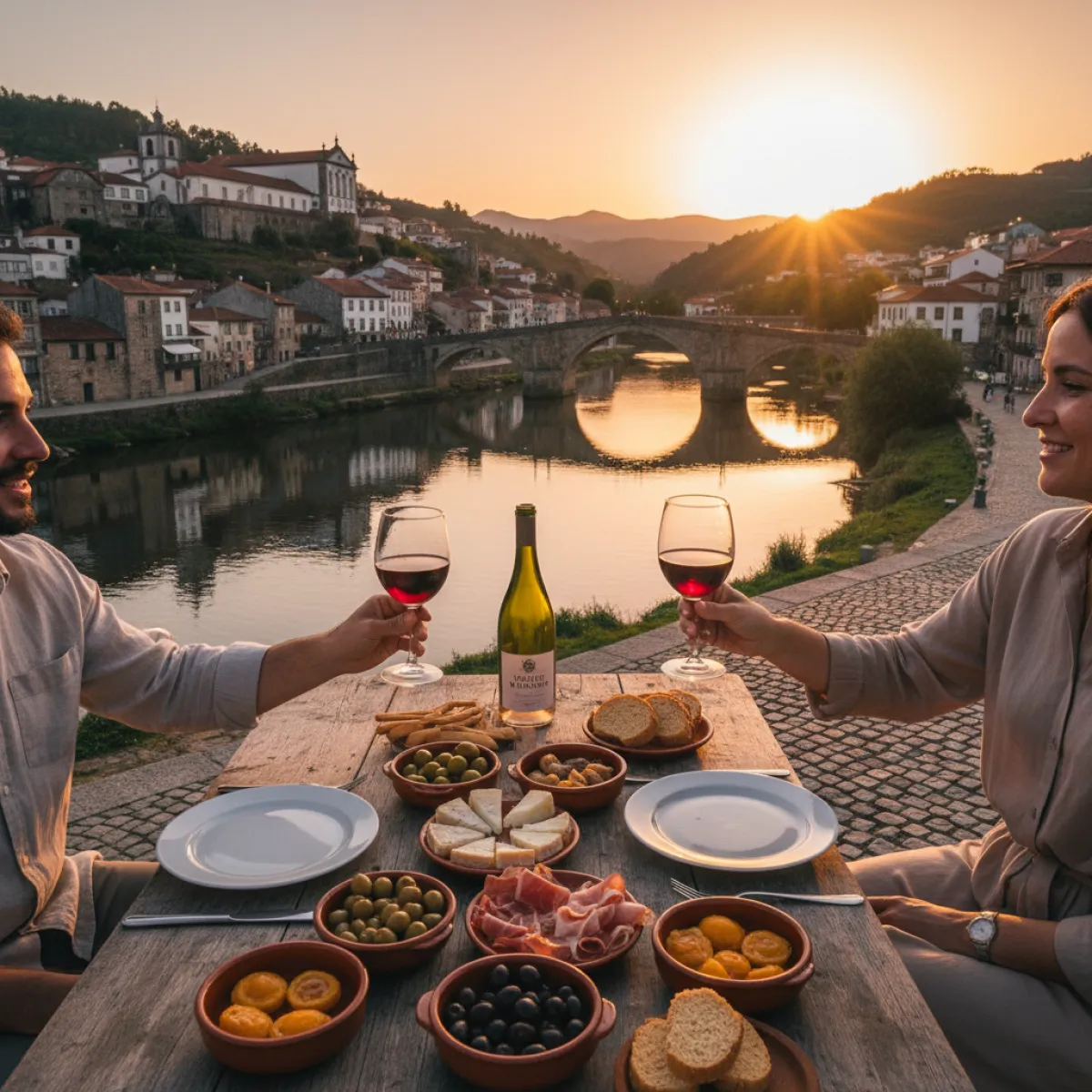
Amarante deserves more than a bridge photo and a convent pastry. At dusk, with a glass of Avesso and a board of northern petiscos, the town shows its finest side. This is the itinerary for those who stay.
Most people get Amarante wrong. They drive up from Porto, snap a photo of the São Gonçalo Bridge, eat a convent sweet, and leave before dinner. That's a mistake. Because Amarante in the late afternoon, when golden light hits the Tâmega river and the bars start filling up, is a completely different town. Slower, more generous, more interesting.
This itinerary is for those who stay. For anyone who understands that a town with this kind of wine heritage and food culture deserves more than a two-hour pit stop. We're going from late afternoon into the night, glass by glass and plate by plate, with no rush at all.
First, some context
Amarante sits in the heart of the Vinho Verde region, but it's not just Vinho Verde you'll be drinking here. The Amarante sub-region has been making a name for itself with medium-bodied reds and whites with more structure than your typical light, fizzy Verde. Local producers have been investing in grape varieties like Alvarinho, Avesso, and Vinhão. If you arrive expecting only that easy-drinking summer white, prepare to have your assumptions corrected.
As for petiscos (Portugal's answer to tapas, but don't say that to a Portuguese person), we're in the deep North. This means cured ham, goat's cheese from the Serra do Marão, smoked sausages, and everything the land and the pig provide. Don't expect foams or reductions. Expect honesty on the plate and generosity in the portions.
5:30 PM: Start slow by the river
Begin at the riverside, near the bridge. Before switching into food mode, it's worth walking along the Tâmega. If you arrived earlier in the day, you might have had time for a boat ride on the Tâmega, which is a perfect way to see the town from the water. But now, in the late afternoon, the walk is enough. The river has a particular calm at this hour, and the terraces are setting up tables for the evening.
If you drove from Porto, it's about an hour via the A4 motorway. By train, the Douro line takes you to Marco de Canaveses, and from there it's a 20-minute bus ride. Not the most convenient, but the scenery makes up for it. In fact, Amarante is one of the best day trips from Porto, though I'd argue it deserves at least a full evening.
6:00 PM: The first glass, in the right place
Torre Jardim Bar is the kind of spot that sets the tone for the whole night. It has a prime location overlooking the river and bridge, and serves regional wines by the glass. Order an Avesso white from the Amarante sub-region. It's the grape that best expresses this specific terroir: fresh, with a minerality that echoes the stone of the nearby Marão mountains, and perfect alongside your first petisco.
Here's the first rule of this itinerary: never drink without eating. Not just for practical reasons (though yes, that too), but because the petiscos in Amarante are too good to skip. If they have boards of cheese and cured meats, start there. Presunto from Barroso or a cured goat's cheese from the serra is the ideal opening act.
Stay an hour. Don't rush. In Amarante, dinner at 8 PM is perfectly normal, and nobody will judge you for being on your second glass at half six.
7:15 PM: Change of scenery
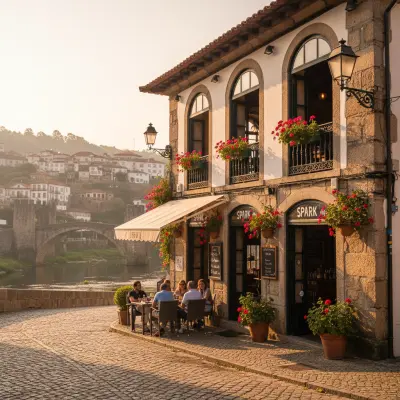
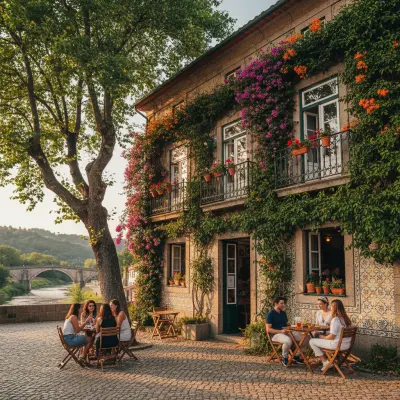
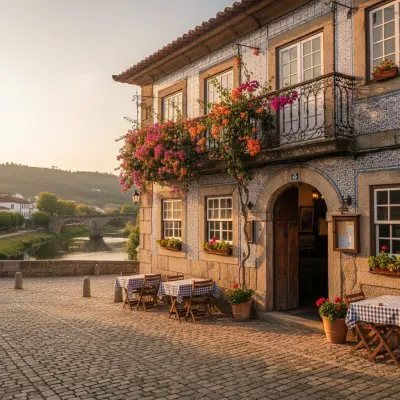
After the first bar, walk through the old town. Rua 31 de Janeiro and the streets around the Church of São Gonçalo have a particular charm at dusk. The granite facades, the iron balconies, the convent pastry shops still open for business. It's during this walk that you grasp Amarante's real scale: small enough to cross on foot in 20 minutes, but with enough corners to surprise you.
Stop at a pastelaria and buy a Doce de São Gonçalo. Yes, they're the phallic-shaped pastries. Yes, they have a history tied to fertility rituals. No, you don't need to photograph them for Instagram, but you probably will. The taste is classic egg pastry with puff dough. Nothing technically extraordinary, but the context makes them irresistible.
7:45 PM: The dinner that matters
This is where the evening finds its centre of gravity. Pobre Tolo is the kind of restaurant Amarante needs and deserves: full of personality, free of pretension, with a kitchen that respects good ingredients without overcomplicating them. The name, which roughly translates to "poor fool," tells you something about the attitude.
Northern Portuguese cooking is what shines here. In Amarante, the culinary references are clear: Barrosã veal, roast kid from the mountains, bacalhau prepared a thousand ways, and always, always, generous Douro olive oil as the foundation. Order what looks good and trust whatever the kitchen sends out. In the North, you rarely eat badly when you follow tradition.
For wine, step beyond Vinho Verde and try a regional red. Amarante's reds, made with Vinhão and sometimes blended with Touriga Nacional, have a frank rusticity that pairs beautifully with grilled meats and cured cheeses. Ask the staff for a recommendation. They usually know the local producers personally.
Dinner with wine for two in Amarante rarely exceeds 50 to 70 euros, which in Portuguese dining terms is outstanding value. Compare that to Lisbon prices and weep with joy.
9:30 PM: The night isn't over
After dinner, the temptation is to head to the hotel. Resist. Amarante's night has a final chapter that's worth staying up for, especially on Fridays and Saturdays.
Spark Bar is where locals go when they want to extend the evening. It has a different energy from the more tourist-facing spots by the river, and it's where you'll find amarantinos chatting about football, politics, and wine in equal measure. Order a gin and tonic or circle back to wine. If the bartender is in good spirits, ask for something off-menu.
This is the kind of bar where you feel the difference between visiting a town and being in a town. The tourists have gone home. The ones who remain are the ones who understand that Amarante after nine o'clock is a place apart.
Practical notes for the perfect evening
A few things to know before you go:
- Book your restaurant, especially on weekends. Amarante is small and the good places fill up fast.
- If you don't want to drive back to Porto after a night of wine (and you shouldn't), there's quality accommodation in town. Casa da Calçada is the luxury option, but there's also excellent rural tourism in the surrounding area.
- Parking in the centre is limited but free on many streets. Arrive before 6 PM to find a spot more easily.
- Amarante's convent sweets are famous, but buy them from traditional shops, not souvenir stores. You can taste the difference.
And the next morning?
If you stayed overnight, the following day in Amarante has plenty to offer. In the morning, you could go cycling along the Tâmega Ecopista with Amarante Trilhos, a bike ride that follows the old railway line through landscapes that justify the hangover. It's flat, it's easy, and the morning air works wonders.
After that, if you want to keep exploring the North, both Braga and Guimarães are less than an hour away and are destinations with serious weight. But that's another story, and another article.
For now, what matters is this: Amarante at dusk, with a glass of Avesso in hand and a board of petiscos in front of you, is one of the finest food experiences northern Portugal has to offer. It doesn't need Michelin stars or 12-course tasting menus. It needs good produce, good wine, and time. Especially time.