24 Hours in Batalha: A Masterclass in Stone and Light
A sophisticated 24-hour guide to Batalha, focusing on the architectural mastery of its UNESCO monastery, regional gastronomy, and the quiet rhythm of Central Portugal's limestone heartlands.
The Scale of the Sacred: Dawn in Batalha
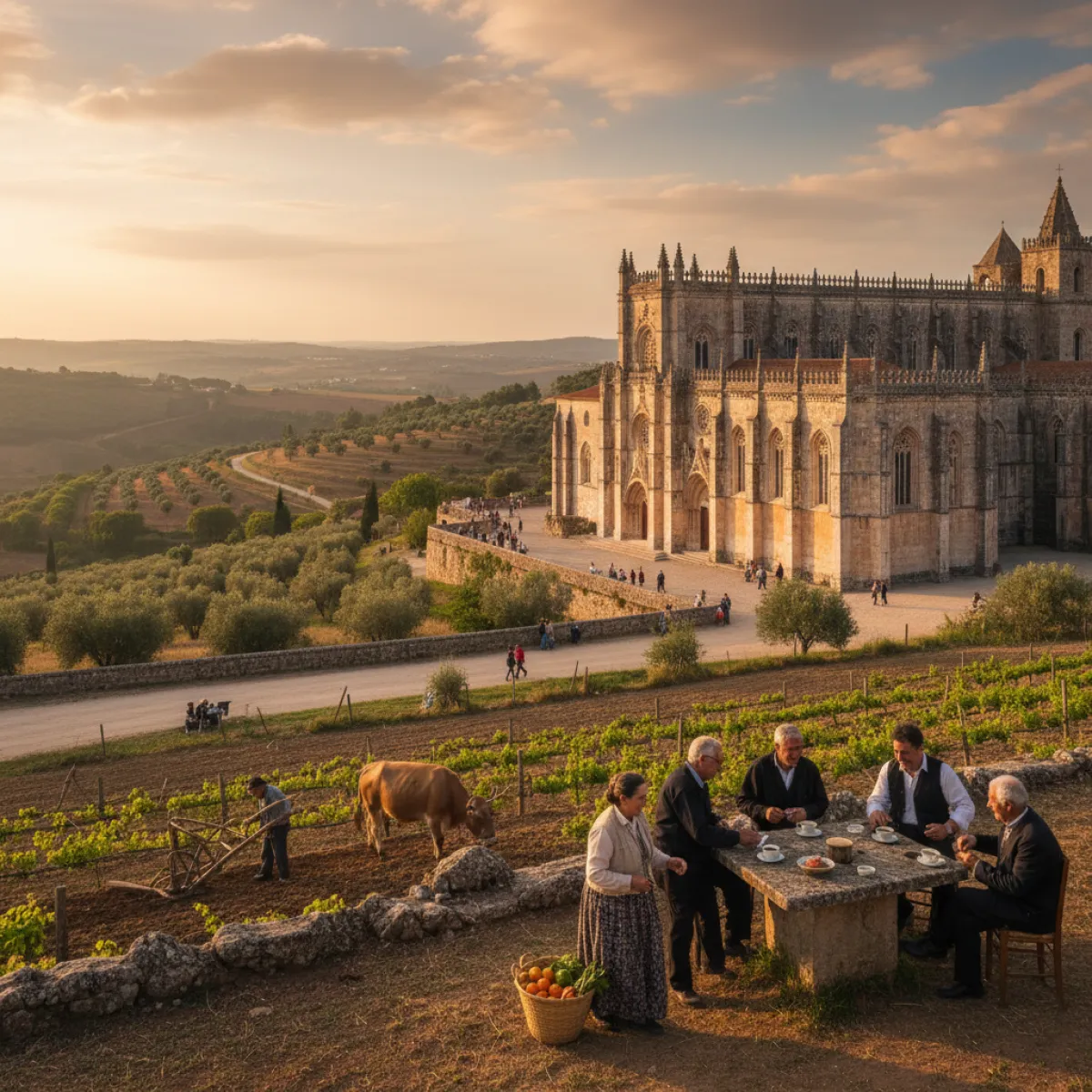
There is a specific gravity to Batalha that is not found anywhere else in Portugal. Unlike Évora, where history is scattered through whitewashed alleys, or Braga, where the Baroque explodes at every corner, Batalha is a town built around a single moment of audacity: the victory at the Battle of Aljubarrota. Arriving here early in the morning, when the autumn sun begins to lick the limestone of the Encostas d'Aire hills, is to witness a chromatic transformation ranging from austere grey to deep honeyed gold.
While Batalha often serves as a pivotal stop on a broader Portugal itinerary: a week in the heart of the country, it demands a slower appraisal. The Monastery of Santa Maria da Vitória is not merely a monument; it is a living organism of stone that dictates the rhythm of the entire community. For the traveler seeking to understand the soul of Central Portugal, the first hours of the day should be spent outside, circling the structure to appreciate the density of the buttresses and the lacy delicacy of the battlements.
The Monastery: A Grammar of Power and Faith
Entering the Monastery at 09:00, precisely when the doors open, allows one to avoid the cacophony of the day-trippers from Lisbon. The silence of the central nave is absolute. Here, Radiant Gothic reaches its zenith. One must look up: the height of the vaults is an engineering feat that, in the 14th century, bordered on the impossible. The light, filtered through medieval stained glass, some of the oldest and best-preserved in the country, casts pools of crimson and cobalt onto the cold stone floor.
The visit should be unhurried, focusing attention on the Royal Cloister. It is here that the Manueline style begins to flourish, with columns decorated with vegetal motifs, ropes, and armillary spheres. It is a constant dialogue between initial austerity and the exuberance of the Age of Discovery. For those traversing the country with the measured pace of a seven-day passage between the capital and the north, Batalha provides a necessary pause to process the historical density of this region.
The Perfect Incompletion: The Unfinished Chapels
No visit to Batalha is complete without a prolonged immersion in the Capelas Imperfeitas (Unfinished Chapels). The name is, in fact, a romantic misnomer; they are arguably the most perfect piece of architecture in the country, precisely because they were left open to the sky. The portal by Mateus Fernandes is a masterclass in virtuosity: seven meters of stone carved as if it were gold filigree or fine lace. Watching the blue sky framed by the unfinished top of the chapels is an almost transcendental experience, a reminder of human ambition and the transience of time.
Lunch: Gastronomy of the Terroir
Batalha is more than its monastery. Midday, step away from the main square and seek out Burro Velho. Forget the tourist menus; here, the focus is on pork and local charcuterie. Order the *morcela de arroz*, a regional specialty that reaches a remarkable texture and balance of spices here. For the main course, the salt cod with cornbread (*bacalhau com broa*) or the slow-roasted kid are reliable choices. Pair it with a white wine from the Encostas d'Aire, a wine region that benefits from Atlantic freshness and limestone soil, producing wines with a vibrant minerality.
For dessert, *Brises do Lis* are non-negotiable. Although originating in nearby Leiria, the version found in local bakeries like Pastelaria Vintage respects the exact proportion of egg yolks, sugar, and almonds that makes this conventual sweet one of the jewels of Portuguese pastry. Budget approximately €35 to €50 per person for a high-quality lunch with wine.
Afternoon: Memory and Geology
After lunch, visit the Museu da Comunidade Concelhia da Batalha (MCCB). Housed in a building that seamlessly blends historical restoration with flawless contemporary design, the museum tells the story of the region from the Jurassic period to the present day. It is a didactic, inclusive, and aesthetically rewarding space. Here, you realize that Batalha is much more than a battlefield; it is a territory where human history and limestone geology have coexisted for millennia.
If time permits, a short ten-minute drive takes you to the Grutas da Moeda (Coin Caves). Less explored than the larger caves at Mira de Aire, they offer a more intimate look at the subterranean galleries carved by water over eons. The constant temperature of 18 degrees Celsius (64°F) is an ideal refuge whether in the depths of winter or the height of summer.
The Evening: Sunset and Stillness
As evening falls, the square in front of the monastery regains its provincial calm. It is the time to watch the shadows of the gargoyles lengthen across the pavement. For those choosing to stay overnight, Villa Batalha offers contemporary hospitality with direct views of the monument. Dinner at the hotel’s restaurant, Adega dos Frades, allows for a more sophisticated exploration of local products, with a wine list that honors the proximity to Alcobaça and the Oeste region.
Just an hour away, Coimbra: the grammar of time in Portugal’s intellectual capital offers a scholarly counterpoint to Batalha’s martial and religious grandeur, serving as the logical next stop for those heading north. But for tonight, stay in Batalha. The silence of the medieval stones, softly illuminated by spotlights that highlight the verticality of the spires, is the perfect epilogue to a day dedicated to the excellence of human ingenuity.
Practical Information
- When to go: April to June or September to October. Avoid July and August due to intense heat and tourist crowds.
- Getting there: Batalha is about 1h30 from Lisbon and 2h from Porto via the A1 and A8 motorways.
- Budget: Set aside €130 to €190 for a full day (entries, premium lunch, and dinner), excluding accommodation.
- What to buy: Local ceramics from Alcobaça or wines from the Encostas d'Aire region.