Photography Tour in Penafiel: Capturing the Romanesque Heritage
Discover how to capture the texture of granite and medieval light on a photography tour through Penafiel's Romanesque churches. A technical guide from the Romanesque Route reveals the best angles of Paço de Sousa for just 20 euros.
The Challenge of Photographing Stone and Time
Arriving in Penafiel with a camera in hand is, first and foremost, an exercise in patience. Not because the city is slow, but because granite, the raw material that defines this region, demands a careful reading of the light. As an editorial writer and occasional photographer, I’ve learned that the grey of these stones isn't just a color; it’s a texture that shifts dramatically with the sun's angle. If you’re looking for an experience that goes beyond the standard tourist snapshot, I highly recommend a route focused on Romanesque heritage, but approached with a trained eye for composition and technical detail.
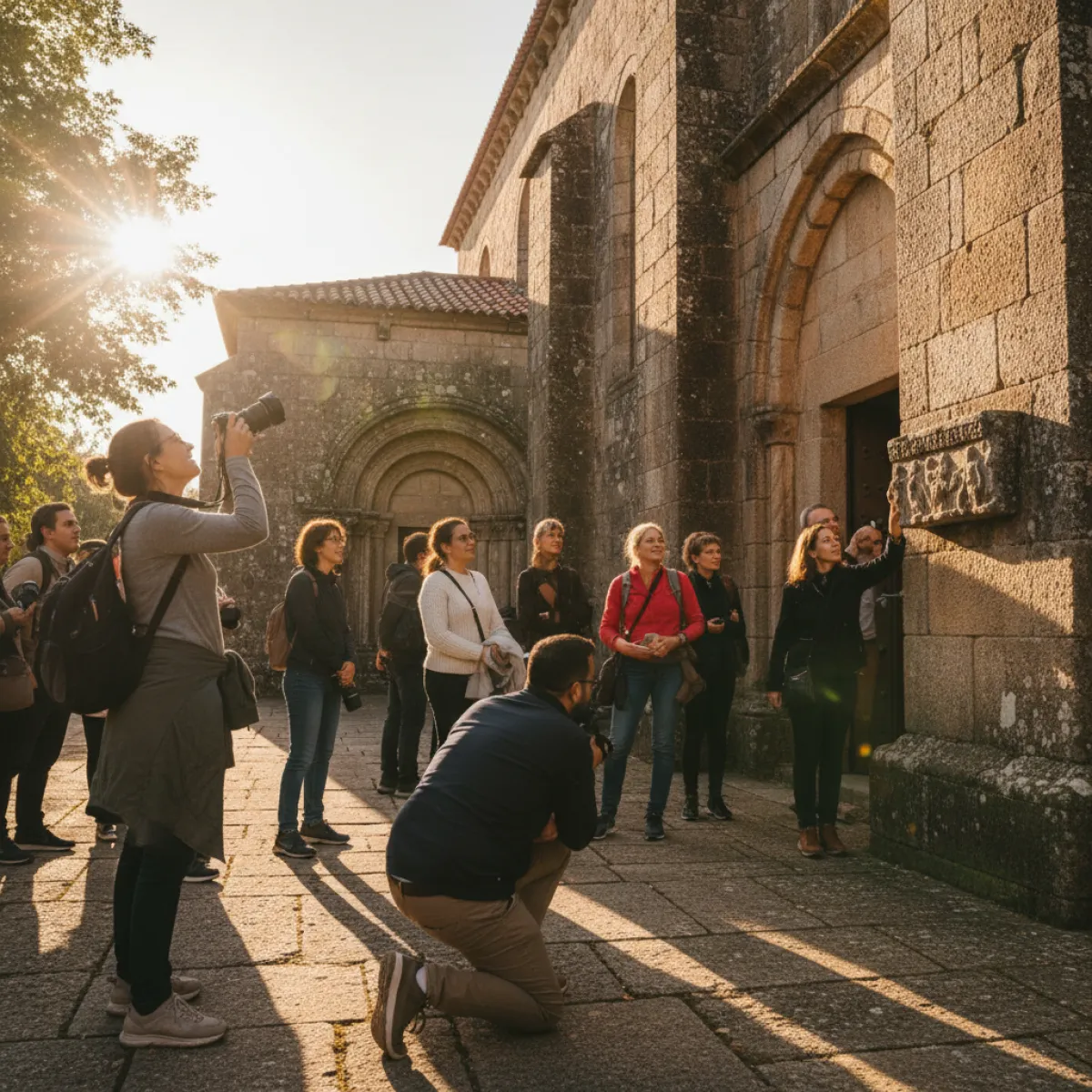
The experience I’m describing isn't a generic bus tour. It’s a journey through Penafiel’s The Granite Axis, centered on what makes this architecture unique. My advice is to book an interpreted guided tour through the Rota do Românico (Romanesque Route). While they offer group packages, the real magic happens when you book a technical guide for a private visit. For 20 euros (the price per monument for a small group), you get access to someone who doesn't just open the heavy oak doors of the churches but knows exactly where the late afternoon light hits the intricate carvings of the capitals.
The Starting Point: Monastery of Paço de Sousa
We begin at the Monastery of Paço de Sousa, a site of monumental historical importance where Egas Moniz, the tutor of Portugal’s first king, is buried. From a photographic standpoint, this monastery is a playground of shadows and symmetries. The main portal, with its five archivolts, offers a fascinating depth of field for those who like working with wide apertures (f/2.8 or f/4). My favorite moment? The filtered light that enters through the side slits in the late afternoon, creating sharp beams that cut across the central nave. It’s the perfect spot to test your wide-angle lens and capture the immense scale of this monument that defines Penafiel: A Granite Geography.
Don’t forget to look up. The modillions, the small stone sculptures under the roofline, are a catalog of grotesque figures, animals, and geometric patterns that beg for a telephoto lens (70-200mm). Each one tells a story of medieval fears and beliefs, and photographing them requires a steady tripod and a bit of patience to wait for clouds to provide the necessary contrast without washing out the textures.
The Rural Perfection of São Gens de Boelhe
Leaving the center, we head toward the Church of São Gens de Boelhe. If Paço de Sousa represents grandeur, Boelhe is the perfect miniature. This small church is, for me, the most photogenic monument in Penafiel. Perched on a slope, surrounded by fields and the distant sounds of rural life, Boelhe shines in the morning light. I recommend arriving around 9:30 AM. At this hour, the stone still holds the night’s moisture, making the moss and lichen growing on the granite pop with incredible color saturation.
Here, the secret is the detail. The south portal has a simplicity that challenges technical skill; its proportions are so balanced that you barely need perspective correction in post-production. It’s an excellent site for architectural detail photography, where the texture of hand-carved stone from centuries ago becomes the main subject. Inside, the space is cramped and dark, a challenge for any sensor, but the resulting images have a weight and gravity that few modern buildings can replicate.
Modernity in Granite: The CIER in Abragão
To complete the interpretive triangle, a visit to the CIER (Center for Interpretation of Romanesque Sculpture) in Abragão is mandatory. Here, modern granite architecture dialogues with the past. This museum space uses light strategically; the rooms are vast, and the sculptural pieces are dramatically lit, allowing you to capture chisel details that would be invisible in an outdoor monument. It is also the place where you can understand The Granite Resonance, not as an abstract idea, but as a physical technique of stone-cutting and acoustics.
Practical Tips for the Traveling Photographer
- Best Timing: Start early at Boelhe and end your day at Paço de Sousa to take advantage of the setting sun on the main facade.
- Gear: A 24-70mm lens is the ideal workhorse for this tour. Bring a 70-200mm for the modillions and a tripod for the dark interiors.
- How to Book: Contact the Rota do Românico (visitas@rotadoromanico.pt) at least 48 hours in advance. Specifically request a guide with experience assisting photographers; they know the exact spots where the light hits first.
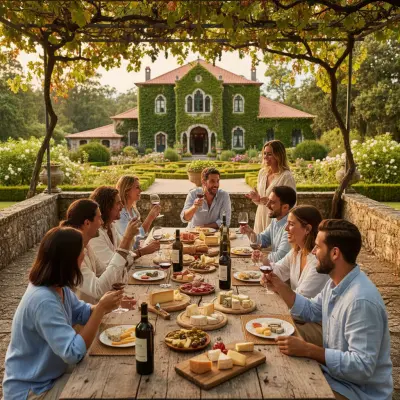
- Where to End the Day: Once the camera is packed away, the final mandatory stop is Quinta da Aveleda. The romantic gardens are a cinematic set in their own right, and the light filtering through the ancient tree canopies is the final bonus for any memory card.
Logistics and Costs
The Rota do Românico is the official operator and ensures that the monuments are opened for your visit. The cost of a private guided tour is 20 euros per monument (for the entire group, up to 5 people). It’s a nominal fee to have an expert explain the iconography while you focus on framing your shot. If you prefer to just have the doors opened without a guide, the fee drops to 5 euros, but you lose the stories that give context to the image. Penafiel also offers some of the best vantages and verandas in the region to capture the city from afar, especially the Sameiro Sanctuary, which provides a panoramic view over this entire valley of stone.