The Granite Axis: Why Penafiel is Northern Portugal’s Strategic Outpost
Discover Penafiel as the strategic hub for exploring Northern Portugal, from the lush Quinta da Aveleda to the Romanesque Route. A guide to granite heritage and its perfect proximity to Braga and Guimarães.
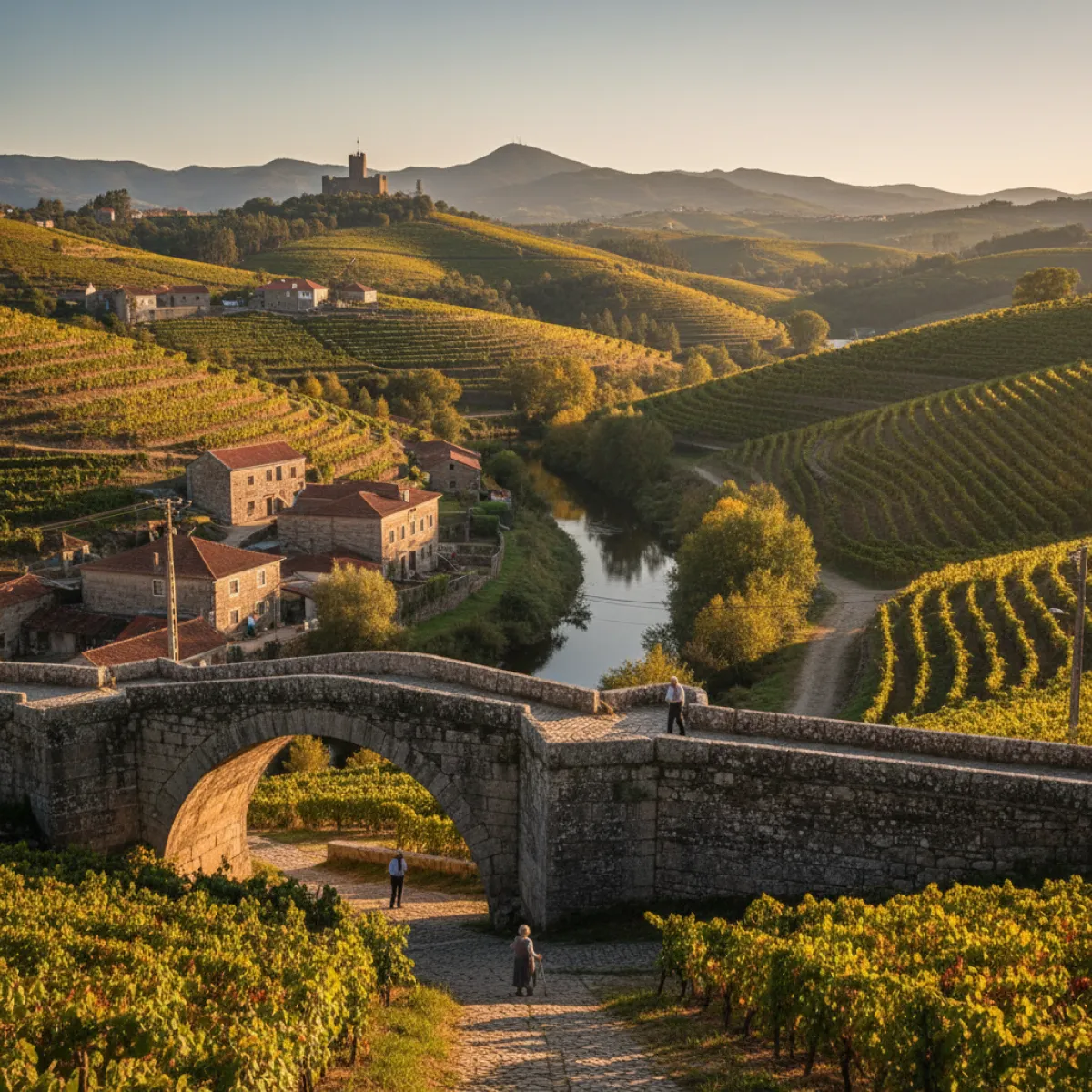
The Geometry of Granite: Penafiel Beyond the Obvious
Penafiel rarely makes it into the opening paragraphs of international travel glossaries, and that is precisely its charm. Anchored in the intersection between the Douro Litoral and the Minho, this city of stone doesn't strive to please. It exists with a pragmatic solidity, defined by the rugged topography of the Sousa Valley and a heritage that stretches back to the very foundation of Portugal. For the traveler who prizes substance over spectacle, Penafiel serves as the Gordian knot of a network linking the coast to the deep rurality of the Tâmega.
The town itself is an exercise in vernacular architecture. The historic center, with its narrow streets paved in cool grey granite, demands a deliberate pace. There is no cosmopolitan rush here; instead, you find a provincial cadence that understands the value of time. The Church of the Misericórdia and the Sameiro Sanctuary dominate the skyline, offering views that extend for miles across vineyards and forest patches. It is the ideal base for those who understand that the most rewarding explorations happen not in the centers of mass, but in the intelligent peripheries.
Quinta da Aveleda: A Manifesto of Terroir and Landscaping
One cannot discuss Penafiel without addressing Quinta da Aveleda. Owned by the Guedes family for generations, this estate is less of a winery and more of a manifesto on how human intervention can elevate nature. The romantic gardens of Aveleda are a botanical rarity, where exotic species thrive alongside native flora under the shade of centennial cork oaks. The 'follies' scattered across the property, such as the Manueline Window transported from Lisbon, reveal a penchant for detail that is inevitably reflected in the wine.
The Vinho Verde produced here, particularly the single-variety editions of Loureiro and Alvarinho, challenges the notion that the region's wine is merely for immediate, unthinking consumption. When visiting, skip the standard tasting and ask to explore the mineral notes of the parcel wines. There is a crisp acidity that cuts through the richness of local gastronomy, serving as the perfect counterpoint to a late lunch. Budget around €25 for a full visit and premium tasting; the value is extraordinary given the exclusivity of the environment.
Northern Incursions: Guimarães and the Weight of History
Just thirty minutes by car, the road climbing toward the Minho reveals the first major extension of this journey. A Guide to Guimarães: The City Where Portugal Learned to Be Itself is essential reading to understand how this neighbor shaped the regional character. In Guimarães, the granite of Penafiel finds a more monumental expression. The castle and the Palace of the Dukes are imposing presences, but the true luxury lies in walking through Largo da Oliveira without the noise of tour groups.
The link between Penafiel and Guimarães is both historical and economic. While Penafiel focused on agriculture and regional trade, Guimarães developed its textile hub. Today, the contrast between Penafiel’s commercial sobriety and Guimarães’ medieval sophistication creates a fascinating dialogue. For those traveling with time, a detour to Citânia de Briteiros, halfway between the two, offers a raw perspective on the Iron Age hillforts that defined these highlands long before the Romans arrived.
The Spirituality and Time of Braga
Following the northern axis, the city of archbishops presents itself as the Baroque antithesis to Penafiel’s austerity. A Guide to Braga: Portugal's Quietly Radical Northern City helps navigate this millennium-old metropolis that pulses with a youthful energy thanks to its university. Braga is where Portuguese Catholicism manifests with its greatest architectural vigor, from Bom Jesus to Sameiro, yet the soul of the city is found in its traditional shopping streets.
When visiting Braga from Penafiel, notice the transition in the landscape. The Sousa Valley gives way to a more open basin. In Braga, the ritual is mandatory: a coffee at A Brasileira and a visit to the Cathedral (Sé), the oldest in the country. It is a city that demands a full day, not because of the distance, but because of the density of information on every corner. A day’s budget in Braga can range from €40 to €70 per person, depending on your choice of restaurant, we suggest looking for establishments serving Bacalhau à Braga, away from the main tourist squares.
Returning to the Hub: Penafiel as a Strategic Base
Many travelers make the mistake of basing themselves in Porto and making quick incursions into the interior. The Penafiel proposal is the inverse: inhabit the geographical center to access variety. Via the Douro Line, access to Porto is direct and efficient, allowing you to consult Best Day Trips from Porto to flip your perspective. Staying in Penafiel allows you to reach Porto in 40 minutes by train, avoid the chaos of parking, and return to provincial silence by the end of the day.
This strategic position also allows for the exploration of the Romanesque Route (Rota do Românico). The Monastery of Paço de Sousa, where Egas Moniz is buried, is a monument of austere beauty that summarizes the regional spirit. There is no Brazilian Baroque gold here; instead, you find the strength of bare stone. It is a lesson in art history that spans 58 monuments across the valley, many just minutes from downtown Penafiel.
The Table: Roasted Kid, Lamprey, and Convent Sweets
Gastronomy in Penafiel is not for the faint of heart or stomach. In winter, the domain belongs to 'anho assado com arroz de forno' (roasted kid with oven rice), prepared in earthenware vessels that retain the heat and the flavor of the wood fire. In spring, the lamprey from the Tâmega River takes center stage. It is an acquired taste, earthy and intense, that divides opinion but defines local identity. For those preferring something lighter, the 'Bolinhos de Amor' or 'Tortas de Penafiel' are the mandatory accompaniment for a mid-afternoon coffee.
Avoid restaurants that attempt to over-modernize these dishes. The strength of this cuisine lies in repetition and fidelity to ancestral recipes. A Sunday lunch in Penafiel is a social ritual; book your table in advance. Expect to pay around €30 for a complete meal that will leave you satisfied until dinner.
Practical Notes for the Discerning Traveler
The best time to visit Penafiel is during the São Martinho fair in November. This annual event transforms the city into an epicenter of traditional trade, roasted chestnuts, and 'vinho novo'. However, for those seeking to avoid crowds, spring offers the ideal light for photographing the granite and the Aveleda gardens in full bloom. Regarding accommodation, look for rural tourism houses in the outskirts, many are restored manor houses offering a level of comfort and privacy impossible to find in chain hotels.
In terms of budget, Penafiel is refreshing. It is possible to live well on an average budget of €100 per day for a couple, excluding accommodation. While public transport serves the main axes, a car is indispensable for exploring the Romanesque Route or preserved villages like Quintandona. Penafiel is not a 'checklist' destination. It is a place for those who appreciate the weight of stone, the zest of Vinho Verde, and the intelligence of being exactly in the center of everything without anyone noticing.
