Museu do Alvarinho in Monção: Tasting Beyond the Quintas
The Museu do Alvarinho on Praça Deu-la-Deu has free entry and a tasting room where you can sample Alvarinhos from several different cellars of the sub-region side by side. It is the best possible introduction to the grape before you book a single quinta visit.
Most people who come to Monção want to do the same thing: book a visit to Soalheiro, to Quinta de Soalheiro, to Reguengo de Melgaço. They are excellent visits, but they require a car, an advance booking, and half an afternoon committed to one producer. For anyone who arrives in the historic centre without a plan, or who wants to taste ten or fifteen different Alvarinhos rather than just one estate's range, there is an alternative that gets overlooked: the Museu do Alvarinho on Praça Deu-la-Deu, and the tasting room that runs inside it.
What this museum actually is
It is housed in Casa do Curro, an eighteenth-century building right on Monção's main square, a few steps from the parish church. It opened in 2015, run by the Câmara Municipal de Monção, and is organised into themed rooms: the territory, the history of Monção wines (from Roman trade to today), the Alvarinho grape itself, the terroir, and finally the producers. The route opens with a short film about the demarcated sub-region of Monção and Melgaço. Watch it even if you think you know the region. It explains very clearly why this strip of valley pressed against the Minho river behaves differently from the rest of Vinho Verde country.
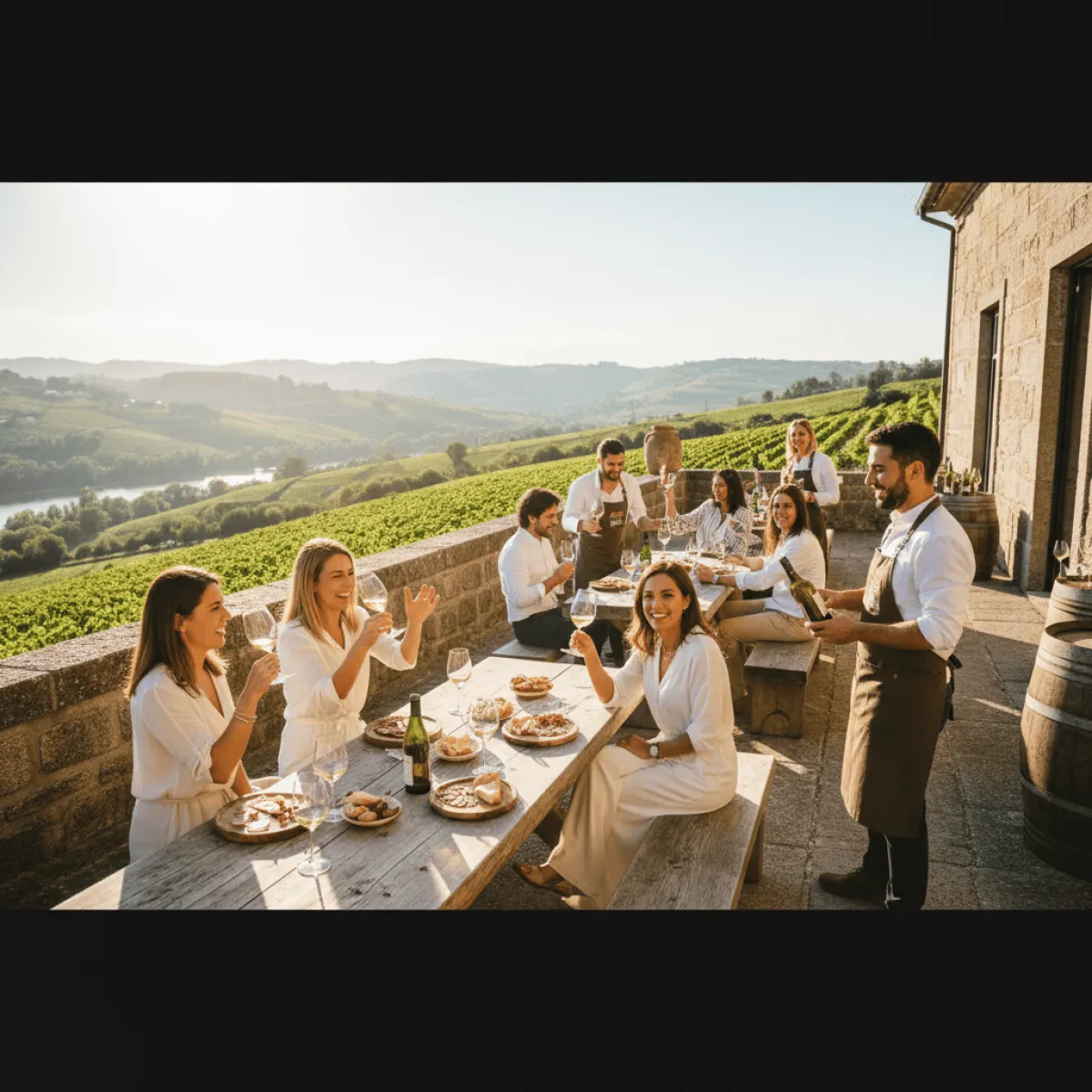
The best part is saved for the end: a room dedicated to wine tasting. There is no producer here selling their own label. What you get is the chance to taste Alvarinhos from several different cellars of the sub-region at the same counter, with someone from the museum explaining the differences between estates, vintages and styles.
How the visit and the tasting work
Entry to the museum is free. The tour through the rooms takes forty minutes to an hour, depending on how long you linger with the film and the panels (some are only in Portuguese, ask at reception for a quick explanation if needed). Then you move to the tasting room. The format varies. Sometimes it is a simple two or three glass flight at the counter with a small fee; other times, especially on Saturdays, the museum runs themed sessions called "(H)À Prova" with a guest producer, pairings with Serra cheese or Melgaço smoked ham, and historical context for each wine.
Honest tip: phone +351 251 649 009 or email dec@cm-moncao.pt before you go and ask what is scheduled for that day. The programme shifts, and there is a real difference between walking into a producer-led guided tasting and walking into an open counter. Worth the call.
Why this beats just heading to a quinta
Three reasons to choose the museum over going straight to one estate.
First: you can taste wines from very different producers side by side. An Alvarinho from the Adega Cooperativa de Monção, an Alvarinho from a small family quinta, a barrel-aged blend, a sparkling. Visiting one producer means tasting that producer's range. Here, you taste the whole sub-region.
Second: it is in the centre of town. You can walk in from anywhere inside the old walls. If you are staying at the Paço Alojamento Local, it is a five minute slow stroll. No designated driver needed, no anxious drive home wondering about breathalysers.
Third: the museum forces you to understand what is in the glass. You see the film first, walk through the rooms about the granite soils, the microclimate, the influence of the Minho river, and only then do you taste. By the time the wine arrives, you already know why it has that white-fruit profile and that bracing acidity. It is the best possible introduction for anyone arriving in the region for the first time.
The moment worth showing up for
The best part, for me, is not the wine itself. It is the detail of drinking Alvarinho on Praça Deu-la-Deu, the square named after Deuladeu Martins, the noblewoman who in 1368 reportedly tricked the Castilian army besieging Monção by throwing them the town's last loaves of bread to suggest they still had stores. The legend is essentially the heart of this square. Sitting inside an eighteenth-century house drinking the grape that defines this side of the Minho, with that piece of history sitting just outside, adds a different weight to the thing. You are not just drinking a fresh white wine. You are drinking it in a place that has had centuries of reasons to make it.
What to pair before and after
The museum runs 10:00 to 13:00, then 14:00 to 18:00. The lunch break is long on purpose. Use it. A few minutes' walk away is Restaurante Sete a Sete, good for an unhurried meal before the afternoon session. If you come in winter or early spring, read our guide to lamprey season first, because the lamprey plus Alvarinho pairing is, without exaggeration, one of the most coherent gastronomic combinations in the country.
If you want to extend the afternoon with a producer-specific visit after the tasting, check our guide to the quintas that actually matter. If you would rather make the rest of the day a slow town walk, do the route inside the walls.
Practical tips
- When to go: avoid Sunday afternoons (weekend crowds, shorter hours). Tuesday to Friday morning is the ideal window: empty museum, undivided attention.
- How long to allow: ninety minutes for the visit plus a short tasting. If you book a themed "(H)À Prova" session, allow two hours.
- What to bring: a bottle of water. Tasting four or five Alvarinhos without hydrating leaves you heavy-headed on the way out.
- Booking: walk-in visits do not require booking. Themed tasting sessions do, and they fill up fast around the Festa da Coca in June and the Feira do Alvarinho in early July.
- Getting there: Praça Deu-la-Deu, in the historic centre. Free parking at the riverside lot, five minutes on foot.
- Accessibility: the building is old but has an access ramp. Confirm directly with the museum if you have reduced mobility.
Check before you go
The museum occasionally closes for institutional events and does not always announce it with much notice. Phone on the day if you are travelling in from out of town. Specific tasting session prices vary with the programme, confirm directly with the provider. If you are arriving in Monção for the first time, this is where you should start, before you set foot on any quinta.