Mértola to Pomarão by Boat: A Guadiana Fishing Village
Happy Guadiana takes you by boat down the Guadiana from Mértola to Pomarão, a fishing village where locals still catch lamprey and eel. It's 3.5 hours on the river, €35 per person, and one of the most authentic ways to experience the Alentejo interior.
There's a road to Pomarão, a narrow national route that winds through the Alentejo interior until it dead-ends at a strip of land beside the Guadiana. But that's not how you should arrive. The right way is by river. The same way people arrived for centuries, when Pomarão was an ore port and the village lived off what the Guadiana provided: lamprey, mullet, and eel.
What This Trip Is
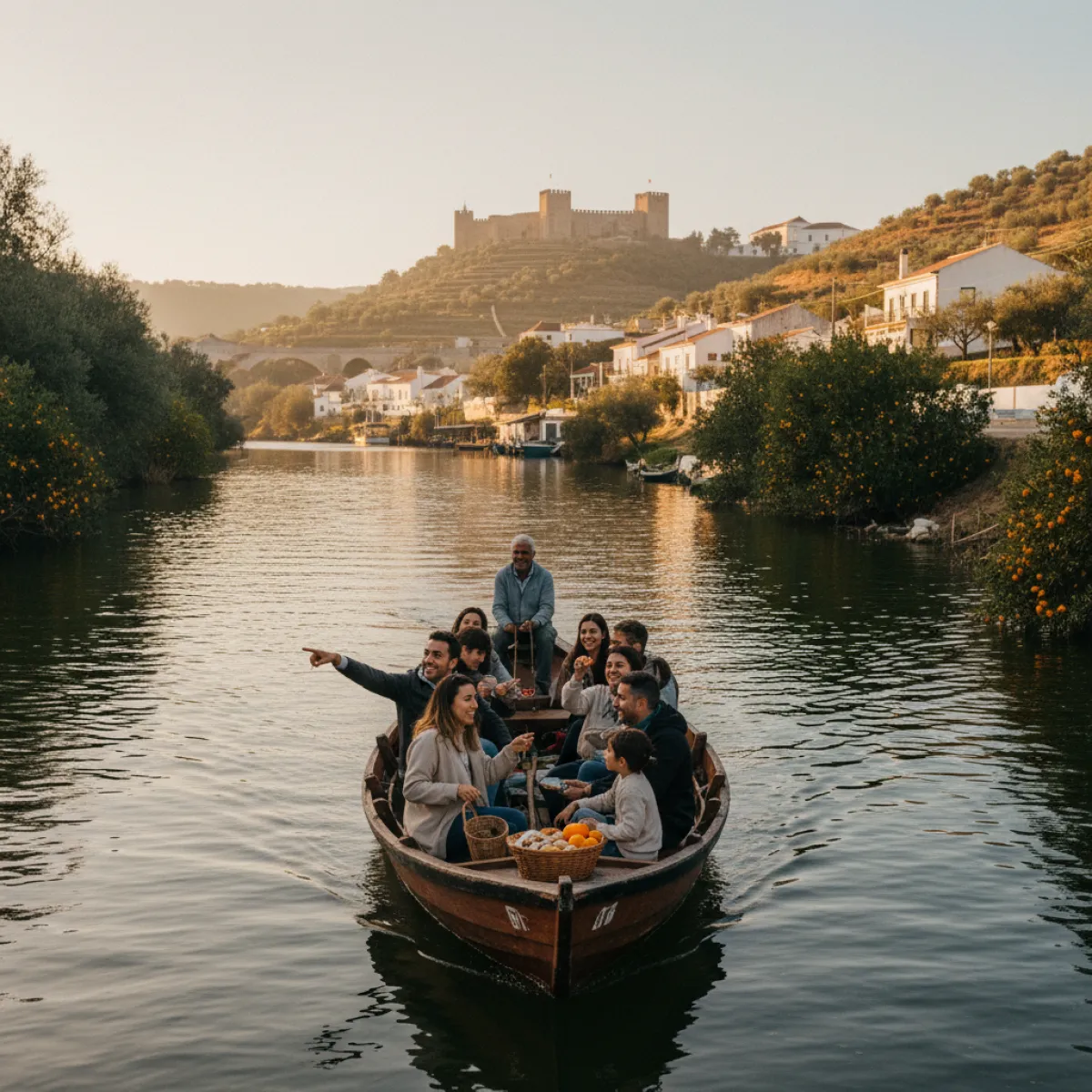
Happy Guadiana operates from the Mértola quay, running the Mértola–Pomarão–Mértola route on a boat that fits 12 people. It's roughly three and a half hours on the river, round trip, with a stop in Pomarão. This isn't a cruise with an audio guide and a complimentary drink. It's a boat trip in the most literal sense: low engine, wide banks, and a guide who knows every bend in the river and every ruin on the hillsides.
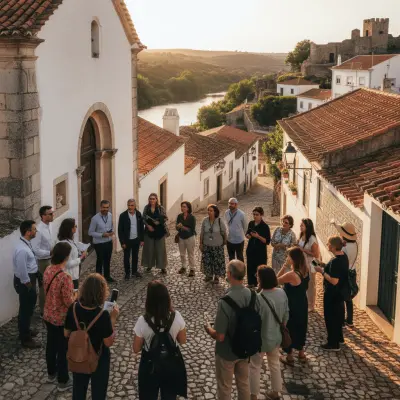
What makes this trip different from other Guadiana tours, and there are several departing from the Algarve, is the starting point. Leaving from Mértola means watching a village-museum you explore on foot slowly recede as the boat heads downriver. The castle up top, the church that was once a mosque, the white houses clinging to the slope, it all looks better from the water.
The River Between Mértola and Pomarão
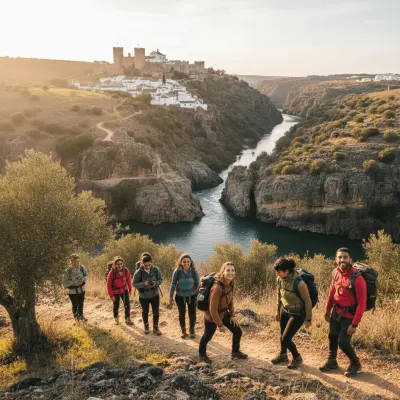
The stretch between Mértola and Pomarão is one of the most beautiful sections of the Guadiana in Portuguese territory. The river widens and narrows, the banks shift from dark schist to pale sand, and there's virtually no construction in sight. This is Guadiana Valley Natural Park territory, meaning the right bank is Spain and the left is Portugal, and neither looks like it's changed much in the past century.
The Happy Guadiana guide provides environmental interpretation throughout, birds (herons, black storks in the right months, kestrels), riparian vegetation, and the geology of the riverbanks. If you're lucky, otters. Not guaranteed, but it happens. The best time for wildlife is early morning, and the morning session has the added benefit of light, the sun hits the schist cliffs differently before noon.
What to Expect in Pomarão
Pomarão is a village with a handful of houses, a restaurant, an abandoned railway station, and a history that doesn't match its size. For decades, this is where ore from the São Domingos Mine was loaded onto trains, brought down the rail line, and transferred to boats that sailed the Guadiana to the sea. When the mine closed, Pomarão emptied out.
What remains is a genuine fishing village, one of the few in Portugal's interior. The handful of residents still fish the Guadiana, lamprey in spring, mullet and eel the rest of the year. The local restaurant serves river fish, and if your stop coincides with lunchtime, eat there. The eel stews and lamprey (when available) are the reason Pomarão is known as the River Fish Capital.
This is also where the annual Festival do Peixe do Rio takes place, organized by the Mértola Municipal Council. If you're around in March, it's a chance to taste the best of Alentejo river cuisine with live music on the Guadiana's banks.
Practical Information
Booking and Prices
The Mértola–Pomarão–Mértola trip costs €35 per person and requires a minimum number of participants (confirm directly with the operator, it varies between 4 and 6). Children aged 0–2 travel free; ages 2–5 get half price. Six and over pay the full rate.
Departures depend on the tides, yes, even more than 60 km from the sea, the Guadiana at Mértola still feels the tide. Happy Guadiana adjusts schedules based on conditions, so booking ahead is essential.
- Operator: Happy Guadiana
- Contact: +351 965 392 516 / +351 925 353 670
- Email: happyguadiana@gmail.com
- Website: happyguadiana.com
- Meeting point: Cais de Mértola (Mértola Quay), 7750-340 Mértola
What to Bring
Sunscreen and a hat, there's no shade on the boat and the Alentejo sun is unforgiving, even in March. Water (at least 1 litre per person). A light jacket or windbreaker, because there's always a breeze on the river and the temperature drops. Shoes you don't mind getting wet, boarding and disembarking happen at the water's edge. Binoculars if you have them, they make a real difference for birdwatching. And a camera, obviously.
When to Go
Spring (March to May) is the best time. The landscape is green, lamprey is in season, and temperatures are comfortable without the extreme summer heat. Autumn (September–October) is the second-best option. Summer works, but prepare for 40°C with no shade.
Getting to Mértola
Mértola is roughly 2.5 hours from Lisbon via the A2. There's no practical public transport, you'll need your own or a rental car. If you're staying in the area, make time for the Guadiana's river beaches and cafés with river views.
What Makes This Worth Doing
Portugal has dozens of boat trips. The Douro has wine-and-lunch cruises. The Algarve has grottoes and dolphins. The Guadiana at Mértola has none of that, and that's exactly why it works. It's a river without a stage set, a village that didn't prepare for tourists, and a route that runs on the tide's schedule.
The best moment of the trip? The return. When the boat turns and Mértola appears in the distance, perched on its promontory, the castle outlined against the sky, you understand why every civilization that came through here decided to stay. And if the day still allows, there are few better ways to finish it than with fado at Espaço Casa Amarela.
For those who want to discover Mértola's surviving crafts, the boat trip to Pomarão fits perfectly into a morning, leaving the afternoon free to explore the village.