Boat to Ilha do Pessegueiro from Porto Covo: Full Guide
Mestre Joaquim Matias, 77 years old, is the only person licensed to take visitors to Ilha do Pessegueiro. For 27 years he has been running the short crossing from Porto Covo's fishing harbour, charging 15€ for a two-hour trip that covers two thousand years of history.
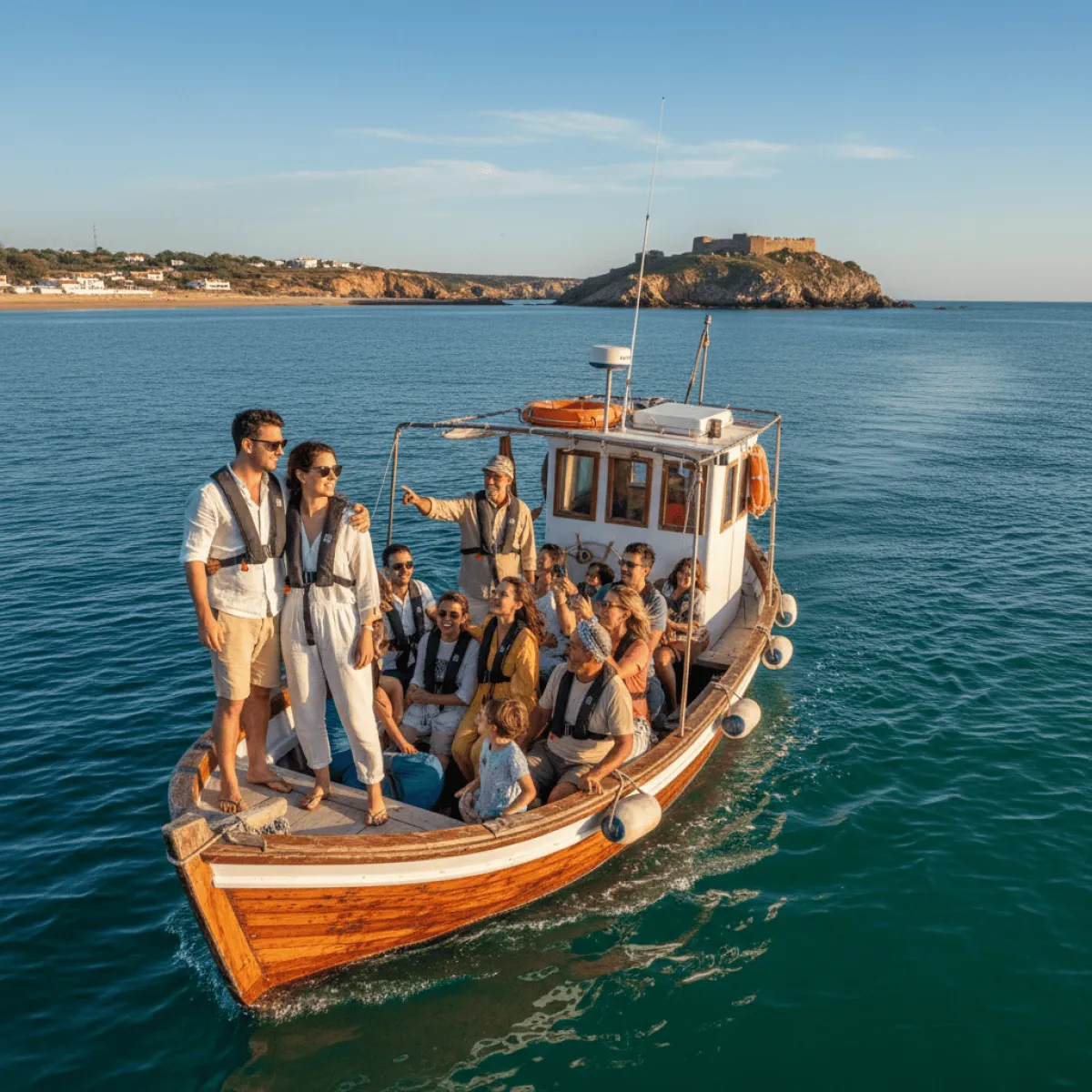
The boat leaves from the fishing harbour, takes ten minutes to reach the island, and the man at the wheel is 77 years old and knows every stone of the Pessegueiro fort better than he knows his own kitchen. His name is Joaquim Matias, but in Porto Covo everyone calls him Mestre Matias. He is the only person licensed to take visitors to the island. For 27 years he has been making the same short crossing, has carried more than 40,000 people, and still tells the island's history as if it were the first time.
This is not a catamaran tour with background music and an ice cream machine. It is a short crossing in a brightly painted fishing boat, with a man who knows everything there is to know about that bit of land 250 metres offshore. That is exactly why it is worth doing.
Who runs the trip
The company is called JMatias Unipessoal, Lda. and works in coordination with the Junta de Freguesia de Porto Covo, which manages public information and bookings. Mestre Matias is captain, guide and resident historian. At 77 he still runs three trips a day during the swimming season, and more when the sea behaves. Bookings go through the phone number 965 535 683.
How it works
Trips leave from the Porto Covo fishing harbour (7520-437), three times a day: 10am, 2pm and 4pm. Each visit lasts about two hours, of which the crossing itself only takes twenty minutes in total (there and back). The rest is spent walking the island. The price is 15€ per person for the standard round trip. For organised fishing groups, between October and May, the rate is 30€ per person for groups of 6 to 8 people. Always confirm times and availability on the day, because the sea has the final word.
What you find when you land
The island is small: 340 metres long and 325 metres wide at its broadest point. But it has more history per square metre than anywhere else on this stretch of coast.
The fort
On the high ground sits the Forte de Santo Alberto, ordered built in the 17th century by King João IV to defend the coast from the Berber pirates who raided the villages along the shore. It is in ruins, but the layout is still clear: low walls, batteries facing the coast, a chapel in the centre. Mestre Matias tells the part of the story that is not on the information panels. Who died there, who escaped, what life was like for a soldier stuck on a rock in the Atlantic for months.
The Roman ruins
Before the fort, before the pirates, before anything, there was a Roman fish-salting factory here. That is where the island's name comes from: the Latin piscatorius, place of fishermen. The stone tanks are still visible, cut directly into the rock. This is where the Romans made garum, the fermented fish sauce they sold across the empire. Standing on a factory floor that is two thousand years old is a strange feeling.
The seaward side
Most visitors never realise that the back of the island has a small pebble beach facing the open Atlantic. It is the best spot to watch the waves slam against the rock. You cannot swim there (strong current, dangerous bottom), but the short detour is worth it.
The best moment of the trip
It is the arrival. The boat curves around the south side of the island before docking, and for those two or three minutes you see the fort from below, walls drawn against the sky. If you can, take the 10am trip. The light is better, there are fewer people, and the sea is usually calmer than in the afternoon, when the north wind picks up. The 4pm trip has the advantage of late afternoon gold on the fort walls, but the crowd is bigger and the water tends to be rougher.
What to bring
- Shoes with grip. The island is loose rock, packed sand and old masonry. Flip-flops will not do.
- Hat and sunscreen. There is no shade on the island, except inside parts of the fort.
- A water bottle. Nothing is sold there.
- A windbreaker, even in summer. There is always wind out there, and the crossing splashes anyone sitting at the bow.
- A camera or phone with battery. You will want pictures.
Getting to Porto Covo
The fishing harbour is on the north side of the village, about ten minutes on foot from the main square (Largo Marquês de Pombal). If you drive, there is free parking next to the harbour, but in August it fills up fast. Coming in the morning solves that. For overnight stays the village has good options: Porto Covo Praia Hotel & SPA for comfort, Hotel Apartamento Porto Covo for families who want a kitchen, or Monte da Bemposta if you prefer to sleep in the countryside.
What to do afterwards
Step off the boat, have a coffee at the harbour and stretch the afternoon out across the village. There is fresh fish for lunch in the fishermen's quarter, covered in this guide to where to eat fish in town, and natural rock pools a few minutes' drive away if you still have patience for salt water, mapped out in this itinerary. To understand why Porto Covo still feels different from the busier villages further south, read our overview of the village.
Is it actually worth it?
Yes, for one simple reason: this is one of the few tourist experiences in Portugal where the guide is also the operator, the captain and the person who carries the story first hand. It is not a packaged product. It is a man with a boat who decided, nearly three decades ago, that he was going to show his island to people. For 15€ you take home the crossing, a visit to the fort, two thousand years of history and the feeling of having done something that has not yet been swallowed by an online booking chain.