Porto Covo: The Alentejo Coast Without the Crowds
Porto Covo is an Alentejo village with a square you cross in thirty seconds and restaurants that close when the fish runs out. On the Fisherman's Trail, storks nest on Atlantic sea cliffs, and in September, the beaches are yours alone.
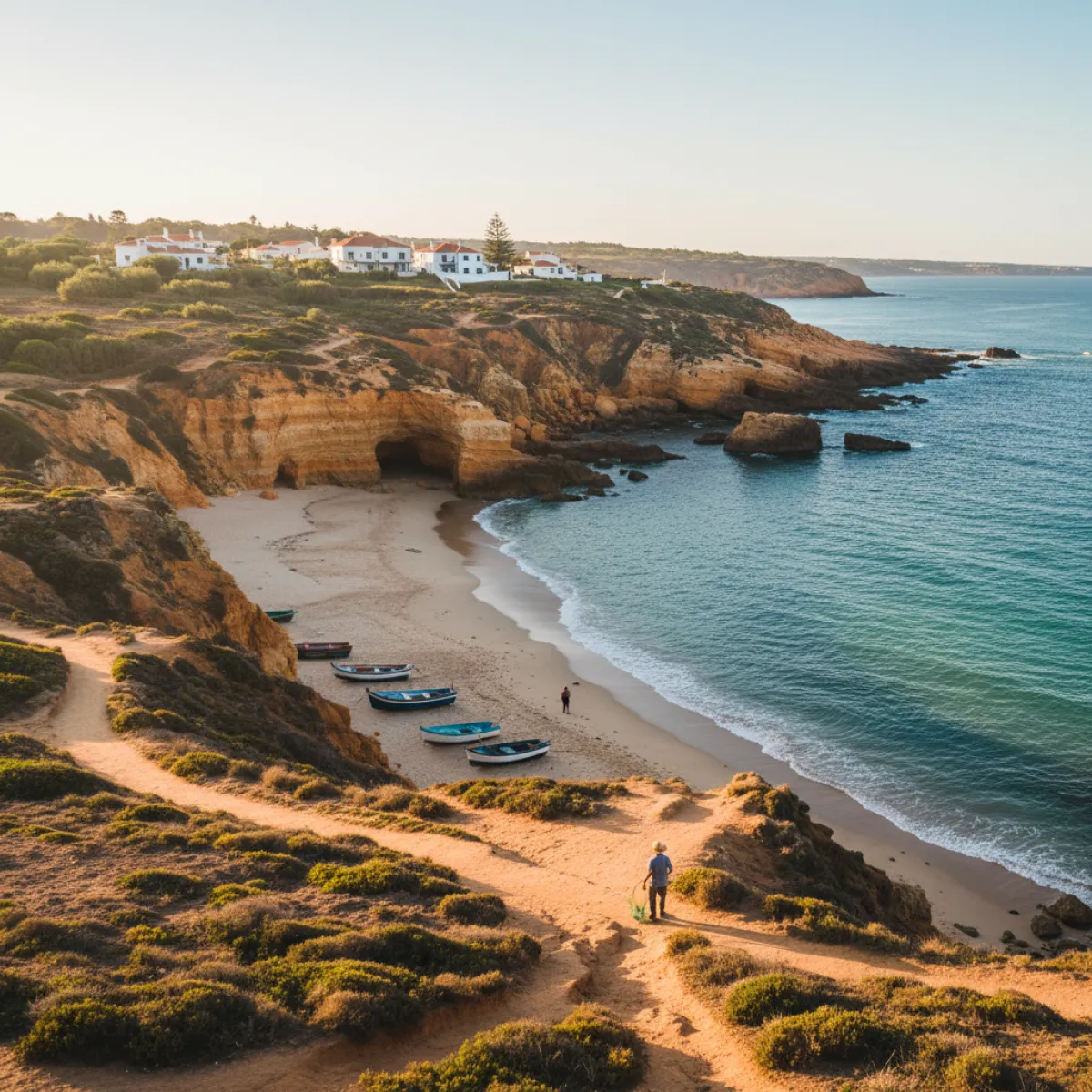
There's a reason Porto Covo never shows up on those "top 10 beach destinations" listicles. It's not a lack of quality, it's that the people who know Porto Covo prefer to keep it that way. A village with a central square you can cross in thirty seconds, a handful of restaurants that close when the fish runs out, and a coastline that makes the Algarve look like a theme park. If that sounds like your kind of place, read on.
A Village That Runs on Tide Time
Porto Covo has roughly a thousand permanent residents and an economy built on two pillars: fish and hikers. In summer the population swells, but even in August it never reaches the chaos of Lagos or Albufeira. Outside peak season, and I strongly recommend April, May, September, or October, the village returns to its natural state: quiet, windswept, and bathed in late-afternoon light that justifies carrying a proper camera.
The centre is Largo Marquês de Pombal, a square plaza with a whitewashed church at the top and outdoor café tables on both sides. Don't expect polish. Expect plastic chairs, draft beer at fair prices, and the kind of quiet that only exists in places where shops close for lunch. This is where Porto Covo's social life happens, if you can call half a dozen old men playing cards and a dog sleeping in the sun a social life.
The Beaches: Small, Wild, No Sunloungers
Praia Grande de Porto Covo is the main beach, reached by stairs from the village. It's pretty, sheltered by cliffs, and small enough that it never feels like a sardine tin. Offshore, Ilha do Pessegueiro, uninhabited, with the ruins of an old fort, provides a backdrop that looks staged for postcards.
But the real prize lies in the beaches to the south: Praia dos Buizinhos, with rock formations that look chiselled by hand, and Praia do Banho, more secluded. Getting to some of them requires walking, which acts as a natural crowd filter. No parking lot, no beach bar with a DJ, just sand, rock, and Atlantic.
A warning: the sea here isn't the Mediterranean. The water is cold even in July (16-18°C is standard) and currents can be treacherous. Respect the flags and, where there's no lifeguard, use common sense.
The Fisherman's Trail: Walking at the Edge of the World
If one thing justifies the trip to Porto Covo, it's hiking the Fisherman's Trail section of the Rota Vicentina. This stretch of coast is, without exaggeration, one of the most beautiful walking routes in Europe, and I say this as someone who's done sections of the Cinque Terre and the Camino de Santiago.
The stage heading south from Porto Covo follows the coastline just metres from the cliff edge. The terrain is uneven, sandy in some sections, rocky in others, and demands proper footwear. No flip-flops, no city trainers. Hiking boots or trail runners, sunscreen, a hat, and at least a litre and a half of water per person. There's no shade and no water sources along the way.
The payoff? Cliffs plunging into the sea, white storks nesting on ocean rocks (yes, storks on sea cliffs, a worldwide rarity), and the certainty that for two or three hours the world has been reduced to the sound of waves and wind.
Best time to walk is early morning, before 10am, especially in summer. In winter, the trail is equally spectacular, but bring a windbreaker, the Atlantic doesn't forgive.
Eating in Porto Covo: Fish, Bread, No Fuss
Porto Covo is not a food destination in the modern sense. There are no tasting menus, no foams, no reductions. What there is, is fresh fish that goes straight from the boat to your plate with an honesty that most coastal towns lost decades ago.
What to order? Grilled fish, sea bass, bream, or whatever the sea gave up that day. Served with boiled potatoes, salad, and Alentejo olive oil. It's simple because it doesn't need to be more. When the raw ingredient is good, the best technique is to get out of the way.
The açordas are another strong suit: açorda de marisco (seafood bread soup), thick and comforting, is technically a winter dish that local restaurants do well year-round. If sopa de cação, a shark soup with bread, coriander, and vinegar, appears on the menu, order it. It's an Alentejo classic that few places outside this region get right.
To drink, house Alentejo wine. You don't need to spend more than €10-12 on a bottle in a restaurant to drink well. The Alentejo produces some of Portugal's best reds, and unlike the Douro or Dão, the prices haven't gone through the roof yet.
A tip: eat lunch early (before 1pm) or dinner early (before 8pm) in summer months. Porto Covo's restaurants are small and rarely take reservations. First come, first served, and when the fish is gone, it's gone.
A Note on Percebes
If you're on this coast and haven't tried percebes (gooseneck barnacles), you have a culinary obligation to fulfil. Odemira's percebes are considered among the best in the world, hand-harvested from rocks pounded by surf, dangerous work that justifies the price (and the price is not gentle, expect €40-60/kg in a restaurant). The flavour is concentrated iodine, the sea in its purest form. You eat them with your hands, tearing off the shell and sucking out the meat. Elegant it is not. Delicious it absolutely is.
Where to Stay: Set Your Expectations Right
Porto Covo has no five-star hotels, and I sincerely hope it never will. Accommodation splits between the campsite (an honest, cheap option a few minutes' walk from the village), holiday rental apartments, and a few rural houses in the surrounding area.
For camping, the Parque de Campismo de Porto Covo is functional and well located. For something with more comfort, look for rural tourism properties near Cercal do Alentejo, about 15 minutes' drive away. Prices are reasonable outside peak season, in May, a decent one-bedroom apartment runs €50-70/night. In August, double or triple that.
Book ahead if you're coming between July and September. Supply is limited, and Porto Covo has been gaining popularity, particularly among Germans and Dutch who've discovered the Rota Vicentina.
Beyond Porto Covo: What's Nearby
Porto Covo works well as a base for exploring the Alentejo coast. Within a half-hour drive, there's plenty worth your time.
Vila Nova de Milfontes, to the south, is a larger town with more restaurants and a river beach where the Mira meets the sea. It's busier than Porto Covo but retains a genuine character. South of Milfontes, Zambujeira do Mar has a market worth giving up a morning for, local produce, cheeses, cured meats, and Alentejo honey at prices that'll make Lisbon residents weep.
Sines, to the north, is the birthplace of Vasco da Gama and has a castle overlooking the industrial port that creates a strange but compelling contrast. The Festival Músicas do Mundo in July transforms Sines for a few days, but that's another story.
Getting There and Logistics
Porto Covo is about 170 km from Lisbon, a two-hour drive via the A2 motorway to Grândola and then national roads. There's no meaningful public transport, one bus a day, if that. A car is essential, not optional.
Fuel: fill up in Sines or Santiago do Cacém. Porto Covo has a petrol station, but it's not always the most convenient.
ATM: there's one in the village, but bring cash. Some smaller restaurants still don't take cards (or accept them reluctantly above a certain amount). Mobile coverage: it works, but don't expect 5G. And frankly, if you came to Porto Covo to be on your phone, you came to the wrong place.
When to Go
Short answer: May or September. Long answer: it depends on what you're after.
- May-June: Perfect temperature for hiking (18-24°C), near-empty beaches, wildflowers along the coastal trail. The water is still freezing, but if you're here to walk, you won't mind.
- July-August: Guaranteed sunshine, fuller beaches (by Porto Covo standards, which are still half-empty by Algarve standards). Higher prices, packed restaurants.
- September-October: The water is at its warmest all year (still only 19-20°C), the village empties out, the light turns golden. The best time, if you ask me.
- Winter: For those who enjoy storms, solitude, and restaurants where you're the only customer. Many establishments close or reduce hours, check before you go.
What Porto Covo Is Not
Porto Covo is not for people who want nightlife, shopping centres, or beaches with towel service. It's not for those who need fast wi-fi in their room or a spa with ocean views. And it's perfectly fine with that.
Porto Covo is for people who want to wake up to the sound of the sea, walk for two hours without crossing paths with more than a handful of people, eat a grilled fish with red wine for lunch, and in the late afternoon sit at a terrace on the square watching the sun drop behind Ilha do Pessegueiro. If that sounds boring to you, it probably is, but for the rest of us, it's exactly what the doctor ordered.
