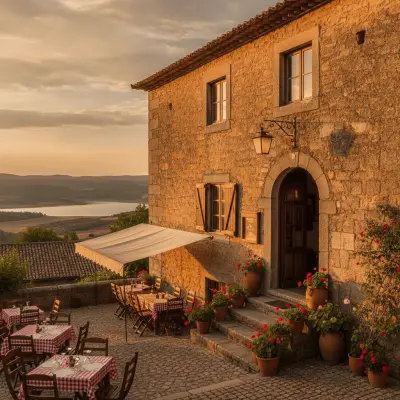
Eat
€€
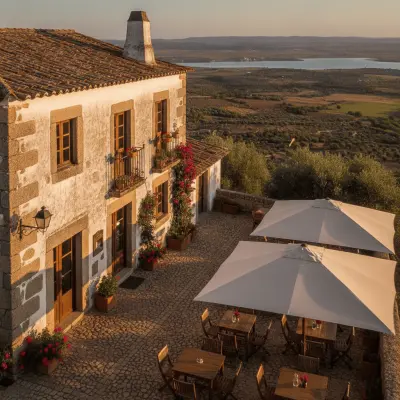
Taverna Os Templários
Monsaraz
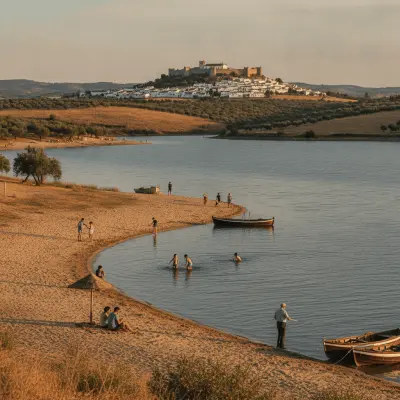
Alentejo has no ocean, but Monsaraz hides a river beach at the foot of its castle hill, warm water and almost nobody around before ten in the morning. Between a swim in Lake Alqueva and a proper Alentejo dinner, there's still time to sleep under one of Europe's darkest skies.
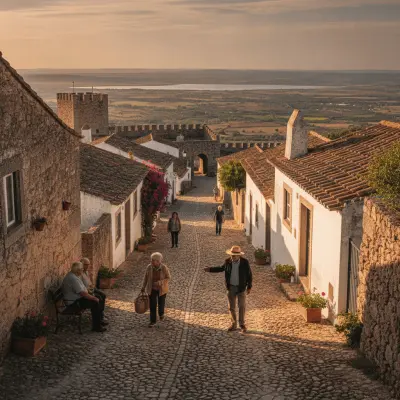
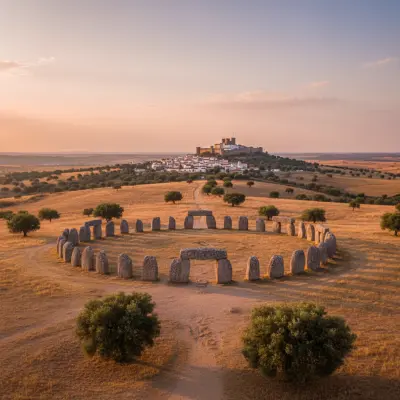
A street under three hundred metres long, a castle with a bullring built inside it, and five thousand years of stone deliberately aligned. This route walks Monsaraz the way it was built: slowly, and without wasting an inch of space.
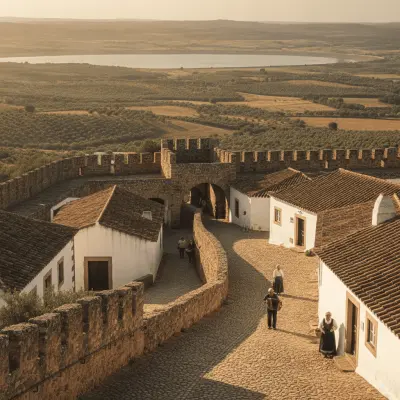
Inside Monsaraz's walls sits a 15th-century fresco that stayed bricked up for four hundred years, a bullring inside a medieval castle, and a view over Western Europe's largest artificial lake. A walking route, no car needed, from the town gate to the top.
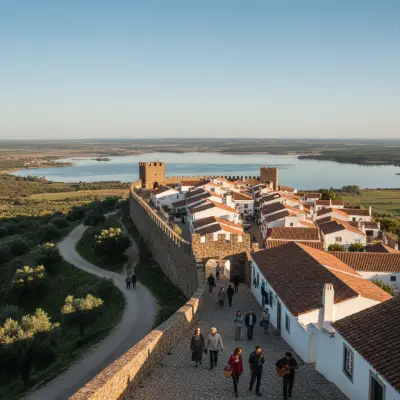
Monsaraz fits in a twenty-minute walk, they say. But anyone who sticks to Rua Direita misses 7,000-year-old megaliths, the descent to the Alqueva shore, and the best starlit sky in Europe. A guide for those willing to stay longer than two hours.
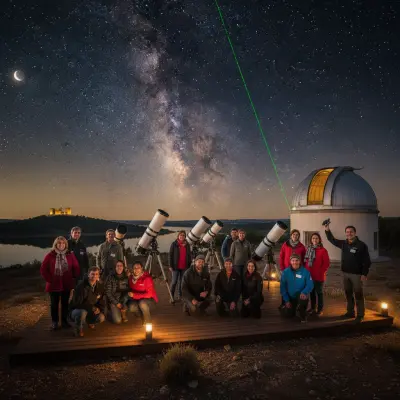
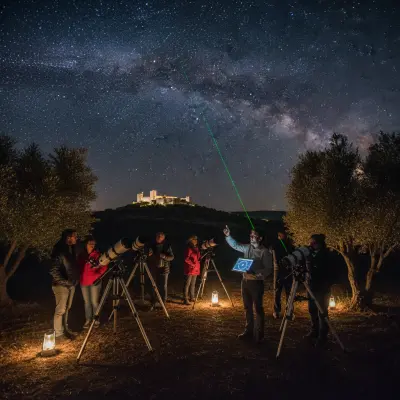
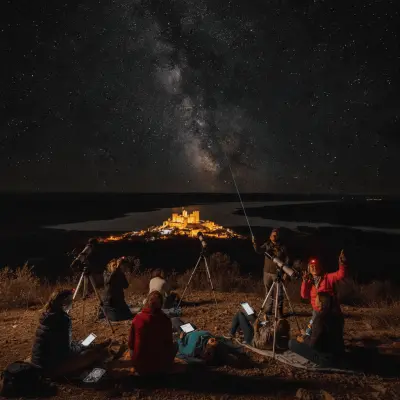
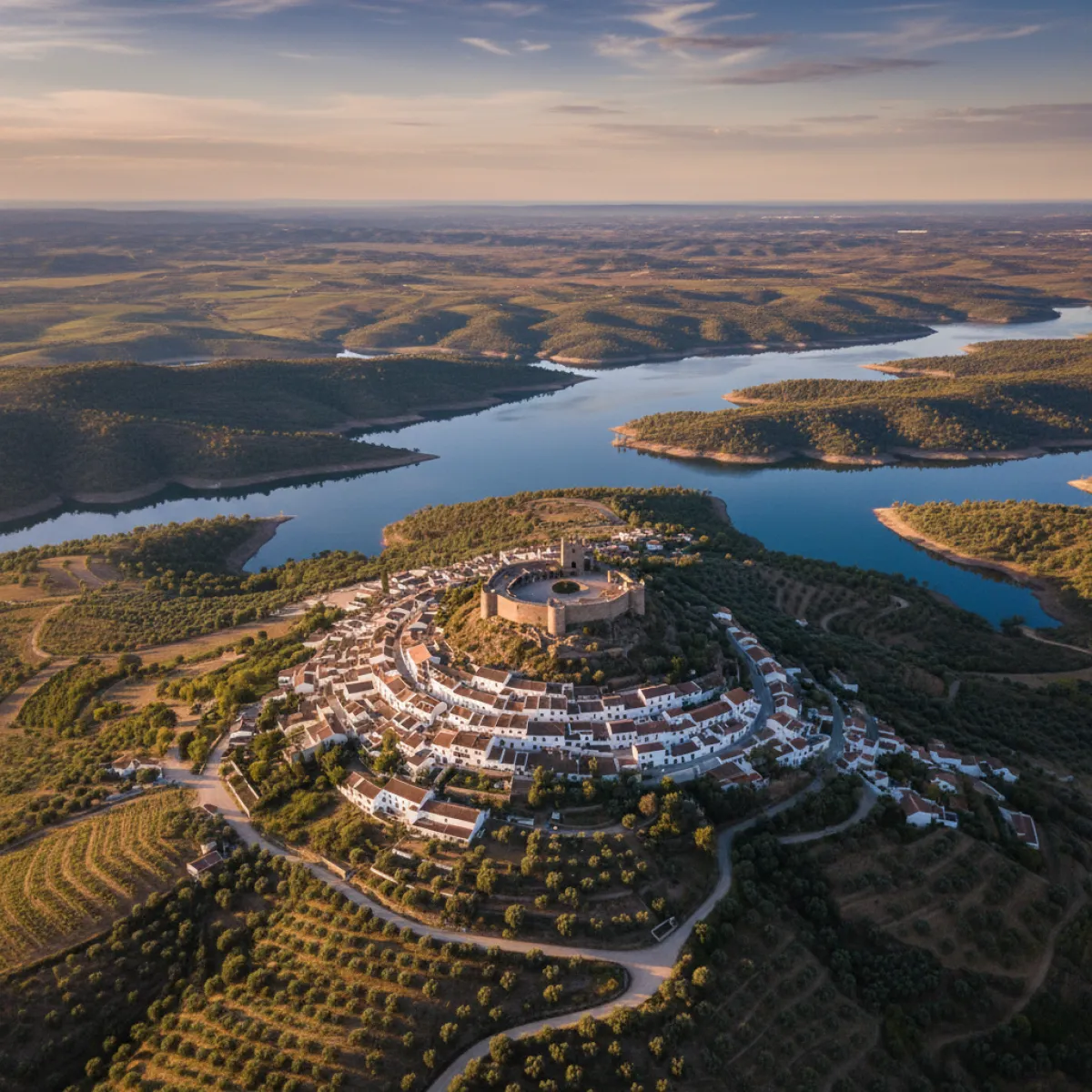
Monsaraz sits on top of a hill in central Alentejo, ringed by medieval walls and overlooking the Alqueva reservoir, the largest artificial lake in Europe. The entire village fits along one main street, Rua Direita, which runs from the Porta da Vila gate to the castle tower. You can walk the whole thing in twenty minutes. And yet some people stay for days.
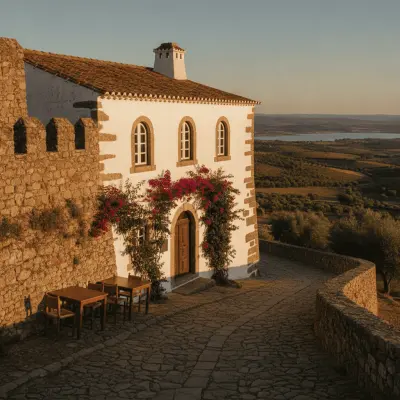
Monsaraz was contested between Portugal and Castile during the Middle Ages, fortified by the Knights Templar and later by the Order of Avis. The castle at the southern end now serves as a makeshift bullring, an open amphitheatre looking out over the Alentejo plains. Along Rua Direita, whitewashed houses trimmed with yellow or blue lime borders stand in quiet rows. The 13th-century Igreja Matriz and the old courthouse with its 15th-century frescoes of the Good and Bad Judge are worth stopping for.
The dam changed Monsaraz's landscape. What was once dry plain is now an enormous body of water that, in the late afternoon, mirrors the sky in shades of orange and pink. The surrounding area has river beaches, the Praia Fluvial picnic park is a practical stop for families. Monsaraz is also part of the Alqueva Dark Sky Reserve, one of the few certified in Europe, which makes moonless nights particularly spectacular for stargazing.
The food is Alentejo cooking without pretension: açorda (bread soup), migas with pork, lamb stew, and Serpa cheese. Regional wines, DOC Alentejo, many from local producers like Herdade do Esporão or Ervideira, pair well with everything. The restaurants inside the walls are few, which helps: the offer is short but honest.
The best time to visit is between March and June or September and October, summer in Alentejo regularly pushes past 40°C, and the village, with little shade, punishes. In February, almond trees bloom across the surrounding landscape, covering the fields in white and pink. Half a day is enough to see the village itself; a full weekend lets you explore the Cromeleque do Xerez, the Megafauna Park, and the Alqueva shoreline at a proper pace.
Monsaraz doesn't need a two-day itinerary. It needs a late afternoon with a glass of wine on the ramparts, watching the sun drop behind the Alqueva. It's a village that works best when you stop treating it as an attraction.