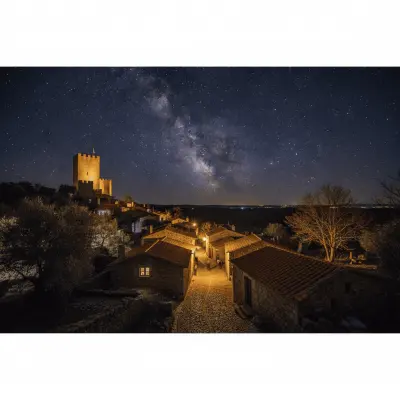
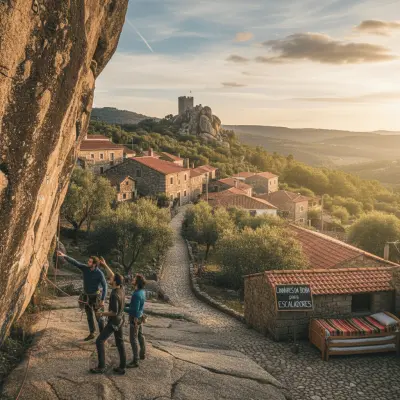
Linhares da Beira sits at 820 metres on the western slope of Serra da Estrela and belongs to Portugal's network of Historic Villages. It's part of the municipality of Celorico da Beira, in the Guarda district, and the narrow roads to get there require patience, which, frankly, works as a natural crowd filter.
The castle and the view from it
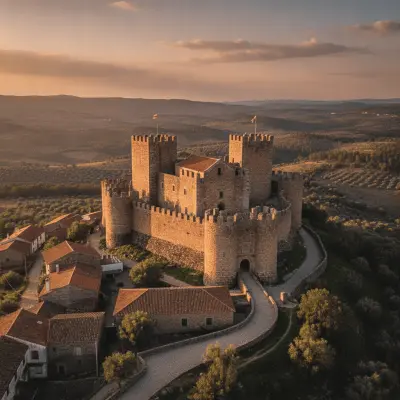
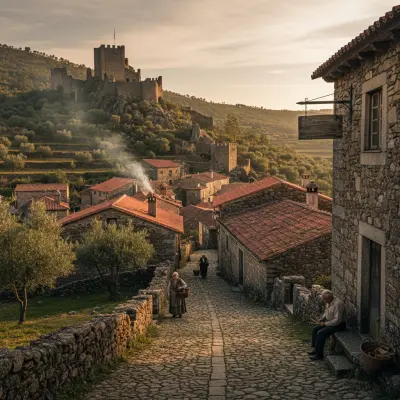
Two crenellated towers define the village's profile from below and the horizon from above. The fortress, reinforced under King D. Dinis, rises over an enormous granite massif and was part of a defensive line that included Trancoso, Marialva, and Celorico. Inside, the grounds are bare, remnants of old cisterns, raw stone, but it's from the ramparts that you understand its purpose: from here, the entire valley was under watch. The view alone is worth the climb.
The village itself
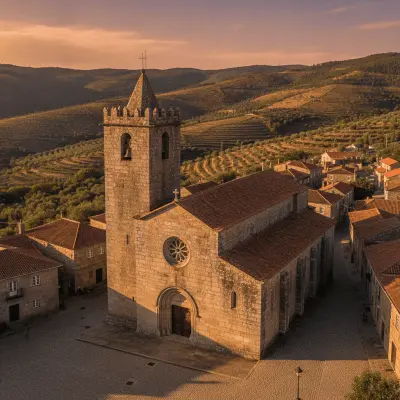
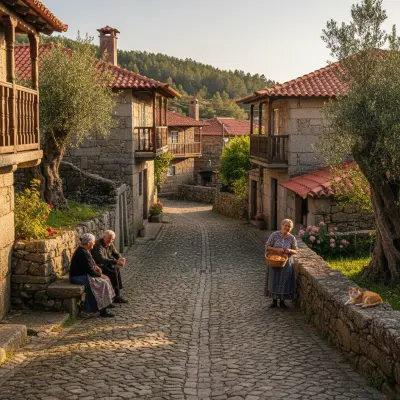
The streets are narrow and granite-built, lined with Manueline gargoyles, carved doors, and windows that betray centuries of habitation. The House of the Jew, with its striking Manueline window and a ground-floor passage, marks what was likely the medieval Jewish quarter. The Manueline pillory, the old Town Hall building, and the manor houses of Corte Real and Brandão e Melo round out a walk you can finish in under an hour. The Igreja Matriz preserves 16th-century paintings worth stopping for, and the 16th-century Misericórdia Church is one of the most visited sites.
Portugal's paragliding capital
Since 1993, Linhares has claimed the title of national paragliding capital. The altitude, wind exposure, and slope topography create conditions that draw pilots from multiple countries. Even if you never fly, you'll end up watching coloured canopies drift against granite, it's an unscripted spectacle that's become part of the village landscape.
Practical details
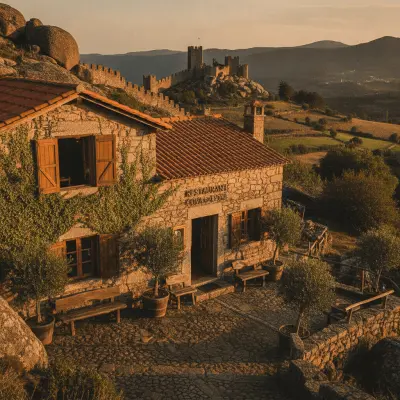
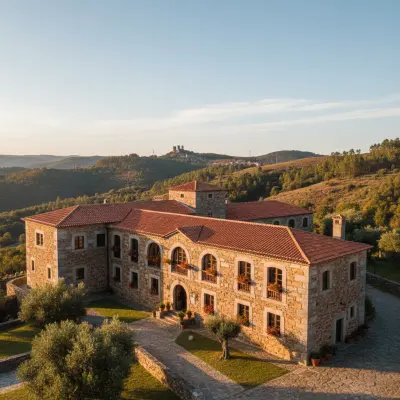
Linhares da Beira can be covered in a morning or afternoon. A car is essential, public transport is virtually nonexistent. The best time to visit is March to October, when the weather is drier and days are long. For food, Restaurante Cova da Loba by the church is the local reference. If you want to stay overnight, INATEL Linhares da Beira Hotel Rural occupies a restored 18th-century manor house. And if you have time, the PR7 trail, Circuito de Linhares da Beira, covers 15 kilometres through forest and rural terrain that give context to what you see from the castle walls.