Zambujeira do Mar for Digital Nomads: Cliffs and Slow Season
August turns it into a tourist circus, but between October and May Zambujeira do Mar becomes one of the best spots on the Vicentine coast for remote work, with prices halved and cliffs all to yourself.
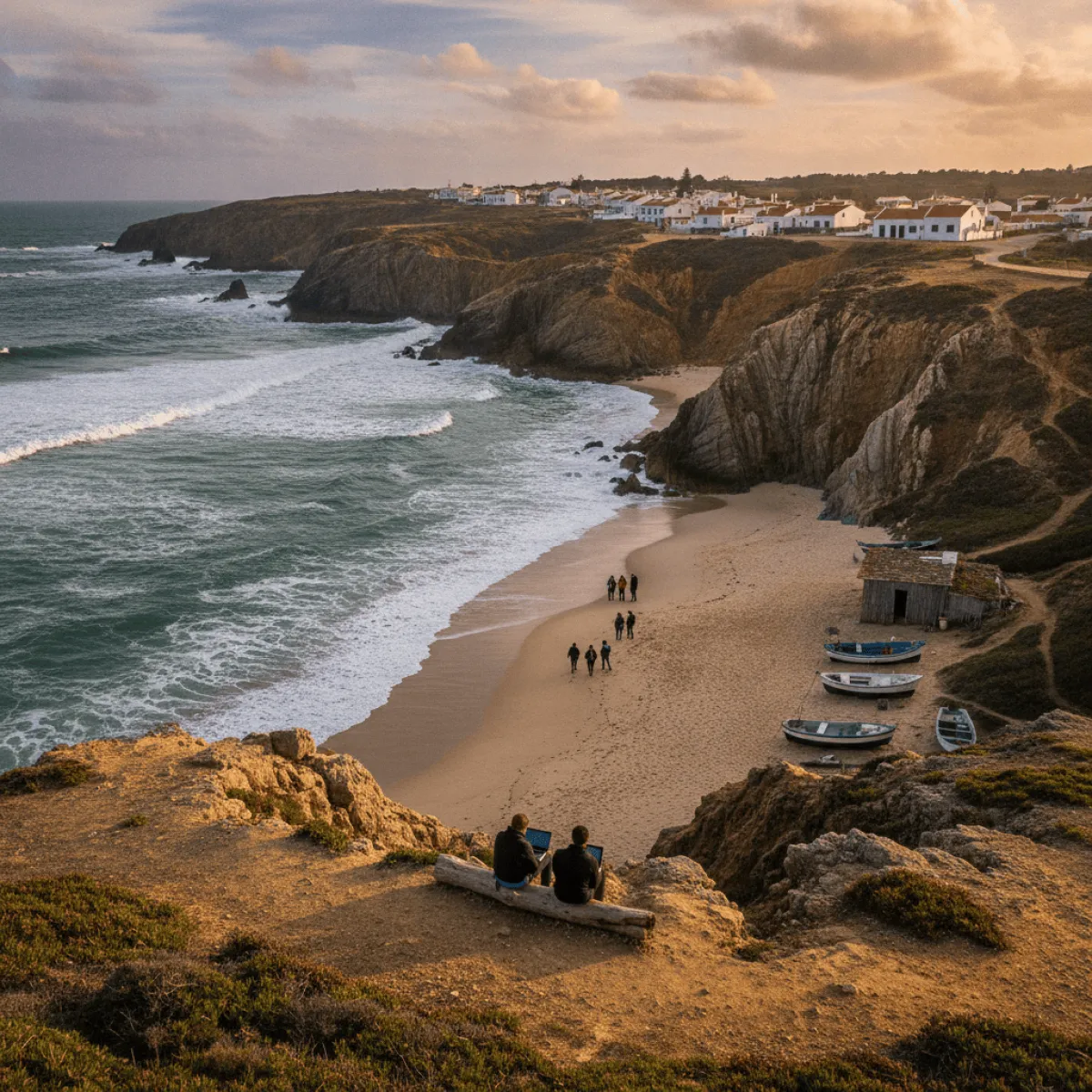
Let's be honest about Zambujeira do Mar in August: it's a circus. Cars parked two miles from the village, queues for coffee, and room rates that would make a Lisbon estate agent blush. But from October to May, the village sheds its skin entirely. That's the window, when the wind still bites but the sun already warms your skin by 11am, when Zambujeira becomes one of the more interesting places in Portugal to actually get work done, provided you know where to stay and what to expect from the internet.
Why the slow season changes everything
In winter, the village has maybe 800 permanent residents. In August, that number multiplies by ten. What this means in practice: between October and May, accommodation prices drop by roughly half, the queues vanish, and the cafes along Rua do Mar stop being a wallet assault and become places where you can sit for three hours working without anyone giving you a look. The Vicentine coast climate is deceptive, though. It can hit 22 degrees at noon and drop to 12 by 6pm when the fog rolls up off the cliffs. Bring layers, literally, not as a metaphor for anything.
Where to stay: three options, three ways of life
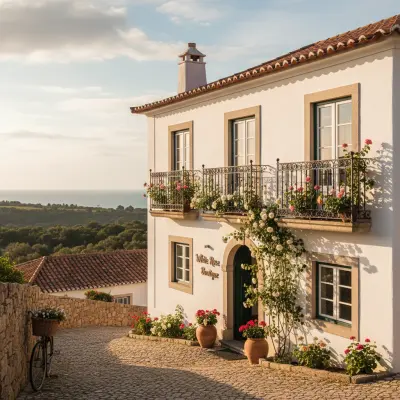
For anyone settling in for a month or more, the accommodation choice shapes the entire experience. Alojamento White Rose Boutique is the pick for comfort without excess: well-kept rooms, good natural light, and close enough to the centre that you're not dependent on a car for everything. I'd point anyone staying two or three weeks who needs a proper workspace inside the room itself toward this one.
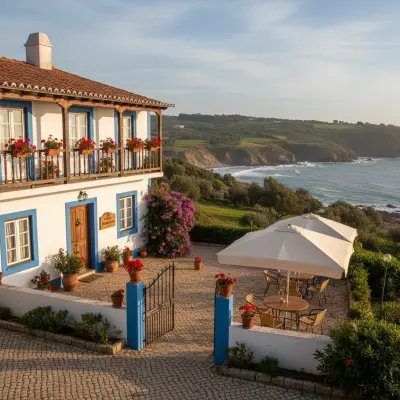
Alojamento Costa Alentejana, meanwhile, has a different personality entirely: more rustic, more tied to the surrounding landscape, ideal for anyone who wants to wake up without traffic noise and walk to the cliffs before breakfast. It's not the place for someone who needs industrial-grade wifi for a 9am call sharp, but it's right for people with flexible schedules who value the morning walk more than upload speed. You can check availability at Alojamento Costa Alentejana.
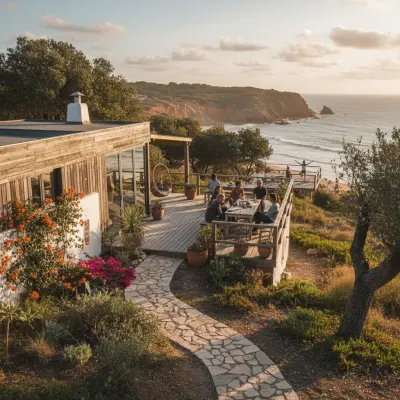
For tighter budgets, or for anyone who enjoys hostel social life, Hostel Nature is the obvious choice. Out of season, these spaces turn into small nomad communities: winter surfers, writers halfway through a project, couples on a career break. There's always someone in the shared kitchen sharing tips on where the internet happens to be fastest that particular week.
The daily rhythm: coffee, cliffs, repeat
The routine for anyone working remotely here tends to organise itself around light and tide. Mornings are for focused work, in a cafe with a view, before the afternoon wind makes terraces uncomfortable. In the afternoon, the cliffs call: a ten-minute walk from the village centre and you're staring at the Atlantic with nothing between you and the horizon except red rock and gulls. There's no wifi cafe up there, and thank goodness for that. That's the moment to close the laptop.
Anyone into surf or bodyboarding will want to time their stay around the Zambujeira Bodyboard Festival, one of the few events that still brings energy to the village outside peak summer, mixing wave competition with beach music at the end of the day. It's not a huge event, but it's genuine, without the paid-festival gloss you see on some beaches further south in the Algarve.
Eating: the seafood isn't decoration, it's the point
This is percebes, oyster, and clam territory, and it would be a waste to come here and order pasta. For a proper introduction to what the coast offers, it's worth booking a seafood feast at Costa Alentejana in Zambujeira do Mar, an experience built for anyone who wants to understand the local catch without guessing their way through a menu in rapid-fire Portuguese. For anyone wanting to go deeper afterward, the guide Odemira's Seafood Summer: Percebes, Oysters, Atlantic Tables explains where and when the region's seafood is at its best, particularly useful if you're staying more than a week and want to space out the splurge meals instead of blowing them all on the first night.
One practical note: out of season, plenty of restaurants close two or three days a week, usually Monday and Tuesday. Always check ahead, or you'll find yourself walking the whole village at 8:30pm on a Tuesday looking for a table that simply doesn't exist that night.
Internet, work, and the reality of the fibre connection
Fibre has reached the village, and most tourist accommodation, especially the newer places, already offers decent speeds for video calls. The issue isn't the village itself, it's leaving it: if you're planning work days further along the Vicentine coast, in Porto Covo or elsewhere, always confirm coverage before assuming you'll get decent 4G on the road, because there are stretches where there's simply no signal at all.
Speaking of Porto Covo, it makes a worthwhile half-day trip for anyone needing a change of scenery without breaking their remote work routine. The guide Porto Covo's Fresh Fish: From Fishing Boat to Plate gives an honest sense of what to expect from the village, which has a slightly more touristy pace than Zambujeira but makes up for it with access to the Pessegueiro islands. And if the trip happens to land in June, when the sea is still too cold to swim in comfortably, the natural pools near Porto Covo are a far more tolerable way to cool off without hypothermia.
Getting there, and what it actually costs
There's no direct train. The most common approach is renting a car from Lisbon, roughly two and a half hours via the A2 and then national roads, or taking a coach to Odemira with a local connection, which stretches the trip into practically a full day if the timetables don't line up. For anyone staying a month, renting a car almost always pays off, because the village itself is small but the best spots (cliffs, neighbouring beaches, Porto Covo) require getting around.
On cost of living out of season: a decent double room runs 40 to 60 euros a night, a full seafood meal at a mid-range restaurant lands between 20 and 35 euros a head, and a three-or-four-hour work session at a cafe costs the price of two coffees and a slice of toast, nobody's going to hassle you about it in November. Compare that to July and August, when the same rooms can triple in price, and the logic of coming in the slow season becomes obvious.
Who this is actually for
Zambujeira do Mar out of season isn't for anyone who needs nightlife or a structured coworking community with networking events every week. It's for anyone who wants real productivity in the morning, genuine quiet in the afternoon, and the certainty that by 6pm you'll be watching a sunset over the Atlantic without fighting fifty other people with phones out for the best angle. If that sounds appealing, book for October or March. If it sounds isolating, stay in Lisbon and come for a long weekend instead.