Walking the Caminho de Santiago from Porto in May
Porto is the perfect launchpad for the Caminho de Santiago in May: long days, ideal temperatures, and albergues that haven't hit summer capacity yet. Two routes, one destination, and the best food in Portugal along the way.
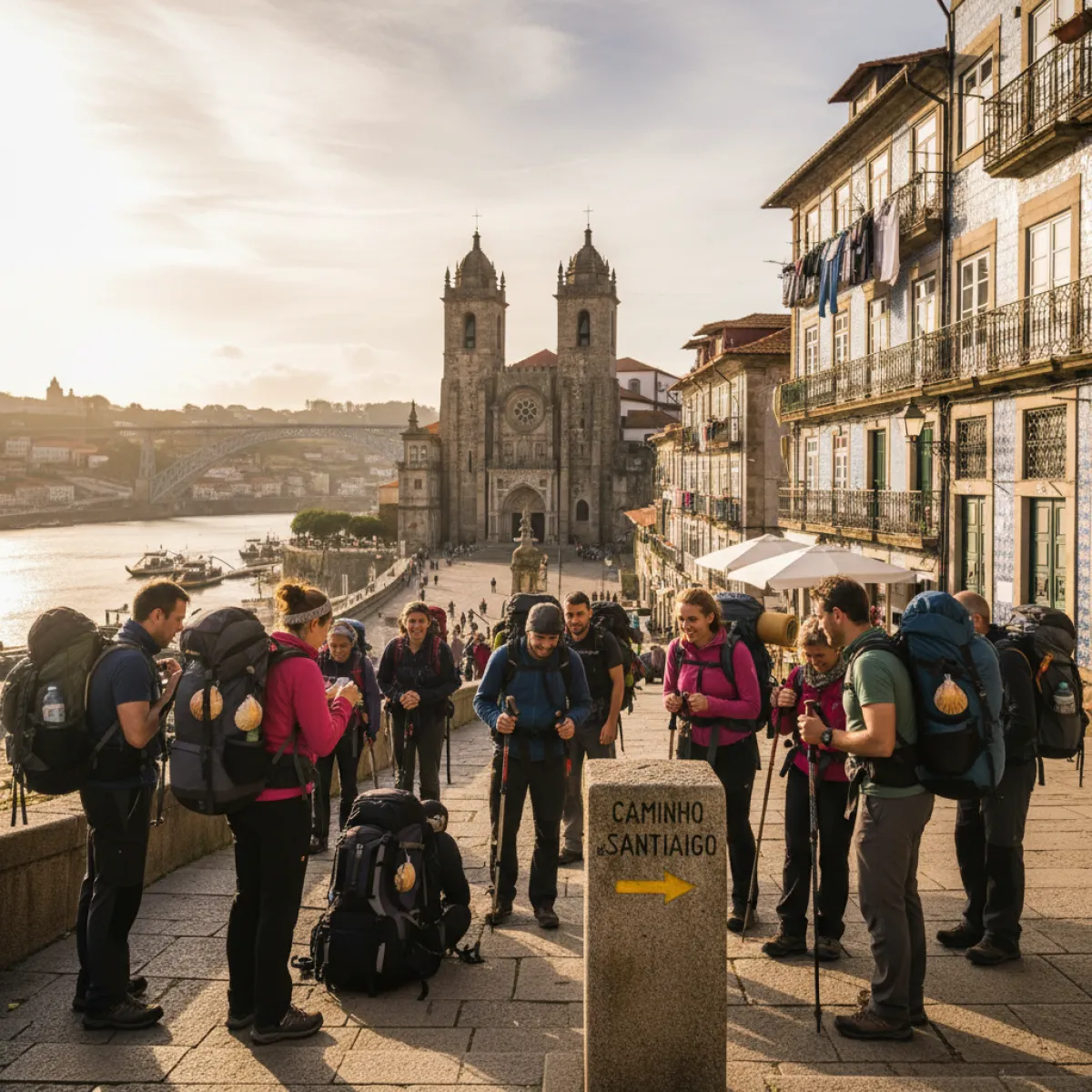
May is, without argument, the best month to start the Portuguese Way of St. James from Porto. The heat hasn't arrived in force, the days are long, and the albergues haven't yet hit peak-summer capacity. If you're considering the Caminho de Santiago through Northern Portugal, Porto is the most logical, most scenic, and best-connected starting point.
But before you lace up your boots and walk out the door with a backpack, spend at least a full day in the city. Not out of tourist obligation, but because Porto genuinely prepares you for what lies ahead. And because, frankly, it deserves more than a one-night stopover.
Before you walk: one day in Porto that matters
If you arrive the day before departure, resist the urge to head straight to Ribeira for the same photograph everyone takes. Instead, go walk through the Jardins do Palácio de Cristal. It's not just a pretty garden with Douro views. It's the perfect place to test your legs, check whether your boots need more breaking in, and calibrate your walking pace. The paths are uneven, there are climbs and descents, and the river views offer a preview of what Northern Portugal has in store.
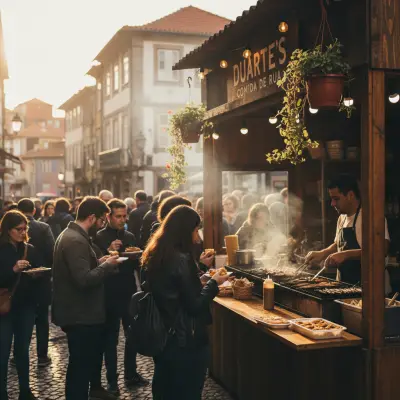
For lunch, skip the tourist-trap francesinhas in the Baixa. Head to Duarte's Comida de Rua, which serves honest, no-fuss food. It's the kind of meal you'll remember fondly when you're eating instant soup in some albergue between Barcelos and Ponte de Lima.
If you have extra time before setting off, consider joining a Porto Historic Centre Walking Tour with Living Tours. It's not just sightseeing. It's context. When you walk past churches and villages in the following days, you'll recognise architectural styles, understand references, and the whole Caminho gains depth.
Two routes: Coastal vs. Central
From Porto, there are two main routes to Santiago de Compostela: the Central Portuguese Way (inland) and the Coastal Way. Both are well marked with yellow arrows and scallop shells. The choice depends on what you're looking for.
Central Way (Inland)
The classic route. It leaves Porto from the Sé Cathedral, heads to Vilarinho, Rates, Barcelos, Ponte de Lima, Valença, and crosses into Galicia. It's roughly 240 km to Santiago, which most pilgrims complete in 10 to 14 days. In May, expect temperatures between 15°C and 24°C, cool nights, and the real possibility of rain. Not much, but enough to justify a poncho in your pack.
The highlight of this route is Ponte de Lima. The town is extraordinary, the river is beautiful, and the final approach, descending through vineyards and green fields, is one of the most memorable stages on any European walking route. Barcelos also deserves more than the obligatory rest stop. If you hit a Thursday, the weekly Barcelos market is one of the largest and most authentic in Portugal. Buy cheese, fruit, and maybe a Barcelos rooster to laugh at yourself.
Coastal Way
More recently popular but equally official. It starts from Matosinhos (reachable by metro from Porto) and follows the coast through Póvoa de Varzim, Esposende, Viana do Castelo, and Caminha before crossing into Spain via A Guarda or Valença. It's slightly longer at around 260 km, but the coastal stages compensate for every extra kilometre.
In May, Portugal's northern coast is something else. The Atlantic is still freezing (14-16°C, for the brave), but the light is spectacular and the beaches are nearly empty. Viana do Castelo is unmissable: the climb to the Santuário de Santa Luzia, on foot or by funicular, offers one of the finest panoramas in the North.
Logistics that matter
Pilgrim Credential
You need the credencial (the pilgrim "passport") to stay in albergues and receive the Compostela certificate in Santiago. In Porto, you can get one at the Sé Cathedral or the Igreja de São Roque. It costs around €2-3. Stamp it at every stop: albergues, churches, cafés, tourist offices. In May, municipal albergues rarely fill up on weekdays, but weekends can get busier. Arrive before 3pm to secure a bed.
What it costs
The Caminho can be surprisingly cheap. Municipal albergues charge €5-10 per night. Private ones run €12-20. Budget €25-40 per day if you alternate between albergues and cheap guesthouses, eat the daily specials (pilgrim menus at €8-10 are common), and don't go overboard on vinho verde. Though vinho verde at €1.50 a bottle from a village mini-market is a temptation that's hard to resist.
What to pack for May
Layers. Mornings start cool (12-14°C), days warm up, and a late-afternoon shower can arrive without warning. Essential list: rain poncho, two sets of technical clothing, a light fleece, sandals for the albergue, sunscreen (the Northern sun is deceptive), and petroleum jelly. Lots of it. Your feet will thank you.
Keep your pack under 8-10 kg. Baggage transfer services between stages are available from around €5-7 per bag per stage, if your feet or shoulders call for mercy. Check locally for current operators.
Stages worth lingering
Don't turn the Caminho into a race. Some stops deserve an extra day, especially in May when daylight is generous.
Braga, accessible as a detour from the Central route or as a day trip from Porto before you start, is a city that surprises anyone expecting only baroque churches. Our dedicated guide to Braga explains why. If your timing coincides with a late Easter, our guide to Holy Week in Braga covers everything you need to know about that extraordinary tradition.
Ponte de Lima, as I said, deserves time. There's a leisure area by the river where you can wash clothes, soak your feet in the water, and understand why the Romans already stopped here. The biweekly market, on the first and third Mondays of each month, is another good reason to adjust your calendar.
Valença do Minho, right on the border, has an impressive fortress. The commerce inside the walls is mostly aimed at Spanish shoppers buying cheap towels, but the views over Tui (on the Galician side) are excellent. Walking across the international bridge on foot, credential in your pocket, is a symbolic moment no pilgrim forgets.
Food on the way
Northern Portugal is the best eating region in the country, and I'll argue that with anyone. Between Porto and Santiago, you'll find: caldo verde made properly (with hand-cut Galician kale, not machine-shredded), rojões à minhota, bacalhau à Braga, arroz de sarrabulho in Ponte de Lima, and lamprey if you're in season (February to April, so May is too late, though you might get lucky).
Restaurants along the Caminho serve pilgrim menus, typically soup, main course, drink, and coffee for €8-12. Not fine dining, but honest. My advice: avoid any place with laminated photos of the menu outside the door. Look for the ones with a chalkboard listing the daily special and a queue of locals.
Vinho verde is the natural companion to the Caminho through the North. Light, fresh, slightly sparkling, and cheap. In restaurants, order the house wine, which in many places between the Minho and Douro regions comes literally from the owner's backyard. It's hard to drink badly in this part of Portugal.
Getting back: don't rush home
When you reach Santiago, you'll feel a mix of euphoria and emptiness. The temptation is to jump on a plane and return to normal life. Don't. If time allows, continue to Finisterre (another 87 km) or, at minimum, spend a day in Santiago eating Galician octopus and wandering the old town without a pack on your back.
For the return to Porto, direct buses from ALSA and Flixbus (from around €15-20, check current schedules and prices online) make the journey in about 4 hours. The train requires a transfer in Vigo but is more comfortable.
And when you're back in Porto, treat yourself to a proper dinner. After two weeks of pilgrim menus and ham sandwiches, sit down at a decent restaurant, order a francesinha (now you've earned it), and toast the fact that you walked what most people only drive.
Why May, seriously
Some people swear by September. Others insist on October. But May has one advantage no other month can match: the days are long (dark after 9pm), temperatures are perfect for walking, the landscape is green and in bloom, and the summer pilgrim crowds haven't arrived yet. The albergues have beds, the trails have quiet, and Northern Portugal is at its absolute best.
Don't wait for summer. Don't wait for retirement. Don't wait for the perfect moment. The Caminho de Santiago through Northern Portugal in May is as close to perfect as it gets. Lace up your boots, shoulder your pack, and start walking. Porto shows the way.