Vinhais Food Trail: Chestnuts, Smoke and the Bísaro Pig
In Vinhais, Bísaro pigs fatten on chestnuts in Transmontano groves and the sausages smoke for 40 days over chestnut wood. A food trail that starts with caldudo soup and ends with six tonnes of salpicão at the annual Fumeiro Fair.
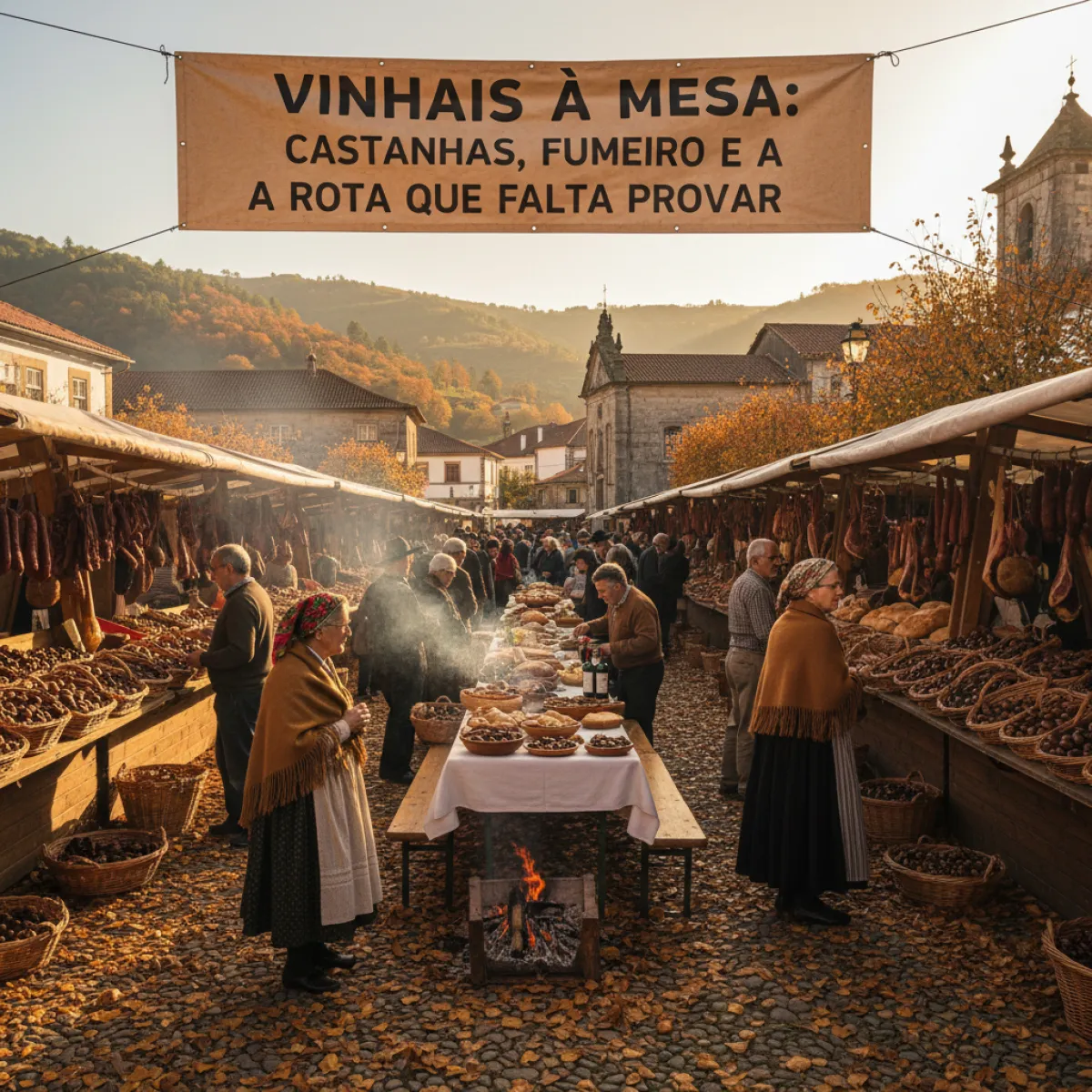
Vinhais doesn't try to impress anyone. It takes nearly three hours to drive from Porto, through mountain passes where your phone signal vanishes, to reach a town whose main attraction is, quite literally, what hangs from iron rods inside dark smokehouses. And that's exactly why it's worth the trip.
This is the self-proclaimed Capital of Fumeiro, Portugal's smoked meat heartland, and unlike many such municipal boasts, this one holds up. Vinhais produces some of the country's most respected PGI-protected cured meats: Salpicão de Vinhais, Alheira de Vinhais, Chouriça de Vinhais, Bucho de Vinhais, Chouriça Doce. All slow-smoked over chestnut and oak wood for a minimum of 40 days. The secret ingredient? The Bísaro pig, an indigenous breed that roams chestnut groves and fattens on chestnuts, squash and potatoes. The result is a depth of flavour that industrial pork simply cannot replicate.
The chestnut comes first
Before we talk sausages, we need to talk chestnuts. In Vinhais, the chestnut isn't an autumn snack you buy in a paper cone on a Lisbon street corner, it's the foundation of an economy, a diet and an identity. The soutos (chestnut groves) surrounding the town feed the Bísaro pigs, supply the wood for the smokehouses, and show up in half the traditional dishes on any local menu.
The most emblematic is caldudo, a thick soup of dried chestnuts, slow-cooked in water until they fall apart, mashed with a fork and mixed with milk, sugar and cinnamon. It's subsistence food elevated to pure comfort. You won't find this on modern restaurant menus in Porto, it belongs to kitchens with stone fireplaces and cast-iron pots.
Then there are castanhas piladas: peeled chestnuts cooked in water seasoned with wild fennel, served in a deep plate with rendered bacon fat poured over the top. It sounds simple because it is simple. And it's extraordinarily good. If you visit Vinhais between October and December, when chestnuts are in season, ask for this at any local tavern. If the cook gives you an approving nod, you've made the right call.
The smokehouse: a lesson in patience
The Feira do Fumeiro de Vinhais has been running since 1981 and is the biggest gastronomic event in the municipality. The February 2026 edition, the 46th, brought over 70 certified producers and approximately 80,000 visitors across four days. Six tonnes of smoked meat served. Six. Tonnes.
But you don't need the fair to understand fumeiro, you need the producers. If you want to know how to buy Vinhais smoked meats like a local, the difference between picking up a vacuum-packed sausage at a supermarket and going to the source is the difference between hearing fado at a five-star hotel and hearing it in a backstreet tavern in Mouraria.
What to look for? Start with salpicão, a thick cylinder of Bísaro pork loin, seasoned with garlic, red wine, paprika paste and salt, stuffed into natural casings and smoked until it turns a deep reddish-brown. Slice it thin and eat it with rye bread. You don't need anything else.
The alheira is a different story. Contrary to what many think, it's not just bread and meat, Alheira de Vinhais PGI is made with Bísaro pork, poultry, regional wheat bread and Trás-os-Montes olive oil. It's horseshoe-shaped, about 30 centimetres long, and the best way to eat it is fried in olive oil until the skin crisps, served with turnip-top rice or simply with a fried egg. Avoid the pre-packaged supermarket versions, they bear no resemblance.
The chouriça doce de Vinhais is perhaps the most surprising for the uninitiated: a sweet sausage, almost a dessert, made with pig's blood, sugar, almonds and spices. It's not for every palate, but if you like black pudding and have a sense of adventure, give it a try.
Where to sit down and eat properly
Vinhais isn't a city with dozens of restaurants competing for Michelin stars. It's a Transmontano town where you eat well in places with zero pretension.
Restaurante Paulu's is a local reference for regional cooking, grilled veal, roasted wild boar, generous portions, honest prices. It's the kind of place where the owner knows what's in the kitchen and recommends without consulting the menu. If you're passing through and want a solid meal with no surprises, it's a reliable bet.
O Delfim is another dependable option with a family atmosphere and good value. Their cod with chickpeas is well made, but since you're in Vinhais, order the regional meats instead, that's what you came here for.
At either place, the advice is the same: order the posta de vitela transmontana if it's on the menu, with batatas a murro (punched potatoes) and turnip tops. And if they're serving cozido à transmontana, with ear, snout, bucho and every regional sausage crammed into a cast-iron pot, don't hesitate. It's a culinary experience that requires both stomach capacity and willingness, but it rewards both.
Beyond the table: what else to do in Vinhais
The Parque Biológico de Vinhais is a good option if you're travelling with children or want to see the Bísaro pig in the flesh, yes, there are live specimens, and understanding the animal before eating the sausage adds another dimension to the experience. The park is a few minutes from the centre and admission is affordable (check locally for current prices).
The historic centre of Vinhais delivers what you'd expect from a Transmontano town: church, pillory, granite houses, quiet. The baroque Igreja de São Facundo deserves a stop. But let's be honest, Vinhais is about food and landscape, not monuments.
If you have time, the surrounding region justifies several days. The Montesinho Natural Park is a short drive away and is one of the last wild refuges in the country, wolves, deer, golden eagles. For anyone wanting to combine gastronomy with mountain scenery, it's the perfect pairing.
To the north, Montalegre has its own tradition of mountain cooking, with Barroso's fumeiro competing (amicably) with Vinhais. And to the east, the thermal springs of Chaves are the perfect antidote to days of excess at the table, sinking into Roman-era thermal waters after consuming half a Bísaro pig is a legitimate form of therapy.
When to go and how to get there
The best time for Vinhais depends on what you're after. For fumeiro in its full glory, February during the Feira do Fumeiro, but expect crowds and book accommodation well in advance, because the town fills up. For chestnuts, October to December. For a balance of good food and peace, any weekend between November and March works, the cold is part of the experience.
By car, it's about 2 hours 45 minutes from Porto via the A4 to Bragança, then another 30 minutes on the N103 to Vinhais. There's no train. Rede Expressos runs buses to Bragança, but from there you'll need local transport, which in practice means a rental car or a favour. Trás-os-Montes doesn't do public transport with ease, and that's both part of the charm and part of the problem.
For accommodation, options in Vinhais are limited but functional, rural tourism houses in the surroundings offer a better experience than the few lodgings in the centre. Check availability and prices locally, especially if you're planning to visit during the fair.
What to bring home
Sausages, obviously. A good salpicão and two or three alheiras is the minimum. Dried chestnuts, if you're visiting in season. Honey from the region, Vinhais produces PDO honey from the Montesinho Natural Park. And Transmontano olive oil, there are local producers whose oil rivals anything Italy wants to put forward.
Buy directly from producers when possible. It's cheaper, the quality difference is real, and you'll hear stories about how grandmother used to make the sausages that are worth as much as the product itself.
Vinhais isn't for people who want pretty Instagram content or curated tourist experiences. It's for people who like to eat well, who want to understand where their food comes from, and who accept that the best things in Portugal are almost always where it's hardest to reach.
